 Save
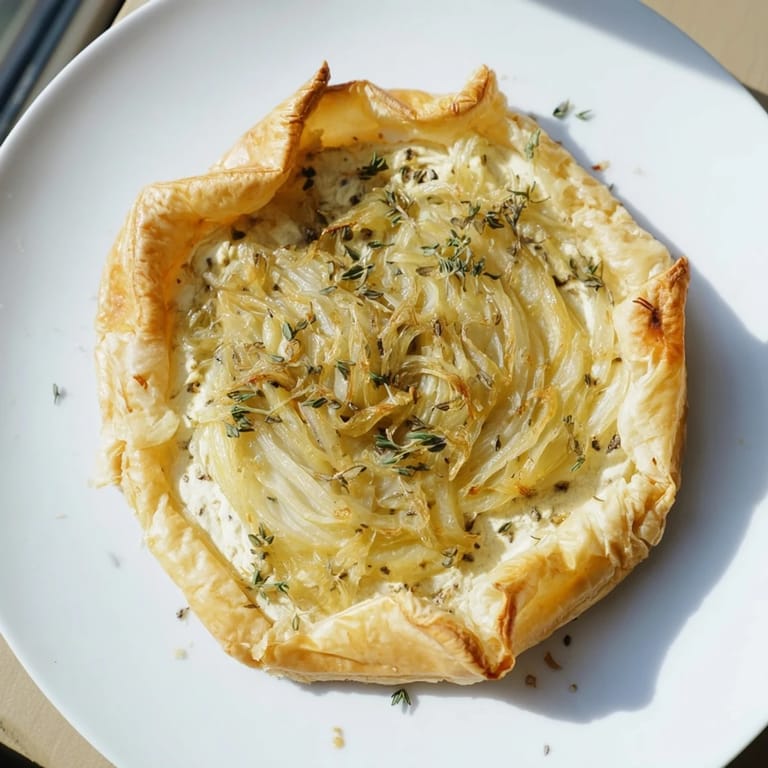
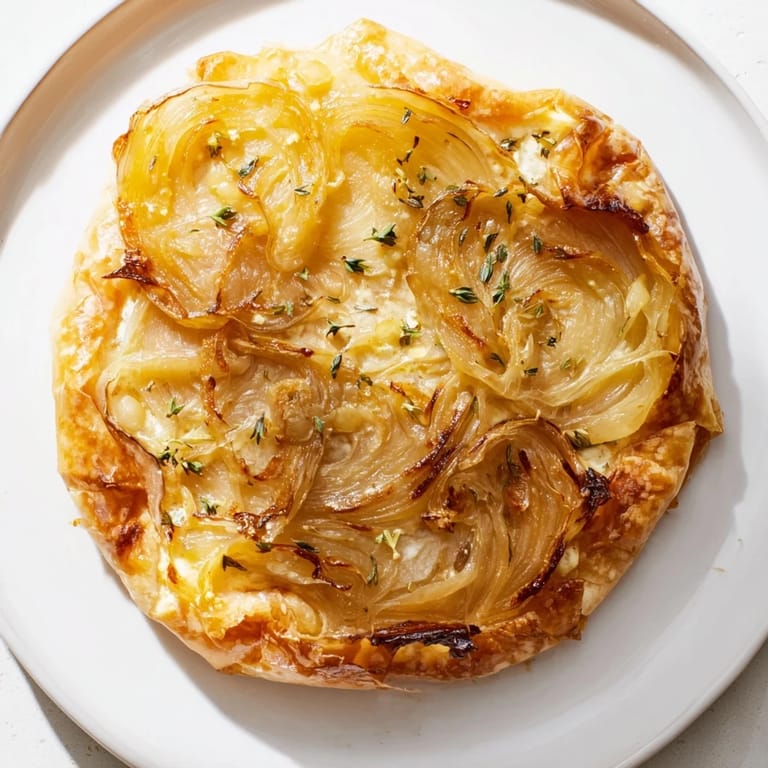
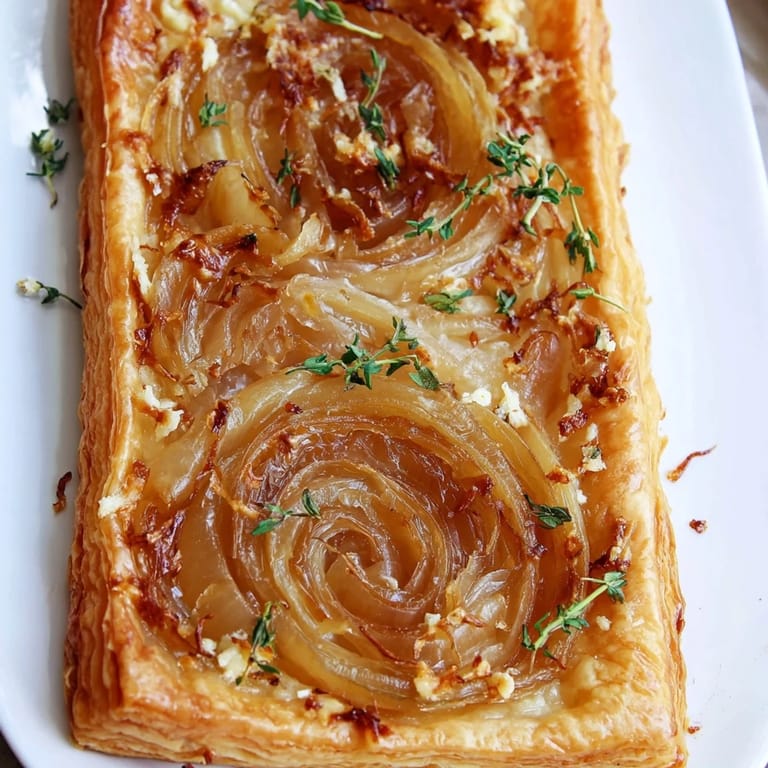
Save There's something about the smell of onions slowly turning golden in butter that makes a kitchen feel like home. I discovered this tart on a quiet Tuesday evening when I had three onions, some leftover pastry, and absolutely no plan. Two hours later, after the onions had done their slow, patient work, I pulled a crackling golden rectangle from the oven and realized I'd found something special—rustic, elegant, and honestly foolproof.
I made this for my sister on a rainy Saturday, and she actually asked for the recipe before she finished her first slice. That's when I knew it wasn't just good—it was the kind of thing that sticks with people, the way food sometimes does when it's made with actual intention instead of just speed.
Ingredients
- Frozen puff pastry (1 sheet, about 250 g): Don't overthink this—thaw it at room temperature while you work on the onions, and it'll be perfect. The magic is all in the filling anyway.
- Large yellow onions (3, thinly sliced): Yellow onions turn sweet and deep when caramelized; red onions stay sharper and add a different note if you want to experiment.
- Unsalted butter (2 tbsp): Butter carries flavor better than oil alone, and pairing it with olive oil keeps things from burning.
- Olive oil (1 tbsp): This prevents the butter from browning too fast and scorching your onions.
- Sugar (1 tsp): A tiny pinch helps jumpstart caramelization and brings out the onions' natural sweetness.
- Salt and black pepper (1/2 tsp each): Season as you go during the caramelizing process so flavors build gradually.
- Crème fraîche or sour cream (1/2 cup): Crème fraîche feels luxurious and has a subtle tang; sour cream works if that's what you have, though it's sharper.
- Dijon mustard (1 tsp): A quiet flavor booster that adds sophistication without announcing itself.
- Gruyère cheese (1/2 cup, grated): Worth seeking out over generic Swiss—its nuttiness is essential to the final taste.
- Fresh thyme (1 tsp, or 1/2 tsp dried): Thyme and caramelized onions are an old friendship; it ties everything together.
- Fresh chives (1 tbsp, optional): A bright finish if you want a last-minute pop of color and fresh allium flavor.
Tired of Takeout? 🥡
Get 10 meals you can make faster than delivery arrives. Seriously.
One email. No spam. Unsubscribe anytime.
Instructions
- Get Your Station Ready:
- Preheat the oven to 400°F (200°C) and line a baking sheet with parchment paper. This step matters because you want everything prepared so nothing rushes.
- Begin the Onion Slow Dance:
- In a large skillet over medium heat, melt the butter with olive oil, then add your sliced onions along with sugar, salt, and pepper. Stir often—this isn't the kind of cooking where you can walk away, but it's not demanding either; think of it as meditative work.
- Let Them Become Gold:
- Keep the heat at medium and let the onions cook for 25 to 30 minutes, stirring every few minutes. You'll watch them transform from raw and sharp to glossy and sweet; this is the whole reason the tart works.
- Prepare Your Canvas:
- While onions are doing their thing, roll out the thawed pastry on a lightly floured surface into a rough 12-inch square or circle. Transfer it to your parchment-lined sheet without overthinking the shape—rustic is the whole point.
- Build the Layers:
- Mix crème fraîche with Dijon mustard in a small bowl and spread it evenly over the pastry, stopping about an inch from the edges to create that beautiful rustic border later. Scatter half your Gruyère, then top with the caramelized onions and sprinkle with thyme.
- Final Touch and Into the Oven:
- Finish with the remaining Gruyère, then gently fold the pastry edges up and over the filling in a casual, folded way—imperfection is the aesthetic here. Bake for 20 to 25 minutes until the pastry is golden and crisp, and you can see the cheese starting to brown at the edges.
- Rest and Serve:
- Let it cool for just a few minutes before slicing. Serve it warm, at room temperature, or even cold the next day with chives scattered on top if the mood strikes.
 Save
Save I served this to someone who claimed not to like onions, and they asked for seconds. That moment—when food crosses a boundary someone thought was fixed—is why I keep coming back to this recipe.
The Science of Slow Onions
Caramelization isn't magic; it's chemistry. When onions cook slowly, their natural sugars break down into complex compounds that taste sweet and almost honey-like. This takes time and patience—there's no shortcut. The moment you rush it with high heat, those sugars burn instead of caramelize, and suddenly your tart tastes sharp and bitter. Medium heat, consistent stirring, and about half an hour is the only real formula.
Why This Works as Appetizer or Main
A single slice with a green salad and a glass of white wine feels complete as a light lunch or starter. Three slices with a side of roasted vegetables becomes dinner. The tart's flexibility comes from how satisfying the caramelized onions are—they're rich enough to feel substantial even without meat, yet light enough that you don't feel weighted down afterward.
Variations and Swaps
Once you understand the structure, this tart becomes a canvas. The bones stay the same—pastry, caramelized base, cheese—but everything else is open. A splash of balsamic vinegar in the last five minutes of cooking deepens the onion flavor. Trading Gruyère for sharp cheddar or Emmental shifts the taste subtly. Some cooks add anchovies or caramelized garlic; others finish with a fried egg on top. The tart doesn't mind—it's forgiving and wants to be played with.
- Try adding a thin layer of tapenade or pesto under the crème fraîche for a Mediterranean spin.
- A few torn fresh basil leaves instead of thyme creates a different mood entirely.
- Caramelize some garlic alongside the onions if you want deeper umami.
 Save
Save This tart proves that the simplest ingredients, given time and attention, become something worth remembering. Make it once and you'll understand why.
Recipe FAQs
- → How do I caramelize onions perfectly?
Cook sliced onions slowly over medium heat with butter and oil, stirring often until they turn a deep golden brown, about 25–30 minutes.
- → Can I use different cheeses for this tart?
Yes, Gruyère can be swapped with Emmental or sharp cheddar for varied flavor profiles without altering texture.
- → What pastry works best for this tart?
Frozen puff pastry is ideal for its flaky, buttery texture, complementing the caramelized onion topping perfectly.
- → Is there a way to enhance onion flavor further?
Adding a splash of balsamic vinegar during the last minutes of caramelizing deepens the onions’ sweetness and complexity.
- → How should I serve the tart?
Serve warm or at room temperature, optionally garnished with fresh chives, alongside a crisp white wine like Sauvignon Blanc.