 Save
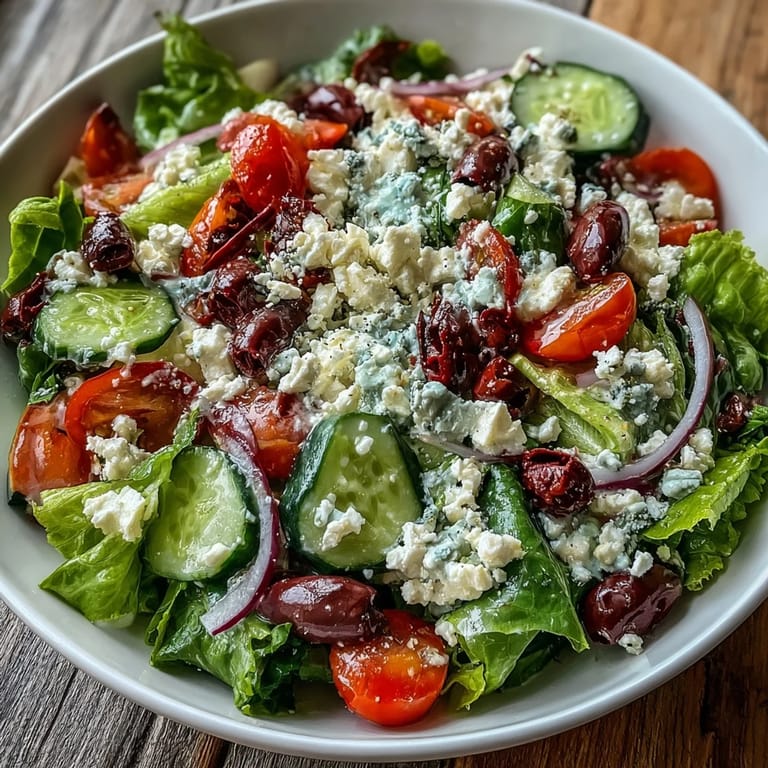
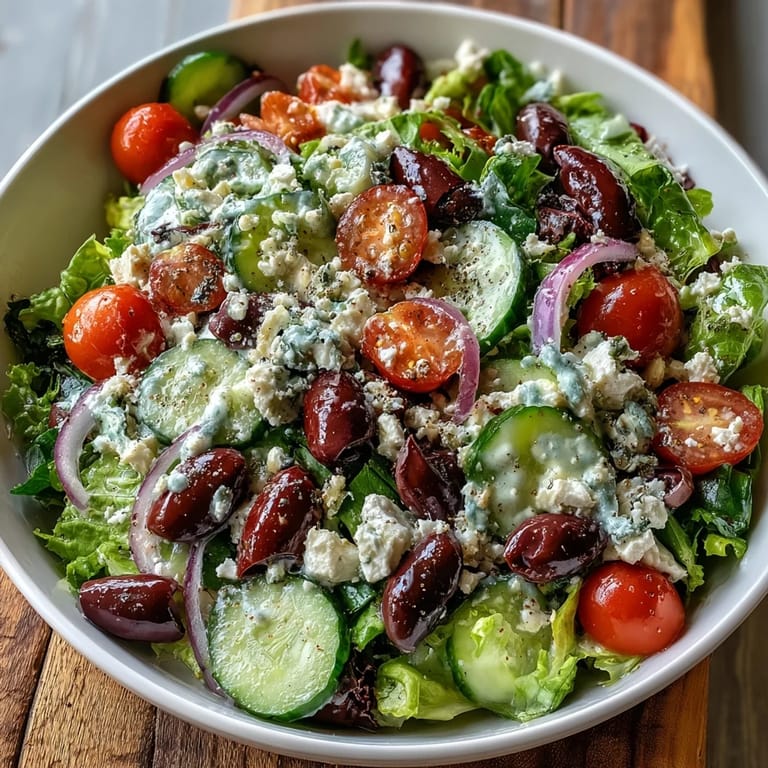
Save There's something about assembling a Greek salad that feels less like cooking and more like painting with vegetables. I was standing in my kitchen on a sweltering July afternoon, the kind where the fridge becomes your best friend, and I realized I had all the makings of something bright and alive. No heat required, just crisp lettuce, briny olives, and that salty feta that somehow makes everything taste like a vacation you're taking right there at your table.
I made this for my sister when she visited last month, exhausted from her flight and too tired to eat much of anything. She took one forkful of that feta-topped romaine, closed her eyes, and suddenly looked like she'd been transported somewhere warm and breezy. That's when I understood that this salad isn't just food—it's a little escape hatch you can make in your own kitchen.
Ingredients
- Romaine lettuce: Choose heads that feel crisp and snap when you bend them; this is where texture lives.
- Cherry tomatoes: Halving them instead of quartering keeps them from getting lost in the greens.
- Cucumber: Slice it thin so it stays refreshing rather than watery, and consider leaving the skin on for color and nutrients.
- Red onion: Thinly sliced lets the sharpness blend in gently rather than dominating every bite.
- Feta cheese: Crumble it with your fingers just before serving to keep it from turning pasty; good feta should taste pleasantly salty, almost like the ocean.
- Kalamata olives: Pitting them yourself means fresher flavor, though store-bought pitted ones save time on busy days.
- Extra-virgin olive oil: This is not the place to skimp; use the good stuff that makes you want to drink it straight.
- Red wine vinegar: The acidity cuts through richness and brings everything into focus.
- Dried oregano: Crush it between your fingers as you add it to release the oils and deepen the flavor.
- Garlic: One clove minced is enough; raw garlic can surprise you if you're not careful.
- Dijon mustard: Just a hint helps the dressing cling to the lettuce instead of pooling at the bottom.
Tired of Takeout? 🥡
Get 10 meals you can make faster than delivery arrives. Seriously.
One email. No spam. Unsubscribe anytime.
Instructions
- Build your base:
- Chop your romaine into bite-sized pieces and place it in a bowl large enough that you can toss without everything flying across your counter. The size of the pieces matters more than you'd think—too big and it's awkward to eat, too small and it bruises.
- Add the fresh elements:
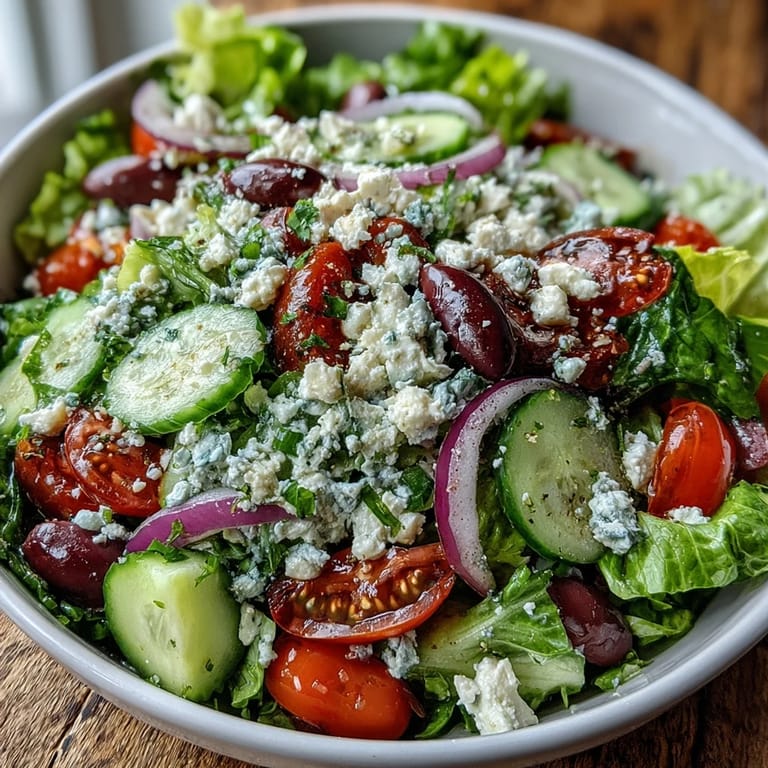
- Scatter your halved tomatoes, sliced cucumber, and thinly sliced red onion over the lettuce like you're arranging a garden. The visual contrast is part of the appeal, so don't overthink the placement.
- Crown it with cheese and olives:
- Sprinkle feta crumbles and halved olives across the top, letting them nestle into the leaves. This way, every forkful gets some of both, rather than discovering a pocket of just one ingredient.
- Make the vinaigrette:
- In a small bowl or jar, combine olive oil, red wine vinegar, oregano (crushed between your fingers), minced garlic, mustard, salt, and pepper. Whisk or shake it vigorously until it looks slightly creamy and emulsified, about a minute.
- Dress and serve:
- Drizzle the vinaigrette over the salad just before eating, then toss gently but thoroughly so every leaf gets coated. Serve immediately while everything is still crisp and cold, because the moment lettuce sits in dressing, the magic starts to fade.
 Save
Save There was a moment during that visit with my sister when she asked for the recipe, and I realized something important: the best meals aren't about complicated techniques or rare ingredients. They're about knowing what makes people feel nourished and alive, especially when they're far from home. This salad does exactly that.
The Magic of Fresh Ingredients
I learned early on that a Greek salad is only as good as the ingredients you start with. Temperature matters too—chill your bowl and vegetables beforehand, and the whole thing tastes brighter. There's no hiding behind cooking when everything is raw; each element has to pull its weight.
Making It Your Own
The beauty of this salad is that it welcomes additions without losing its soul. Some people add roasted red peppers for sweetness, others throw in sliced bell peppers for crunch. I've seen it made with fresh dill stirred into the vinaigrette, with chickpeas for protein, or with thinly shaved red cabbage for a peppery twist. The core stays true, but you're free to make it feel like yours.
When You Need This Most
This salad becomes essential in those sticky summer months when your kitchen is the last place you want to spend time, and your appetite wavers without something fresh and alive on your plate. It's equally at home as a quick lunch between errands or as the opening act to a bigger meal. It also travels well to potlucks if you pack the dressing separately and dress it just before serving.
- Make the vinaigrette in a mason jar and shake it up right before you eat for a fresh emulsion.
- If you're feeding a crowd, double or triple the recipe but keep the dressing separate until the last moment.
- Leftover vinaigrette keeps for up to a week and works beautifully on roasted vegetables or grilled fish.
 Save
Save This is the kind of salad that reminds you why simple food, made with intention and good ingredients, never goes out of style. Come back to it whenever you need something that feels both nourishing and celebratory.
Recipe FAQs
- → How long does Greek salad stay fresh?
Greek salad tastes best when served immediately, as the lettuce can become soggy over time. If you need to prep ahead, store the dressing separately and toss just before serving. The dressed salad will keep for 1-2 hours at room temperature.
- → Can I make this salad dairy-free?
Yes, simply substitute the feta cheese with a vegan feta alternative or omit it entirely. You can add extra olives or avocado to maintain the creamy texture and richness that feta provides.
- → What vegetables can I add to this bowl?
Bell peppers, radishes, or fresh herbs like dill and parsley make excellent additions. For more protein, consider adding grilled chicken, chickpeas, or hard-boiled eggs without altering the classic Mediterranean profile.
- → Is Greek salad healthy?
Absolutely. This salad provides fiber from vegetables, healthy fats from olive oil, and protein from feta. At 240 calories per serving, it's a nutrient-dense option that fits into balanced eating patterns while delivering essential vitamins and minerals.
- → What's the difference between Greek and village salad?
Traditional Greek village salad (horiatiki) typically doesn't include lettuce, relying on chunked vegetables instead. This version uses romaine as a base for added crunch and volume, making it more filling while maintaining the classic Greek flavor profile.