 Save
Save My coworker brought a Korean beef bowl to lunch one Tuesday, and I watched her eat it with such quiet contentment that I had to ask for the recipe. She laughed and said it was something she threw together on busy weeknights, nothing fancy, but the way those bright pickled vegetables popped against the rich, savory beef told a different story. That first bite—the heat of gochujang balanced with sweetness, the crunch of fresh cucumber against tender meat—made me understand why she guarded her lunch so carefully. I've been making it ever since, and now it's become my own version of comfort food that doesn't require hours in the kitchen.
I made this for my sister when she was going through a rough patch, and she showed up at my door unannounced on a Friday evening. I didn't have much planned, but I had ground beef and gochujang in my pantry, so I started chopping vegetables while she sat at the counter and talked. By the time the beef was sizzling and the pickled radishes were getting all fragrant and bright, she was smiling again, leaning over the bowls I was assembling like she'd forgotten to be sad for a moment. That's when I realized this dish does something special—it feeds people in a way that goes beyond calories.
Ingredients
- Ground beef (1 lb): Lean beef works best here because the sauce carries all the flavor, and you won't want excess grease pooling at the bottom of your bowl.
- Gochujang (3 tbsp): This Korean chili paste is the backbone of the dish—don't skip it or substitute willy-nilly, because that umami depth is irreplaceable.
- Soy sauce (2 tbsp): Use a good quality soy sauce if you have it; the difference between cheap and decent is noticeable when it's a main seasoning.
- Rice vinegar (1 tbsp plus 1/2 cup for pickling): The acidity cuts through the richness and brightens everything on the plate.
- Toasted sesame oil (1 tsp): A little goes a long way here—it's potent and deeply aromatic, so resist the urge to splash extra.
- Garlic and ginger (3 cloves and 1 tbsp): Fresh is non-negotiable; the minced and grated forms release more flavor into the hot oil immediately.
- Brown sugar (1 tbsp): It rounds out the spice and creates a subtle sweetness that makes people ask what's in this.
- Pickled vegetables (carrots and daikon): These get brined while you cook, so they're ready to go and add crucial brightness to each bite.
- Cucumber and radish for serving: The crispness is essential—slice them just before assembly so they stay snappy.
- Kimchi (1 cup): The fermented funk brings everything into focus and adds its own spicy, complex note.
- Green onions (2 divided): Raw green onions add a sharp bite that cooked ones can't quite deliver.
- Toasted sesame seeds (1 tbsp): Sprinkle these on at the very end for nutty crunch.
Tired of Takeout? 🥡
Get 10 meals you can make faster than delivery arrives. Seriously.
One email. No spam. Unsubscribe anytime.
Instructions
- Pickle while you cook:
- Combine rice vinegar, sugar, and salt in a small bowl and stir until the sugar dissolves completely. Add your julienned carrots and daikon radish, mix well, and let them sit—they'll soften and become tangy while you handle the beef, which is smart kitchen timing.
- Build a fragrant base:
- Heat vegetable oil in a large skillet over medium-high heat until it shimmers, then add minced garlic and grated ginger. You'll smell it immediately—that's when you know it's ready for the beef.
- Brown the beef properly:
- Add ground beef and break it apart with a wooden spoon as it cooks, making sure it gets golden and no gray lumps remain (about 5–6 minutes). If there's a pool of grease at the bottom, pour some off before moving forward.
- Create the sauce:
- Stir in gochujang, soy sauce, brown sugar, rice vinegar, and toasted sesame oil all at once. Let it bubble gently for 2–3 minutes while the sauce thickens and clings to the beef, then pull it off the heat and fold in half the fresh green onions.
- Assemble with intention:
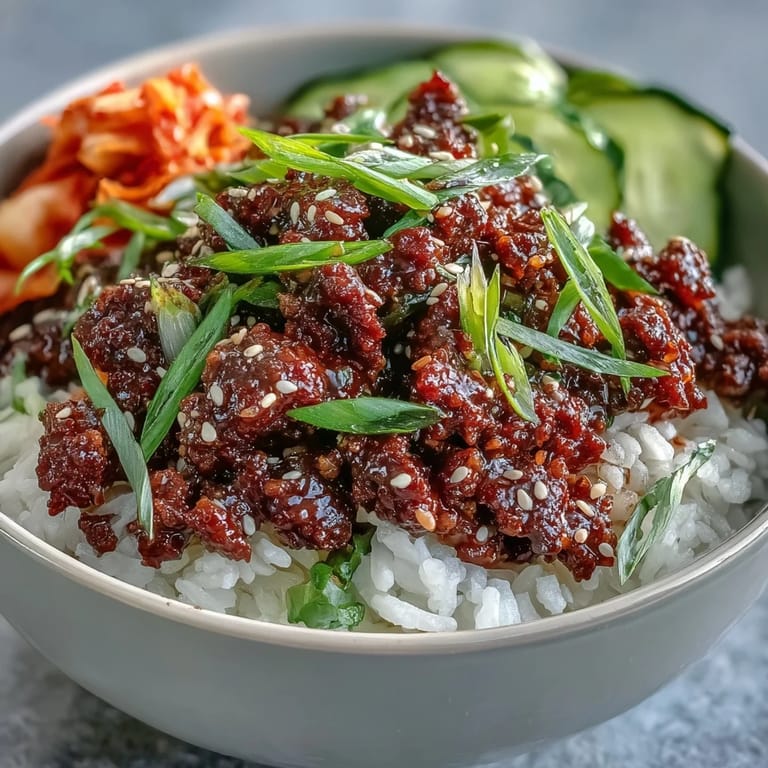
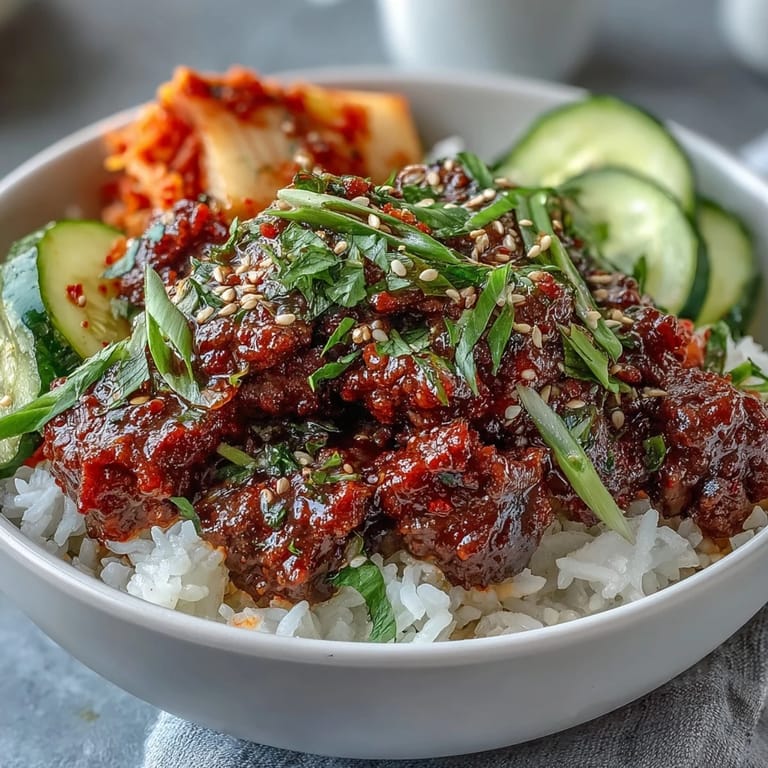
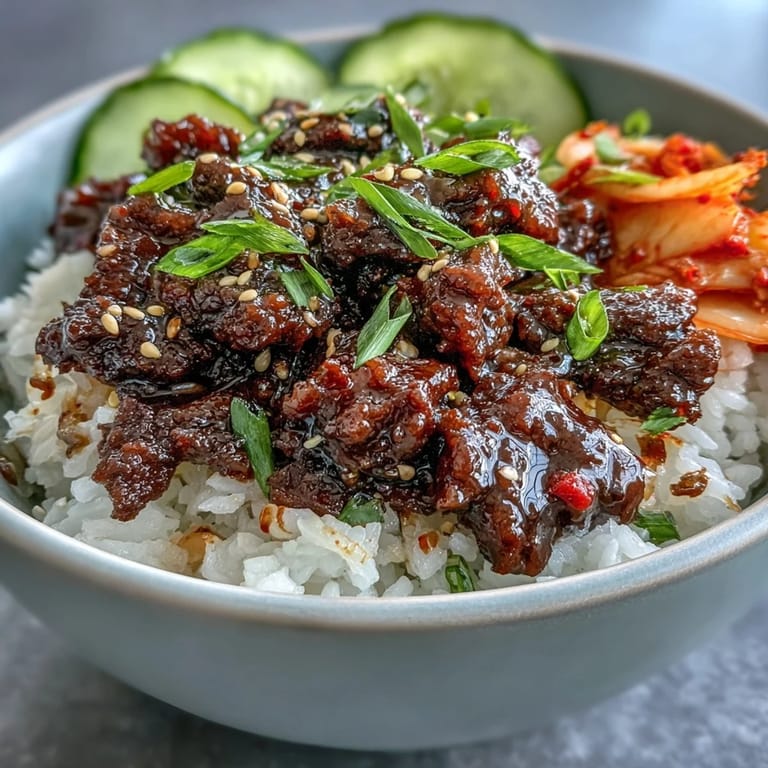
- Divide cooked rice among four bowls, making a small well in the center, then top each with a generous spoonful of the spiced beef. Arrange your pickled vegetables, fresh cucumber, radish, and kimchi in clusters around the beef like you're composing something intentional, then finish with remaining green onions and sesame seeds.
 Save
Save There's something powerful about serving a bowl that looks this vibrant and tastes this good without feeling like you spent your evening stressed in the kitchen. My friends have started asking for this specific recipe, and I've stopped acting surprised by how much people light up when they taste it.
The Art of Layering Flavors
What makes this bowl work isn't any single ingredient—it's the conversation between them. The gochujang brings heat and umami, the brown sugar softens the edges, the rice vinegar adds brightness, and the sesame oil ties everything together with a toasted, almost nutty finish. I learned this by accident the first time I made it without tasting as I went; I added the sugar last and suddenly everything clicked into place. Now I understand why Korean food balances these flavors so deliberately—it's not about overpowering your palate but creating something that evolves with every bite.
Customizing for Your Crowd
The beauty of this bowl is that it accommodates preferences without requiring you to cook multiple versions. Someone who likes extra heat can drizzle more gochujang or add sriracha to their portion; someone who prefers mild can go lighter on the kimchi and focus on the crisp vegetables. I've made this for vegetarians by swapping the ground beef for extra-firm tofu or mushrooms, and it works just as well because the sauce is so flavorful on its own. The structure of the dish—a base, a protein, and numerous toppings—means everyone walks away satisfied.
Storage and Make-Ahead Tips
The beef keeps beautifully in the refrigerator for up to three days, and honestly, it might taste even better the next day once the flavors have melded together. The pickled vegetables last about a week if stored in a sealed container, so you can make a bigger batch and use them throughout the week on salads, tacos, or just as a crispy snack. I always cook my rice fresh or warm leftovers properly, but the component nature of this dish means you're never really making a full meal from scratch if you plan ahead.
- Make the pickled vegetables up to a week in advance and store them covered in the refrigerator.
- The beef reheats gently on the stovetop over low heat or in the microwave—add a splash of water so it doesn't dry out.
- Assemble bowls fresh to order so the rice stays warm and the fresh vegetables stay crisp.
 Save
Save This bowl has become the recipe I make when I want to feel like I'm cooking with care but without the stress, and somehow that translates to everyone's plate. Make it once and you'll understand why it deserves a regular spot in your rotation.
Recipe FAQs
- → What is gochujang?
Gochujang is a Korean fermented chili paste made from red chili powder, glutinous rice, fermented soybeans, and salt. It adds a sweet, spicy, and umami-rich flavor to dishes.
- → Can I make this less spicy?
Yes, reduce the amount of gochujang to 1-2 tablespoons or substitute with a milder chili paste. You can also add more brown sugar to balance the heat.
- → How long do the pickled vegetables last?
The quick-pickled carrots and daikon will keep in the refrigerator for up to 1 week in an airtight container. They actually develop more flavor as they sit.
- → Can I use other proteins?
Ground chicken, turkey, or even crumbled tofu work well as substitutes. Adjust cooking time as needed—poultry may cook slightly faster than beef.
- → Is this dish gluten-free?
It can be made gluten-free by using tamari instead of soy sauce and ensuring your gochujang is certified gluten-free, as some brands contain wheat.