 Save
Save My kitchen smelled like toasted sesame oil the first time I made this, and my roommate followed the scent like a cartoon character drawn by aroma alone. I'd been craving something bold but simple, and this Korean beef bowl delivered exactly that—savory, colorful, and ready in under thirty minutes. What started as a weeknight dinner became the dish I'd make whenever I needed to impress without fussing, or honestly, just when I wanted to feel like I'd put in real effort without actually breaking a sweat.
I made this for a dinner party last spring when three friends showed up unexpectedly hungry, and I realized I could have four satisfying bowls on the table in twenty minutes. Everyone got to build their own, adding as much or as little kimchi as they wanted, and suddenly we were all leaning over our bowls like we were solving the world's most delicious puzzle. That's when I understood this dish isn't just food—it's permission to play with your meal and make it exactly yours.
Ingredients
- Lean ground beef (1 lb): The backbone of this bowl; choose meat with some marbling for flavor, not just pure lean, or it'll taste a bit thin and dry.
- Gochujang (2 tbsp): This fermented chili paste is the soul of the dish, bringing heat and depth—find it in the Asian section, and don't skip it for anything else.
- Soy sauce (2 tbsp): Use full-sodium if you can; it adds savory saltiness that low-sodium versions just can't match.
- Brown sugar (1 tbsp): A small amount balances the spice and salt, creating that addictive sweet-savory tension.
- Garlic and ginger (2 cloves and 1 tbsp): Mince these fresh and fragrant; pre-minced from a jar won't give you that same aromatic punch.
- Toasted sesame oil (1 tbsp): This is about flavor, not cooking oil; a little goes a long way, so measure it seriously.
- Green onions (2): Half goes in the beef, half sprinkles on top for color and a bright, sharp finish.
- Short-grain rice (4 cups cooked): The sturdy bed that holds everything; white or brown both work, though white rice feels more traditional here.
- Cooked edamame (1 cup): These add protein and a gentle, slightly sweet contrast to the savory beef.
- Cucumber (1 cup sliced): The cooling element; don't peel it if your skin is thin and pretty, just rinse well.
- Carrot (1 cup julienned): Raw carrots stay crisp and sweet, cutting through the heat beautifully.
- Kimchi (1 cup chopped): The wild card that brings funk, fermentation, and personality; choose a spice level you actually enjoy.
- Toasted sesame seeds (2 tbsp): Buy them already toasted, or toast raw seeds in a dry pan for two minutes until fragrant and golden.
Tired of Takeout? 🥡
Get 10 meals you can make faster than delivery arrives. Seriously.
One email. No spam. Unsubscribe anytime.
Instructions
- Warm your pan and wake up the aromatics:
- Heat your skillet over medium, add the sesame oil, and let it shimmer before tossing in minced garlic and ginger. You'll smell that herbaceous, almost floral warmth hit your face within seconds—that's your signal you're starting right. Stay there for just a minute, stirring constantly, so the raw edge fades and you get toasted, fragrant bits instead.
- Brown the beef with intention:
- Crumble your ground beef into the pan and break it up with your spatula as it cooks, reaching those five to six minutes where the pink disappears and everything's a warm brown. Don't rush this or stir obsessively; let it sit for thirty seconds between stirs so it actually browns instead of steaming. You want texture and color here, not a gray mush.
- Coat everything in that glossy sauce:
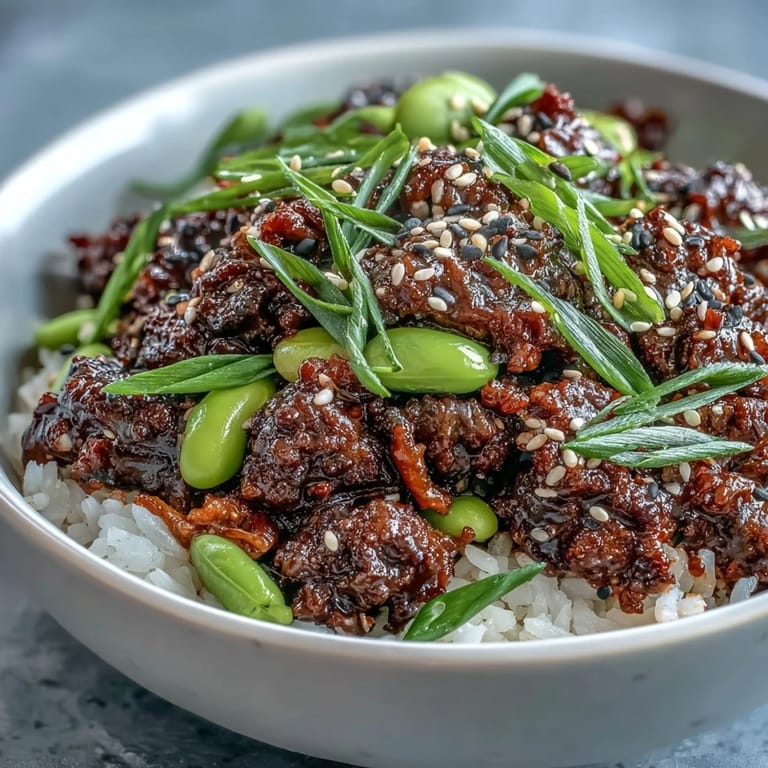
- Stir in your gochujang, soy sauce, and brown sugar, and watch the mixture go from loose and wet to thick and clingy as it cooks another two to three minutes. The sauce should coat the beef with a deep reddish-brown shine; if it looks too thick, a splash of water helps, but usually the beef's moisture saves you.
- Finish with fresh green onion brightness:
- Turn off the heat and stir in half your green onions, letting their sharp, onion-y flavor cut through the richness. The residual heat will soften them just enough without cooking away that fresh bite.
- Build your bowls with color and balance:
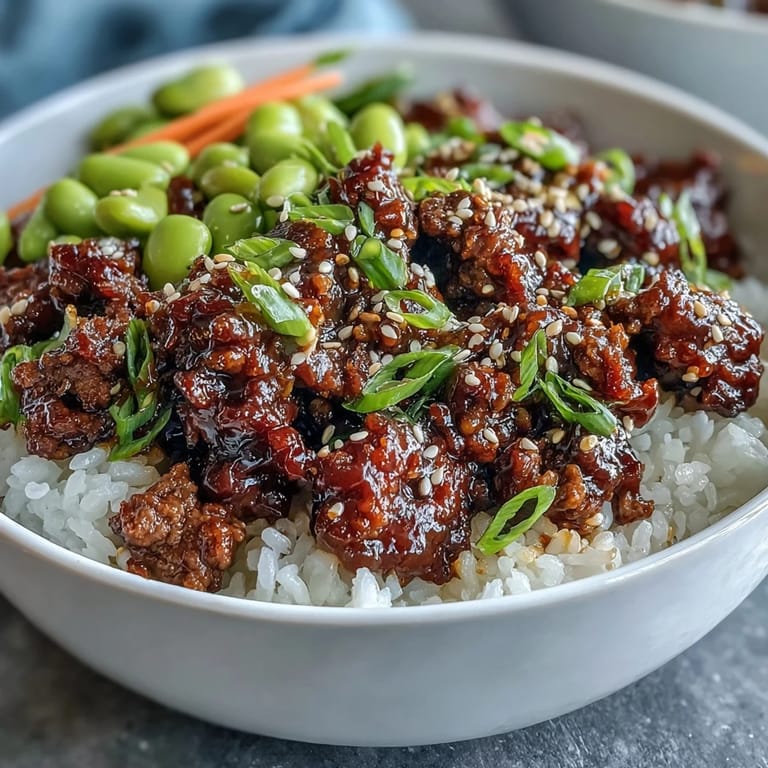
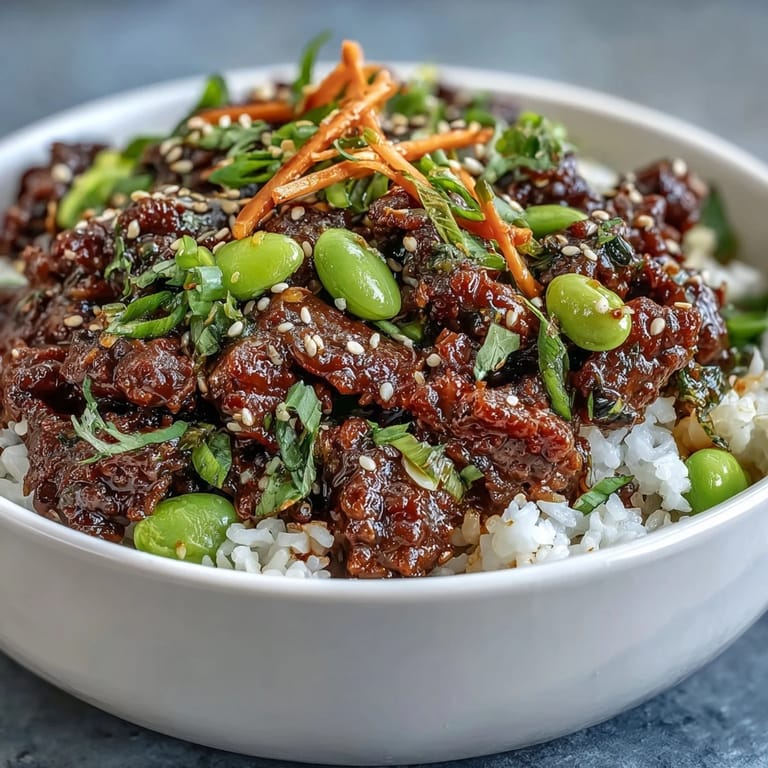
- Start with a base of warm rice in each bowl, then top with a generous scoop of beef, then arrange your edamame, cucumber, carrot, and kimchi around it like you're composing something beautiful. Everything should be visible; this meal is half about how it looks and half about how it tastes, so don't bury anything.
- Finish and serve right away:
- Sprinkle the remaining green onions and toasted sesame seeds over top, and get these bowls to the table while the rice is still steaming and the toppings haven't gotten soggy.
 Save
Save I've made this bowl so many times now that my hands know the motions without thinking, but what keeps bringing me back is that moment when everyone at the table takes their first bite and gets quiet for a second. That's when you know you've made something that speaks for itself, something that tastes like care and effort wrapped up in a single, satisfying bowl.
Why This Bowl Wins Every Time
There's something about a rice bowl that feels both casual and special at once, like you're serving restaurant food but from your own kitchen. The formula is simple: warm, creamy rice as your canvas, one hot protein element, and then fresh, cool toppings that surprise your palate with every spoonful. This balance is what makes Korean bowls so craveable and why this one has become my go-to when I want something that feels intentional without being complicated.
How to Make It Your Own
The beauty of a bowl is that it's a framework, not a prison, so swap things around based on what's in your kitchen or what you're craving that day. Ground turkey, chicken, or even plant-based crumbles will work in that sauce with barely any adjustment. Cold leftover vegetables, pickled radish, shredded cabbage, or even thinly sliced avocado all slot in seamlessly, and suddenly you have a completely different meal that still hits that same satisfying note.
The Secret Moves That Change Everything
I learned the hard way that toasted sesame oil is not a substitute for cooking oil; it's a finishing flavor bomb that you use in small amounts for maximum impact. Also, never underestimate how much personality a good kimchi brings—it's the secret weapon that ties everything together and makes people ask why this tastes so good. One last thing: if you fry an egg and slide it on top, the runny yolk becomes a sauce that takes the whole thing to an unnecessary but impossible-to-regret level.
- Make your gochujang sauce slightly looser than you think it should be, because it'll cling perfectly to warm rice and beef once it cools just a touch.
- Toast your sesame seeds right before serving if you have time, or buy them pre-toasted and store them in an airtight container so they stay crispy.
- Cook your rice ahead of time, chill it if you want, and you can have this meal on the table in fifteen minutes on any night of the week.
 Save
Save This bowl has become my answer to the question of what to cook when I want something that tastes like I tried but didn't actually stress. It's one of those dishes that reminds you why home cooking matters.
Recipe FAQs
- → What does gochujang taste like?
Gochujang is a Korean chili paste with a complex flavor profile—fermented, savory, slightly sweet, and moderately spicy. It adds rich umami depth and a beautiful red color to the beef.
- → Can I make this bowl spicier?
Absolutely. Increase the gochujang to 3 tablespoons, add Korean red pepper flakes (gochugaru), or drizzle with sriracha when serving for extra heat.
- → What rice works best?
Short-grain white rice is traditional and pairs perfectly with the bold flavors. Brown rice adds nuttiness and extra fiber, though the texture will be chewier.
- → Is this meal meal prep friendly?
Yes. Cook the beef and rice in advance, store separately in airtight containers, and reheat throughout the week. Add fresh vegetables just before serving for best texture.
- → Can I use other proteins?
Ground turkey or chicken work well for a lighter version. For vegetarian options, try crumbled tofu, tempeh, or plant-based meat alternatives with the same seasonings.