 Save
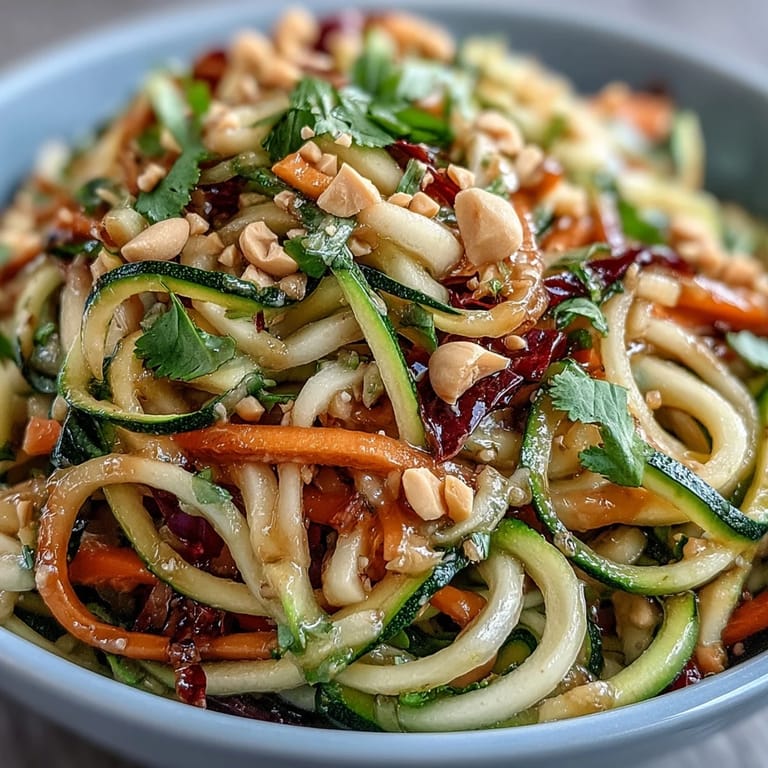
Save My spiralizer sat unused for three months until a sweltering afternoon when the thought of turning on the stove made me want to cry. I opened the vegetable drawer, grabbed whatever looked promising, and suddenly remembered that tool gathering dust in the cabinet. Twenty minutes later, I had this salad—vibrant enough to photograph, honest enough to actually eat, and cold in exactly the way my overheated kitchen needed. It became my go-to answer for the question nobody asks: what do you eat when summer itself feels exhausting?
I made this for a potluck where someone had promised to bring salad and then forgotten, leaving an awkward vegetable-shaped hole at the table. This showed up instead, and I watched my friend reach for a second helping while telling someone else the recipe sounded complicated when really it's just vegetables and a jar you shake. That's when I realized it's the kind of dish that makes you look like you have your life together, even when you're just good at opening your produce drawer with intention.
Ingredients
- Zucchini: Use the largest one you can find because spiralizing thin zucchini feels like punishing yourself, and spiralizing satisfyingly thick zucchini feels almost meditative.
- Carrot: The natural sweetness holds its own against the aggressive sesame-ginger dressing, but don't spiral it too thin or it'll dissolve into the sauce like it never existed.
- Red bell pepper: Sliced rather than spiralized because some vegetables have standards, and the strips catch the dressing in a way that matters.
- Red cabbage: Its sharpness cuts through the richness of sesame oil the way a good friend cuts through your nonsense—with respect.
- Cucumber: The one vegetable that's already mostly water, which means it plays well with acidic dressing and doesn't get soggy, it gets refreshing.
- Green onions: Not optional despite what your instincts might tell you, because their faint onion bite wakes everything else up.
- Fresh cilantro: Either you understand this or you don't, and I'm not here to convince anyone who thinks it tastes like soap.
- Toasted sesame oil: The whole personality of this dish lives here, so use the good stuff and don't even think about the cheap bottle.
- Rice vinegar: Gentler than other vinegars, which is why this dressing doesn't taste like punishment but like a friend telling you a truth you needed to hear.
- Low-sodium soy sauce or tamari: Check your labels because this is where gluten sneaks in if you're not paying attention, and tamari is its honest cousin.
- Fresh ginger: Grate it just before mixing the dressing because pre-grated ginger is a lie your supermarket tells itself.
- Maple syrup or honey: The small sweetness that balances acid and heat without announcing itself loudly.
- Garlic: One small clove because this isn't garlic bread, it's a supporting player in an ensemble cast.
- Lime juice: Brightness that sesame oil alone can't quite reach by itself.
- Chili flakes: Optional only if your mouth is afraid of what it could become.
- Toasted sesame seeds: The satisfying crunch that reminds you this is actually salad and not just a vehicle for dressing.
- Roasted peanuts or cashews: Another crunch layer that makes the whole thing feel intentional rather than accidental.
Tired of Takeout? 🥡
Get 10 meals you can make faster than delivery arrives. Seriously.
One email. No spam. Unsubscribe anytime.
Instructions
- Prep like you mean it:
- Spiralize your zucchini, carrot, and cucumber in whatever order keeps you sane, slice the pepper and cabbage until your knife hand feels the pleasant ache of purpose, and scatter everything into a bowl large enough that nothing feels crowded. This is the moment the dish starts to feel real instead of just an idea.
- Build the dressing with intention:
- Whisk together the sesame oil, rice vinegar, soy sauce, ginger, maple syrup, garlic, lime juice, and chili flakes in a separate bowl until it looks smooth and smells like you've unlocked something. Taste it on your finger and adjust before it touches the vegetables, because that's when you still have power.
- Bring everything together gently:
- Pour the dressing over your vegetables and toss with enough care that you're coating rather than crushing, treating the noodles like they matter because they do. The goal is every strand catching dressing, not a salad that looks like it's been through a minor disaster.
- Let time do its quiet work:
- Step away for five to ten minutes and let the vegetables soften just slightly while the flavors start having conversations with each other. This isn't laziness, it's strategy.
- Finish with flair:
- Transfer to whatever you're serving from, scatter sesame seeds and nuts across the top like you're putting a period on a sentence that deserves one, and add cilantro if the herb situation feels incomplete. Serve immediately because cold noodle salads have a brief window where they're perfect.
 Save
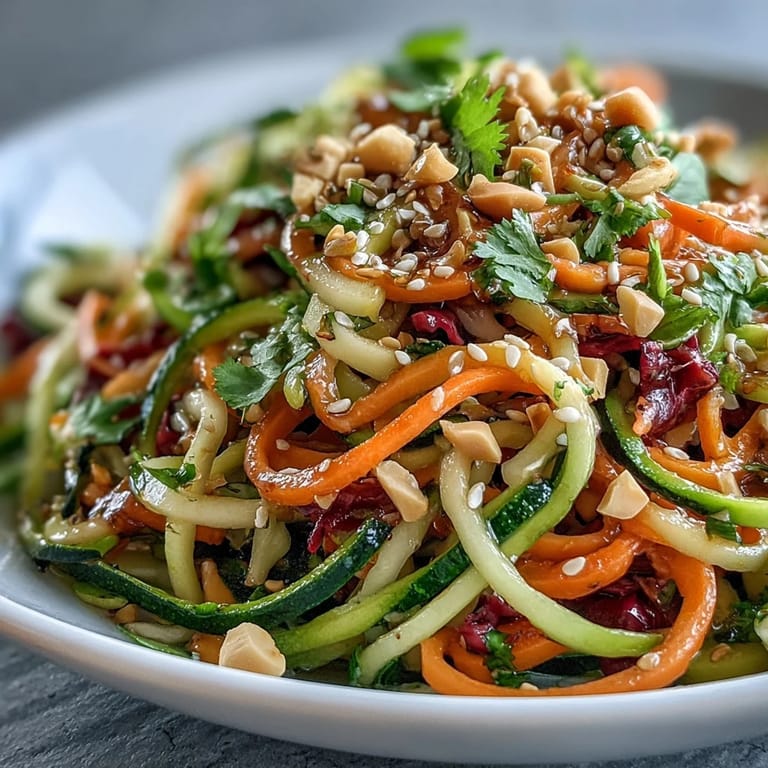
Save Someone once told me over this exact salad that they'd been scared of cooking for years, thinking it all had to be complicated, and this was the first time they realized a beautiful meal was just vegetables and a good dressing. I watched something shift in their face, and suddenly I understood why I kept making it.
When to Make This
Summer makes obvious sense—when heat makes the thought of cooking feel like a personal betrayal and cold vegetables feel like relief. But I've made this in February too, when I needed something bright enough to argue with the gray outside my window. The dressing's warmth from ginger and sesame means it doesn't taste like deprivation even when eaten under fluorescent office lights, which is when you need good food most.
The Dressing Formula You Should Remember
Once you understand that this dressing is basically fat plus acid plus heat plus sweet, you can make it in your sleep or adjust it based on what you have. The proportions matter less than the balance—you should taste all four elements, none of them drowning out the others. I've made this dressing in restaurant kitchens and at midnight in apartments with minimal equipment, and it works because the formula is sound, not because I'm special.
How to Make This a Full Meal
Vegetable noodles alone are a beautiful thing, but they know they're not filling if you show up very hungry. Crumbled baked tofu, grilled chicken, crispy shrimp, or even a soft-boiled egg transforms this from side dish to something that satisfies rather than teases. I've done all of these, and each one creates a different meal from the same base, which means you can stop acting like cooking is this one narrow thing.
- Baked tofu or crumbled tempeh gives you protein without heat, perfect if you're already managing acid and spice.
- Grilled chicken turns this into something you could serve at a dinner party without apology.
- A soft-boiled egg adds richness and creates its own sauce situation when the yolk breaks into the dressing.
 Save
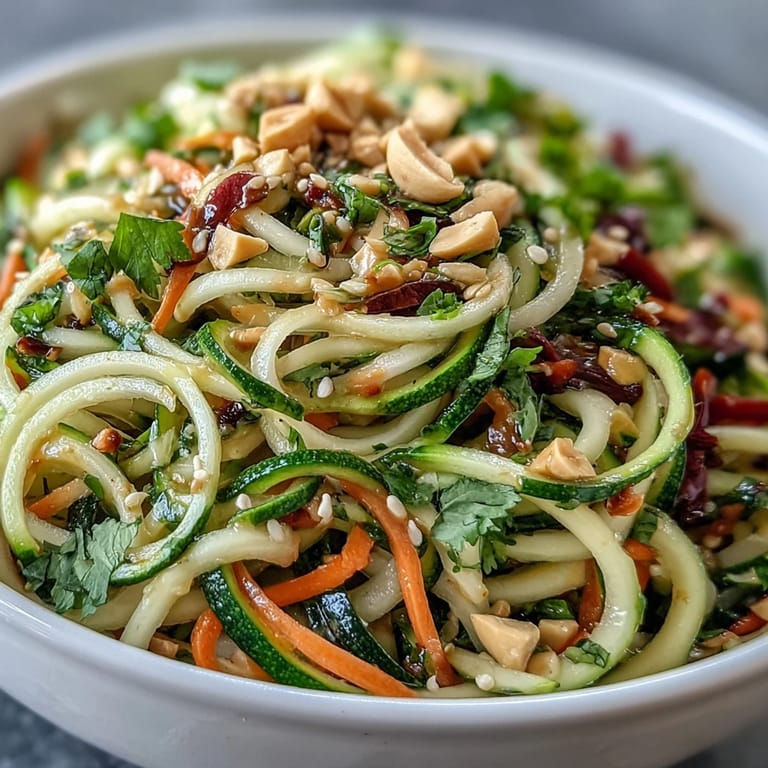
Save This salad proved to me that simple food doesn't mean boring food, and that sometimes the best meals are the ones where you stop trying to impress and just make something that tastes good. Make it, eat it cold, feel better.
Recipe FAQs
- → How long does the dressing need to sit?
Let the dressed vegetables rest for 5–10 minutes before serving to allow flavors to meld together, though it's enjoyable immediately.
- → Can I make this ahead of time?
The salad tastes best within a few hours of tossing. Store dressing separately if prepping ahead to keep vegetables crisp.
- → What vegetables work best for spiralizing?
Zucchini, carrots, cucumbers, yellow squash, daikon radish, and beets all spiralize beautifully and hold their texture well.
- → Is this suitable for meal prep?
Yes, though vegetables may release moisture over time. For best results, store components separately and combine just before eating.
- → Can I add protein to make it more filling?
Baked tofu, edamame, grilled chicken, or shrimp pair perfectly with these Asian-inspired flavors for a heartier bowl.
- → How do I adjust the spice level?
Reduce or omit the chili flakes for a milder version, or add sriracha to the dressing for extra heat.