 Save
Save There's a Tuesday evening I'll never forget when my roommate called asking what was for dinner and I realized I had exactly ten minutes before she'd arrive home hungry. I opened the pantry to find pasta, oil, garlic, and almost nothing else, so I threw together what became my go-to rescue meal. That night taught me that sometimes the simplest dishes, made with intention and good ingredients, taste better than anything elaborate.
I made this for my Italian neighbor once, nervously, since I assumed she'd judge my simplified take on her family's classic. She watched me cook, nodded approvingly at how gently I treated the garlic, then asked for the recipe. That moment made me realize that respecting the ingredients matters more than following complicated steps.
Ingredients
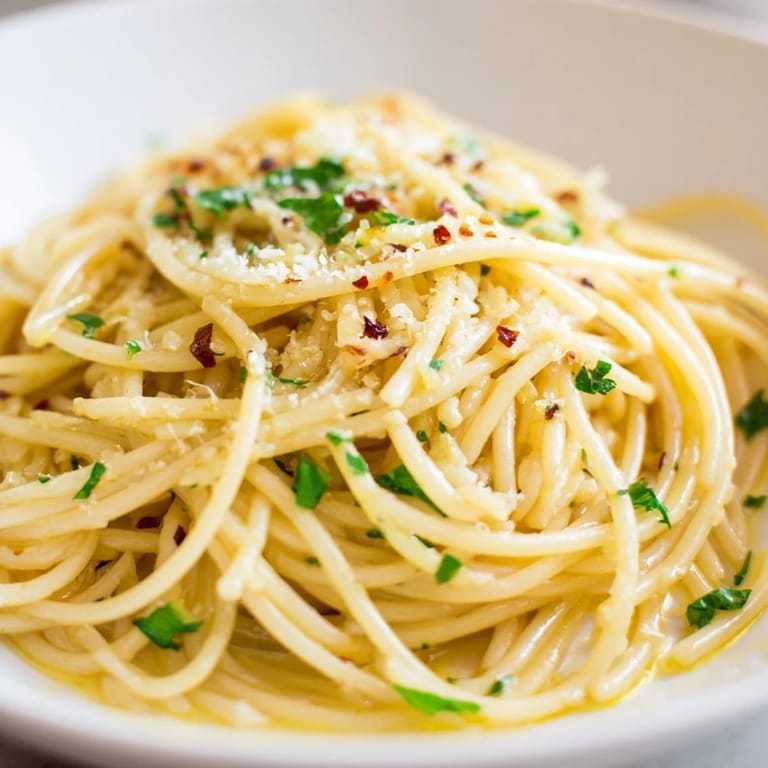
- Dried spaghetti, 200 g (7 oz): The shape matters here because it catches the oil and creates little pockets of flavor throughout the dish.
- Extra-virgin olive oil, 4 tbsp: This is where the magic happens, so use something you'd actually enjoy drinking if you had to.
- Garlic cloves, 4 large, thinly sliced: Thin slices cook faster and distribute more evenly than chunks, and they turn sweet if you're patient with the heat.
- Red chili flakes, 1 tsp: Start here and adjust upward if you like heat; it's easier to add than to remove.
- Fresh parsley, 2 tbsp chopped: It brightens everything at the end and adds a fresh note that ties the dish together.
- Black pepper, freshly ground, to taste: The mill matters because pre-ground loses its bite by the time it reaches you.
- Sea salt, to taste: Use your pasta water for seasoning too; it carries the starch that helps coat the noodles.
- Parmesan cheese, 2 tbsp freshly grated (optional): Skip it for vegan, but if you use it, grate it yourself for the best texture.
Tired of Takeout? 🥡
Get 10 meals you can make faster than delivery arrives. Seriously.
One email. No spam. Unsubscribe anytime.
Instructions
- Start your water boiling:
- Fill a large pot with water, salt it generously (it should taste like the sea), and let it come to a rolling boil. This is your window to get everything else ready.
- Cook the pasta to al dente:
- Add the spaghetti and stir it once to prevent sticking, then follow the package timing but taste it a minute early. You want it tender but still with a slight resistance when you bite it, not mushy.
- Make the garlic oil while pasta cooks:
- Pour olive oil into a large skillet and set it to medium-low heat, then add your sliced garlic. You're looking for a gentle sizzle, not an aggressive one; the garlic should turn a pale gold and smell sweet, which takes about one to two minutes.
- Add the heat:
- Stir in the chili flakes for just ten seconds; they bloom instantly in the hot oil and release their flavor all at once.
- Combine pasta and sauce:
- Reserve your pasta water before draining, then tip the hot spaghetti straight into the skillet with the garlic oil. Toss everything together, splashing in a little pasta water as you go to create a silky coating rather than a dry dish.
- Season and finish:
- Remove from heat, taste, then add salt and pepper as needed. Scatter the fresh parsley over the top, toss once more, then divide between bowls and add Parmesan if you want.
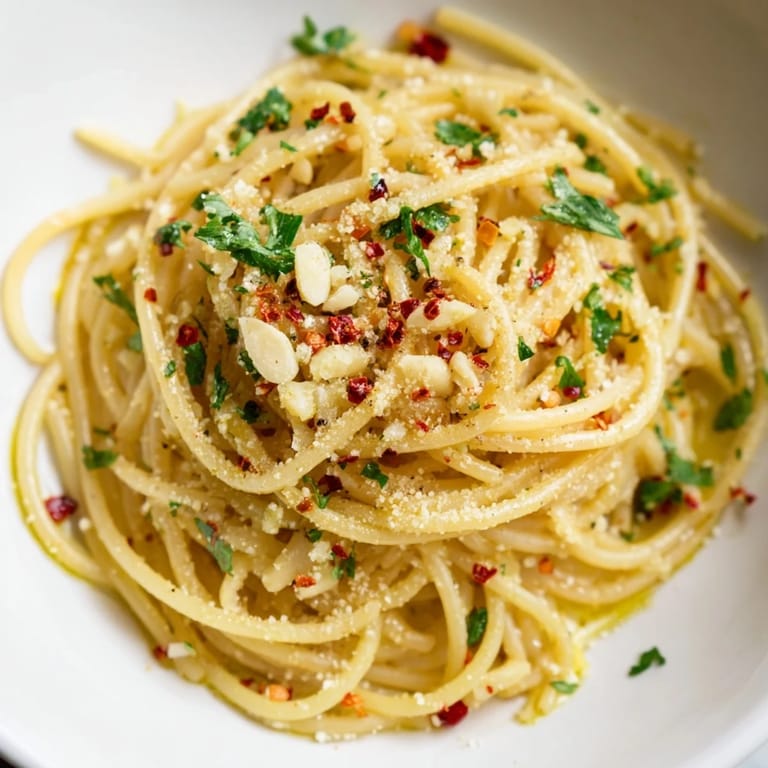 Save
Save A friend who claims they can't cook stood in my kitchen and made this for the first time, and I watched their face light up when they tasted it. That's when I understood this recipe isn't just food; it's proof that care and attention matter more than skill.
The Magic of Simplicity
Growing up, I thought cooking meant complicated recipes with long ingredient lists. This dish flipped that idea on its head and showed me that four quality ingredients treated with respect can outshine dishes with twice the components. Every element has a job: the oil carries flavor, the garlic adds sweetness, the chili brings heat, and the pasta is the canvas. There's nowhere to hide, which is exactly why it works.
Timing and Temperature
The whole appeal of this dish is how quickly it comes together, but speed without control creates a mess. Medium-low heat on the garlic might feel slow, but those two minutes are where the sweetness develops. I learned this by burning garlic more times than I care to admit, each time becoming more convinced that patience and low heat are the real shortcuts in the kitchen.
Variations and Personal Touches
Once you master the basic version, there's room to make it your own without losing what makes it special. I've added everything from a squeeze of lemon juice at the end to a pinch of anchovy paste stirred into the oil, and both elevated the dish without overshadowing the garlic. Some nights I load it with extra chili if I want something warming, and other times I go light on heat and heavy on the parsley for a fresher feel.
- Try a squeeze of fresh lemon juice stirred in just before serving for brightness that cuts through the richness.
- A few anchovies melted into the oil add umami depth, though you won't taste fish, just the savory roundness it brings.
- Adjust the chili flakes to your preference, knowing you can always add more but can't take it back.
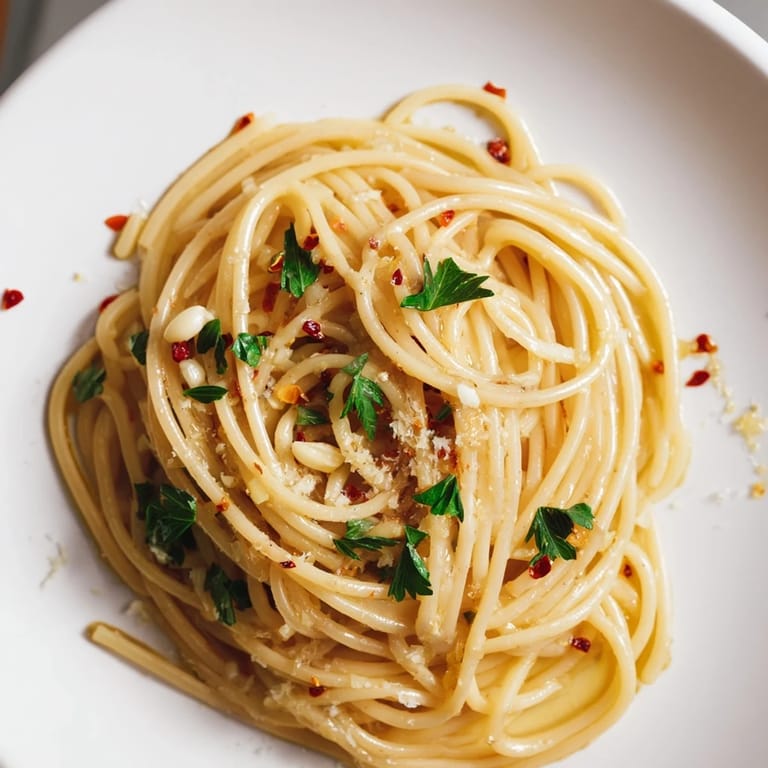 Save
Save This pasta has become my default when I want to eat well but not spend my evening in the kitchen. It's the kind of meal that reminds you why people fall in love with Italian food in the first place.
Recipe FAQs
- → How do I prevent garlic from burning in the oil?
Cook the garlic on medium-low heat, stirring frequently until it turns golden. Avoid high heat to prevent bitterness.
- → Can I adjust the spice level?
Yes, modify the amount of red chili flakes to suit your preferred heat intensity, from mild to spicy.
- → What is the purpose of reserved pasta water in this dish?
Adding reserved pasta water helps loosen the sauce, creating a silky texture that clings to the pasta.
- → Is Parmesan necessary for this preparation?
Parmesan is optional; it adds a savory richness but can be omitted or replaced with a vegan alternative.
- → How can this dish accommodate dietary restrictions?
Use gluten-free pasta for gluten intolerance and omit or substitute Parmesan for dairy-free options.
- → What is the best way to serve this pasta?
Toss with fresh parsley and freshly ground black pepper immediately after cooking for optimal flavor and aroma.