 Save
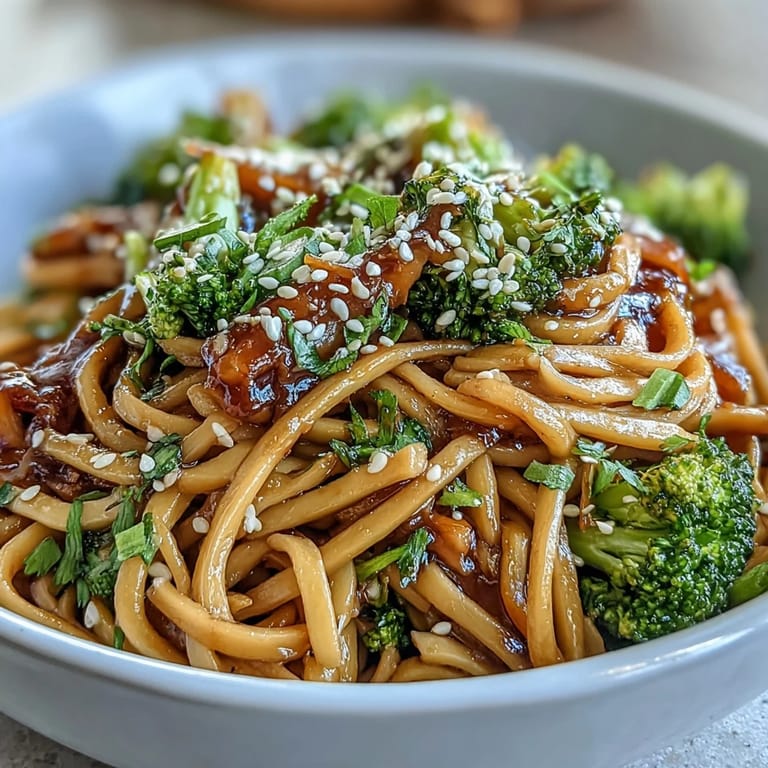
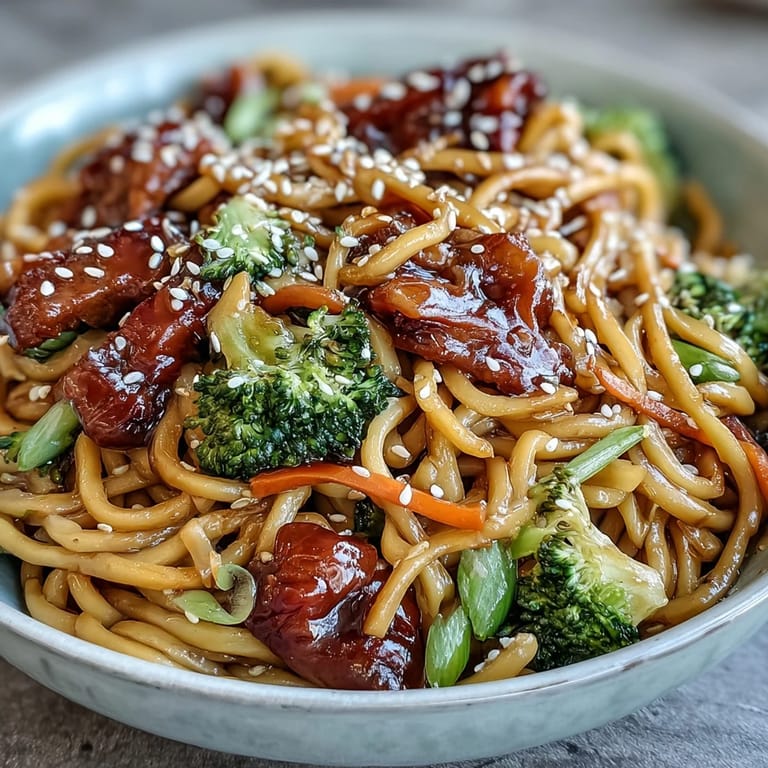
Save There's this moment that happens every time I make a teriyaki noodle bowl—when the sauce hits the hot wok and suddenly your entire kitchen smells like a bustling Asian street market. It was a Tuesday night when I first figured out the trick to getting that glossy, perfectly thickened sauce without it turning into glue, and honestly, it changed how I approach quick weeknight dinners. The beauty of this dish is that it comes together faster than you'd expect, yet tastes like you've been standing over the stove for hours.
I made this for my roommate once when she came home stressed from work, and watching her face light up when she tasted it—that moment when the sweet, savory, nutty flavors all clicked—made me realize this wasn't just a meal, it was her instant reset button. She asked for the recipe that night, and now it's her go-to comfort dish too.
Ingredients
- Egg noodles: 300 g of these tender strands form your foundation—they're sturdy enough to hold onto the sauce without turning mushy, and their slight richness complements the sweet-savory glaze perfectly.
- Broccoli florets: 2 cups of these little trees add textural contrast and a hint of vegetal earthiness that keeps the dish from feeling too sweet.
- Carrots, julienned: 2 medium carrots cut into thin matchsticks soak up the sauce beautifully and add a natural sweetness that deepens the teriyaki flavor.
- Green onions: 2 sliced scallions provide that fresh, sharp brightness that wakes up your palate between bites.
- Soy sauce: 1/4 cup is the umami backbone—use a good quality one if you can, as it's the foundation of your entire sauce.
- Mirin: 2 tablespoons of this sweet rice wine is what gives teriyaki its signature glossy shine and subtle depth (dry sherry works in a pinch, though the flavor shifts slightly).
- Honey or maple syrup: 2 tablespoons balances the saltiness and creates that caramelized quality when the sauce reduces.
- Rice vinegar: 1 tablespoon cuts through the richness with a gentle tang that keeps everything bright.
- Brown sugar: 1 tablespoon adds depth and helps the sauce coat the noodles more effectively.
- Sesame oil: 2 teaspoons of this nutty, aromatic oil is your secret weapon—a little goes a long way to make everything taste restaurant-quality.
- Garlic and ginger: 2 minced cloves and 1 teaspoon grated are the aromatic base that gives the sauce its warmth and complexity.
- Cornstarch slurry: 1 tablespoon cornstarch mixed with 2 tablespoons water thickens the sauce to a perfect gloss without it becoming gluey—the key is adding it at the right moment.
- Toasted sesame seeds: 2 tablespoons sprinkled on top add a final nutty crunch and visual appeal.
Tired of Takeout? 🥡
Get 10 meals you can make faster than delivery arrives. Seriously.
One email. No spam. Unsubscribe anytime.
Instructions
- Cook your noodles until just tender:
- Bring a large pot of water to a rolling boil and add the egg noodles, stirring occasionally so they don't stick together. Once they're soft but still have a bit of bite to them (usually about 4-5 minutes), drain them and rinse under cold running water—this stops them from cooking further and keeps them from becoming a tangled mess.
- Steam the vegetables until crisp-tender:
- While your noodles are cooking, bring a pot of salted water to a boil or set up a steamer basket. Add the broccoli florets and julienned carrots, cooking for just 2-3 minutes until they've lost their raw bite but still snap when you bend them. You want them to have presence in the bowl, not disappear into mush.
- Build your sauce in a quiet moment:
- In a small saucepan, combine the soy sauce, mirin, honey, rice vinegar, brown sugar, sesame oil, minced garlic, and grated ginger over medium heat. Let it come to a gentle simmer—you'll see tiny bubbles forming around the edges, and the aroma will be incredible. Let it bubble quietly for about a minute so the flavors can mingle.
- Thicken with the cornstarch slurry:
- Give your cornstarch and water mixture a quick stir (it separates easily), then pour it slowly into the simmering sauce while stirring constantly with a wooden spoon. Watch as it transforms from a thin liquid into something glossy and coat-worthy—usually takes just 1-2 minutes. If it seems too thick, add a splash of water; too thin, let it bubble a bit longer.
- Bring everything together in the wok:
- Heat a large wok or skillet over medium-high heat and add your cooked noodles, steamed vegetables, and sliced green onions. Pour the warm sauce over everything and toss for 1-2 minutes, making sure every strand and floret gets coated in that glossy, gorgeous sauce. The heat will freshen the vegetables and warm everything through.
- Serve and finish with flourish:
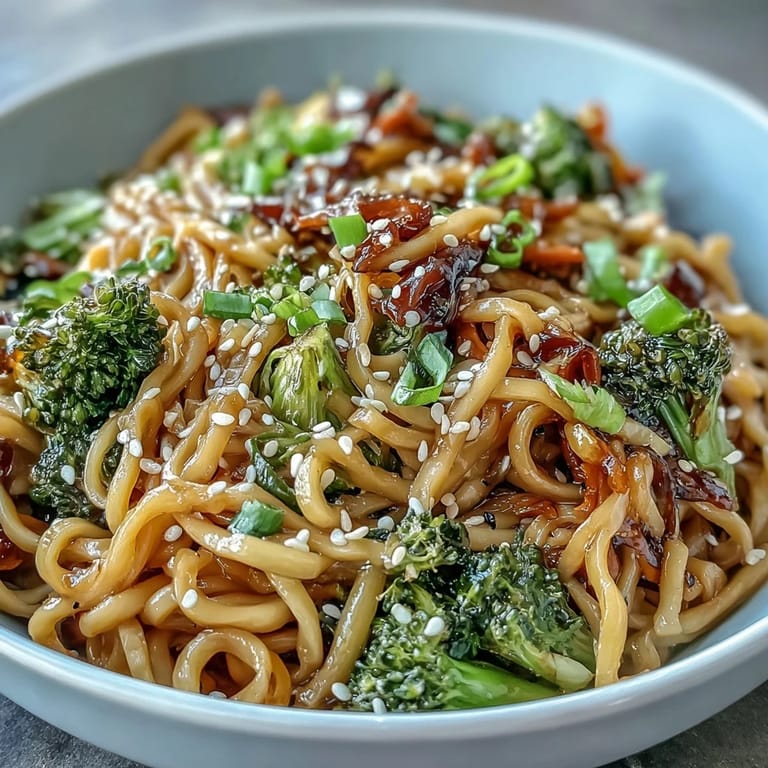
- Divide the noodle mixture among four bowls and sprinkle each serving with toasted sesame seeds and a few extra green onion slices. The contrast between the warm noodles and that cool, fresh garnish is what makes people ask for seconds.
 Save
Save There was this afternoon when I made an enormous batch for a small dinner party, and as everyone sat around passing bowls, someone said, 'This tastes like it took all day'—and I just smiled. It's one of those dishes that proves good food doesn't require hours of effort, just good ingredients and a little care.
The Secret to Perfect Teriyaki Sauce
The magic of teriyaki isn't about any single ingredient—it's about balance. Too much soy sauce and your bowl tastes salty; too much honey and it becomes candy. The way these ingredients interact, especially when you layer them into a simmering sauce, creates this umami-rich, slightly sweet, subtly spicy complexity that makes people close their eyes when they taste it. I learned this the hard way after several batches where the proportions were off, but now I can practically make it with my eyes closed.
Making It Your Own
One of the joys of this dish is how forgiving it is. Swap the broccoli for bok choy, add some red peppers, throw in shiitake mushrooms—whatever speaks to you. I've made versions with leftover roasted chicken, crispy tofu, even shrimp, and every variation feels just as satisfying. The sauce is flexible enough to shine with almost any addition, which makes this recipe feel less like a strict formula and more like a template for whatever you're craving.
Noodle Bowl Rituals and Timing
The rhythm of making this dish becomes almost meditative once you've done it a few times—boil, steam, simmer, toss. There's something grounding about the sequence, especially when you're standing at the stove and the whole kitchen fills with steam and that distinctive sesame aroma. I've noticed that the best version happens when I don't rush it, when I actually taste the sauce before adding the noodles, when I let each element do its job without cutting corners.
- Keep your ingredients prepped and ready before you start cooking—mise en place makes everything smoother and less stressful.
- If you're making this for guests, assemble everything in bowls and let people garnish their own—it feels interactive and special.
- Leftovers reheat beautifully in a wok with a splash of water, though honestly, these rarely make it to the next day.
 Save
Save This teriyaki noodle bowl has become my answer to 'what's for dinner' on nights when I need something fast but still impressive. It reminds me that good food is about presence and intention, not complexity.
Recipe FAQs
- → Can I make this dish vegan?
Absolutely. Replace egg noodles with wheat or rice noodles, and substitute honey with maple syrup in the teriyaki sauce. All other ingredients remain plant-based.
- → What protein can I add?
Tofu, tempeh, or grilled chicken work beautifully. Pan-fry tofu until golden or grill sliced chicken before tossing with the noodles and sauce.
- → Can I prepare the sauce ahead?
Yes. Make the teriyaki sauce up to 5 days in advance and store refrigerated in an airtight container. Reheat gently before tossing with noodles.
- → What other vegetables work well?
Snap peas, bell peppers, shiitake mushrooms, bok choy, or edamame all complement the teriyaki flavors perfectly while adding variety.
- → How do I store leftovers?
Keep refrigerated in an airtight container for up to 3 days. Reheat gently in a skillet or microwave, adding a splash of water if needed to loosen the sauce.
- → Can I freeze this dish?
Not recommended. The noodles and vegetables may become mushy upon thawing. The sauce freezes well separately if you want to meal prep components.