 Save
Save There's something almost magical about the moment you first taste a soup that tastes like it took hours when it really took just one. I learned this on a gray October afternoon when a friend showed up at my kitchen with a butternut squash from her garden, still dusty with soil. She cut into it and the whole room filled with this warm, nutty smell that made everything feel cozy without trying. That squash became this soup, and I realized that the best comfort food doesn't need to be complicated—it just needs a little time in the oven and the right spices.
I made this soup for a dinner party once where someone brought up their food sensitivities halfway through the meal, and instead of panicking, I realized this recipe had already taken care of everything—it's naturally gluten-free, can be vegan, and doesn't try to hide behind processed ingredients. Watching people ask for seconds while being surprised it had no cream in it was its own kind of victory.
Ingredients
- 1 large butternut squash (about 2.5 lbs), peeled, seeded, and cubed: The foundation of everything—pick one that feels heavy for its size and has a deep orange color, because that's where the real sweetness lives.
- 1 medium yellow onion, chopped: This builds the savory backbone that stops the soup from being cloying.
- 2 cloves garlic, minced: Just enough to whisper in the background, not announce itself.
- 4 cups vegetable broth: Use something you'd actually want to sip on its own, because it matters more here than it would in a dish that hides it.
- 2 tbsp olive oil: Split between roasting and sautéing for two different kinds of flavor development.
- 1 tsp sea salt and 1/4 tsp ground black pepper: Adjust these at the end when you can actually taste what you've made.
- 1/2 tsp ground nutmeg and 1 tsp dried sage (or 1 tbsp fresh sage, chopped): These two are the secret handshake—they make people ask what's in it without being able to put their finger on it.
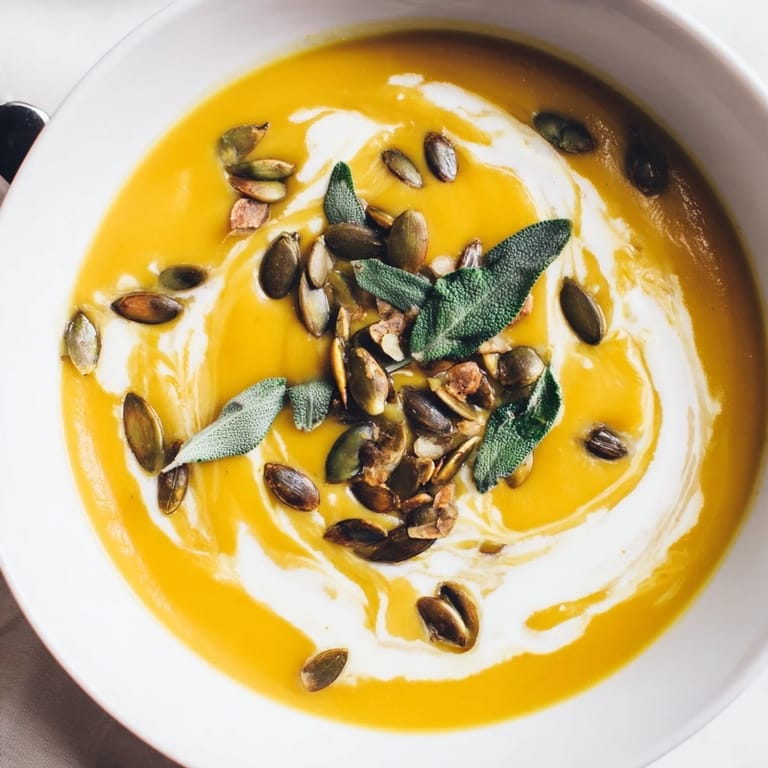
- 1/4 cup heavy cream or coconut milk (for swirling) and roasted pumpkin seeds and fresh sage leaves for garnish: The finishing touches that make a weeknight soup feel intentional.
Tired of Takeout? 🥡
Get 10 meals you can make faster than delivery arrives. Seriously.
One email. No spam. Unsubscribe anytime.
Instructions
- Prepare and roast the squash:
- Preheat your oven to 400°F and toss your cubed squash with one tablespoon of olive oil, a pinch of salt, and pepper on a lined baking sheet. Let it roast for 30 to 35 minutes, turning halfway through, until the edges turn caramelized and the flesh is so tender it practically falls apart—this is where the real sweetness develops.
- Build the base:
- While the squash is finishing, heat your remaining olive oil in a large pot over medium heat and sauté your chopped onion until it turns translucent and soft, about 4 to 5 minutes, then add your minced garlic and let it bloom for just a minute longer until the whole kitchen smells like you know what you're doing.
- Bring it all together:
- Pour your roasted squash into the pot with the onions and garlic, sprinkle in your sage and nutmeg, then pour in your vegetable broth and bring the whole thing to a gentle boil before turning the heat down to let it simmer for about 10 minutes so all the flavors start knowing each other.
- Make it silky:
- Remove the pot from heat and use an immersion blender to puree everything into smooth submission—if you're using a countertop blender instead, work in batches and be careful because hot soup likes to escape, then return it all to the pot.
- Taste and adjust:
- Give yourself permission to add more salt, more pepper, or even a whisper more nutmeg if it needs it—this is your moment to make it exactly right.
- Serve with intention:
- Ladle it into bowls and swirl in your cream or coconut milk if you're using it, scatter roasted pumpkin seeds across the top, and tuck a single fresh sage leaf on top like you spent all day on this.
 Save
Save I remember one November when I made this soup three nights in a row because my sister was going through something difficult, and somehow bringing a container of it over felt like saying things I didn't have words for. She texted me later that the soup was the thing that finally made her feel like someone understood she needed something warm and real.
Why Roasting Actually Matters
The oven does something that boiling never could—it caramelizes the natural sugars in the squash and deepens everything to a richer, more complex flavor. It's the difference between a soup that tastes like squash and a soup that tastes like something you've been thinking about all day. Plus, your house will smell incredible, which is really half the reason to make soup in the first place.
The Sage and Nutmeg Conversation
These two spices work together in a way that feels almost mathematical—the sage brings an herbal earthiness while the nutmeg adds warmth and a tiny bit of sweetness. Neither one should overpower the other, which is why the measurements matter but also why you should taste as you go. I learned this the hard way by dumping in too much nutmeg once and spending an evening that tasted like I'd made pumpkin pie soup instead of butternut squash, so measure carefully even if you're someone who usually cooks by instinct.
Serving This Soup in Different Seasons
This is a soup that knows how to adapt itself to whatever you're in the mood for, which is one of the reasons I keep making it. In fall, I lean into the warm spices and serve it with crusty bread and a glass of wine, but in winter I sometimes add a splash of cream and treat it like a special occasion dinner. If you want to make it spicier, a pinch of cayenne pepper wakes everything up without changing the essential character of the dish.
- Make it ahead and reheat gently, because freezing it works beautifully if you leave out the cream and add that when you serve it.
- Leftover soup tastes even better the next day when all the flavors have had time to settle and know each other.
- If you want to make it vegan, coconut milk swirled on top is just as luxurious as cream and brings its own flavor to the party.
 Save
Save This soup is the kind of thing that teaches you that the best recipes aren't the ones with the longest ingredient lists or the fanciest techniques—they're the ones that remind you why you started cooking in the first place. Make it when you need comfort, make it when you want to impress someone, make it because you have a squash and an afternoon, and it will never let you down.
Recipe FAQs
- → What is the best way to roast butternut squash for this dish?
Cut into uniform cubes, toss with olive oil, salt, and pepper, then roast at 400°F for 30–35 minutes until tender and caramelized.
- → Can I substitute fresh sage for dried sage?
Yes, use about 1 tablespoon of fresh sage chopped in place of 1 teaspoon dried for a fresher herbal flavor.
- → How can I make the soup creamier without dairy?
Swirl in coconut milk as a creamy, dairy-free option that complements the squash’s sweetness.
- → What spices enhance the flavor of butternut squash?
Nutmeg and sage provide warm, aromatic notes that balance the natural sweetness of butternut squash.
- → Is this dish suitable for gluten-free diets?
Yes, all main ingredients are naturally gluten-free, making it safe for gluten-sensitive individuals.