 Save
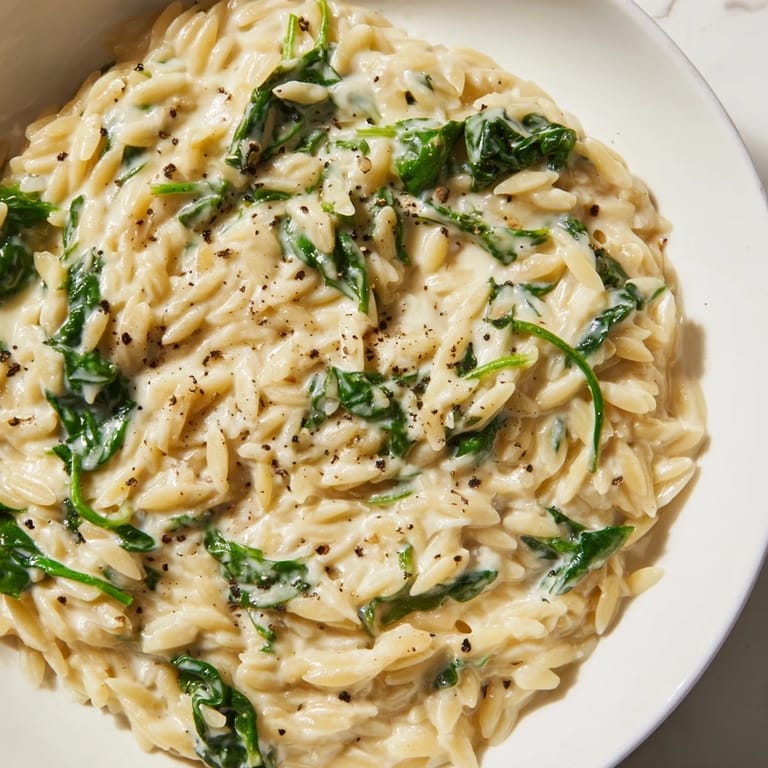
Save There's something about a rainy Tuesday when you realize you have nothing but pantry staples and a bunch of wilting spinach that somehow turns into the most comforting dinner. I was standing in my kitchen, honestly just trying to use up what was about to go bad, and I grabbed the orzo almost by accident. Twenty minutes later, I had this creamy, dreamy pasta that tasted like I'd spent hours on it, and my partner asked for seconds before I'd even sat down. That's when I knew this one was a keeper.
I made this for my friend who swears she doesn't cook, and she watched me in her tiny apartment kitchen, skeptical the whole time. When she took that first bite and got quiet for a second, then looked at me and grinned—that moment taught me that sometimes the simplest dishes are the ones people remember. She's made it three times since, and it's become her go-to when she wants to impress someone without the stress.
Ingredients
- Orzo pasta: Small, rice-shaped pasta that absorbs the creamy sauce like a dream; don't skip the toasting step or it'll taste flat.
- Butter and olive oil: The combination gives you both richness and a subtle fruity note; use unsalted so you control the salt level.
- Garlic and onion: These are your flavor base; don't rush them, let them soften into the butter first.
- Vegetable broth: Use good quality broth, not bouillon cubes; it makes a surprising difference in the final taste.
- Whole milk or half-and-half: Half-and-half gives you more creaminess without being too heavy; whole milk works fine if that's what you have.
- Parmesan cheese: Grate it fresh if you can; pre-grated has anti-caking agents that make the sauce grainy.
- Cream cheese: The secret ingredient that makes everything velvety without extra cream; let it soften first so it melts smoothly.
- Baby spinach: Fresh is better than frozen here because it wilts into the sauce elegantly; frozen works but can add extra moisture.
- Salt, pepper, and nutmeg: That tiny pinch of nutmeg wakes up the whole dish in a way people can't quite identify but absolutely taste.
Tired of Takeout? 🥡
Get 10 meals you can make faster than delivery arrives. Seriously.
One email. No spam. Unsubscribe anytime.
Instructions
- Start with the base:
- Melt butter with olive oil over medium heat, then cook the onion until it turns translucent and soft, about three minutes. You'll smell the sweetness developing, which is your signal that you're building flavor. Add the garlic after and let it wake up for just a minute—any longer and it turns bitter.
- Toast the orzo:
- Stir the pasta into the aromatics and let it sit, stirring often, for two minutes. You're looking for it to turn slightly golden and smell a bit nutty; this small step changes everything about the final texture.
- Add the liquid:
- Pour in the broth and milk together, stirring so nothing sticks to the bottom. Bring it to a gentle simmer and then lower the heat to medium-low; this isn't a boil, it's a slow, steady cook.
- Cook until creamy:
- Stir frequently—this isn't the time to walk away. The orzo will gradually absorb the liquid while releasing its starch, which thickens everything naturally. You'll know it's ready when the pasta is tender and the sauce coats the back of your spoon, about ten to twelve minutes.
- Finish with cheese:
- Cut the cream cheese into smaller pieces so it melts faster, then stir both cheeses into the hot pasta until you have a smooth, silky sauce. Taste as you go; you might need a little more salt than you think.
- Wilt in the spinach:
- Add the chopped spinach and let it cook for just a minute or two, stirring gently. It'll look like there's too much spinach, but trust me—it shrinks down to almost nothing. Season with salt, pepper, and that pinch of nutmeg if you're using it.
- Serve immediately:
- Plate it hot with extra Parmesan and a grind of black pepper on top. The dish keeps warm for a few minutes, but it's best eaten right away while everything is still silky and warm.
 Save
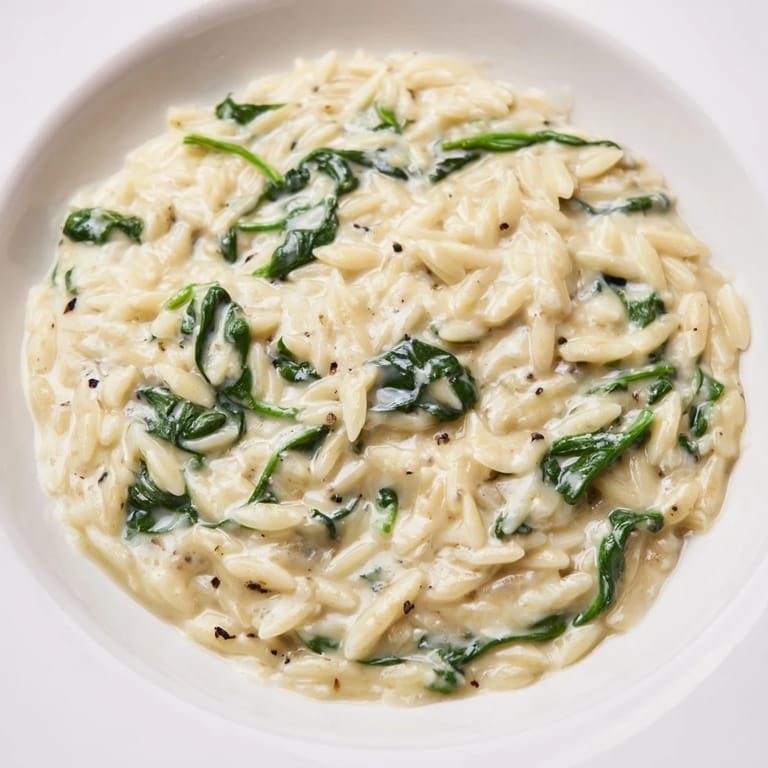
Save My mom ate this and said it reminded her of something she ate in Rome twenty years ago, which made me laugh because I'd never been to Italy and was making it in my apartment with ingredients from a regular grocery store. But that's exactly what this dish does—it transports you somewhere warmer, somewhere slower, somewhere where meals matter.
Timing and Flexibility
The whole thing takes thirty minutes start to finish, which makes it perfect for those nights when you're hungry now, not in an hour. You can chop everything while the pan heats up, so there's no real downtime where you're standing around. If you need to add vegetables or protein, just remember that anything extra should be cooked before it goes into the pan so you're not extending your cooking time.
Variations That Work
This is one of those recipes that's flexible without losing its soul. I've added sautéed mushrooms, cooked chicken, sun-dried tomatoes, and even roasted red peppers without changing the essential character of the dish. The key is not to go too crazy—this isn't a dumping ground for everything in your fridge, it's a creamy canvas that shouldn't be overcrowded. If you want something richer, swap some of the milk for heavy cream, but honestly, the cream cheese does enough work that you might not even miss it.
Wine and Serving
This pairs beautifully with a crisp white wine like Pinot Grigio or Sauvignon Blanc; the acidity cuts through the richness in the best way. As a main course it feeds four people generously, or it can be a luxurious side dish for six if you're serving it alongside something else. Either way, it's the kind of food that makes people feel cared for without you having to exhaust yourself.
- Serve it hot straight from the pan with extra Parmesan on the side.
- Leftovers can be gently reheated with a splash of milk stirred in to loosen them up.
- This freezes surprisingly well if you want to make a double batch and save one for later.
 Save
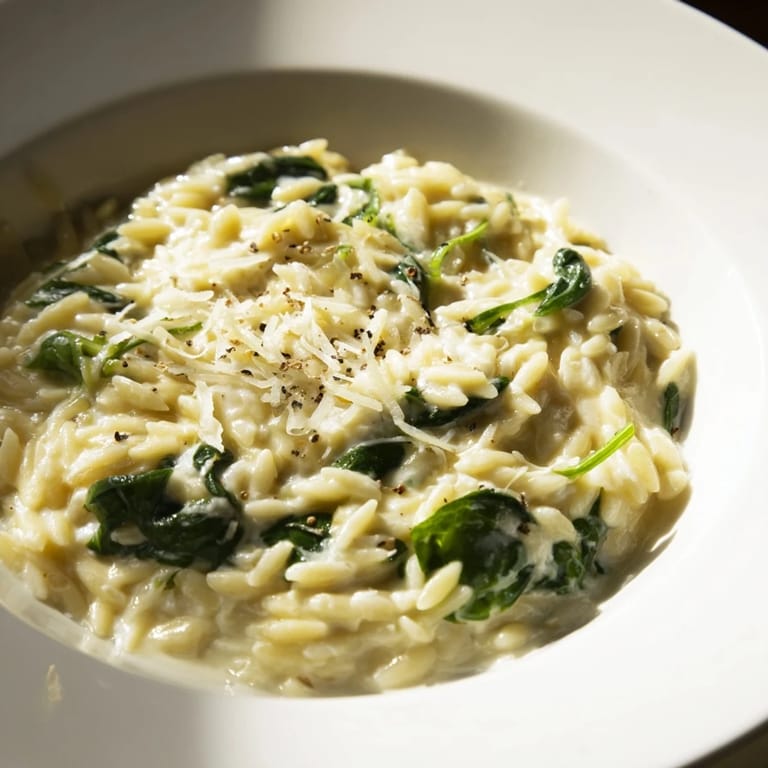
Save This pasta has become my answer to the question that sneaks up on you every evening: what's for dinner? It's turned skeptics into believers and made me feel like a good cook on nights when I've done almost nothing. That's the real magic of it.
Recipe FAQs
- → How do I prevent the orzo from sticking?
Toast the orzo lightly in butter and olive oil before adding liquids. Stir frequently during cooking to prevent clumping.
- → Can I substitute the spinach with other greens?
Yes, kale or Swiss chard work well. Add them slightly earlier as they take longer to wilt compared to spinach.
- → What can I use in place of cream cheese for creaminess?
Sour cream or mascarpone cheese can be good alternatives to maintain a rich texture.
- → Is it possible to make this dish gluten-free?
Yes, simply use gluten-free orzo or a similar rice pasta to keep it gluten-free.
- → How do I adjust the dish for added protein?
Adding cooked chicken, sautéed mushrooms, or even chickpeas enhances protein without altering the creamy texture.