 Save
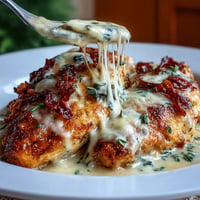
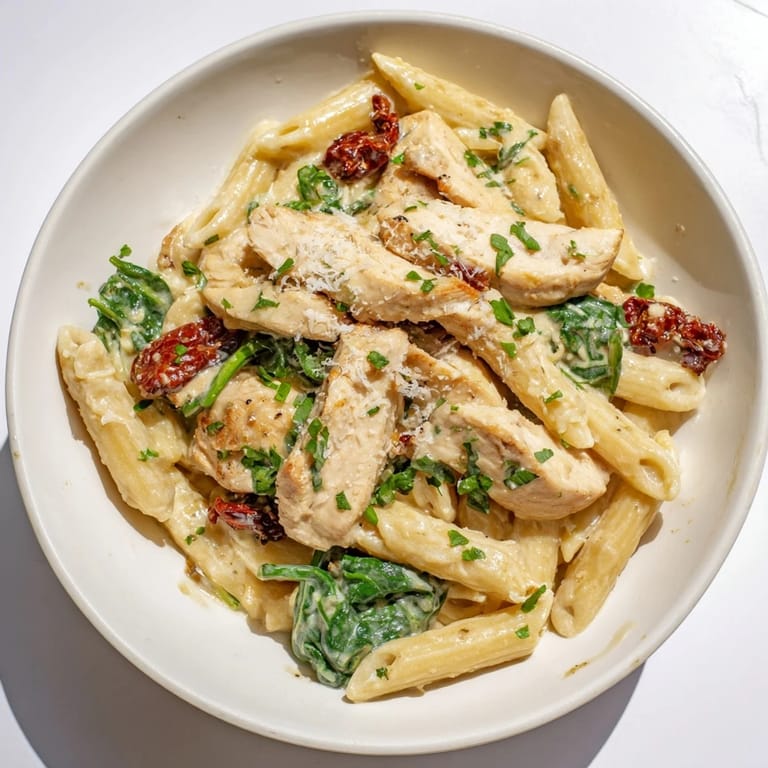
Save There's something magical about the moment cream hits a hot pan and transforms into liquid gold. I discovered this Tuscan pasta on a Tuesday night when I had leftover sun-dried tomatoes staring at me from the pantry and absolutely no plan for dinner. What started as improvisation became one of those dishes I find myself craving at odd hours, the kind that tastes like Italian countryside comfort but comes together faster than you'd expect.
I made this for my sister when she was going through a rough week, and watching her face light up after that first bite reminded me why I love cooking for people. She went back for seconds, then asked for the recipe before she'd even finished her plate, which in our family means it's officially a keeper.
Ingredients
- Penne or fettuccine, 350 g (12 oz): Penne cups the cream sauce perfectly, though fettuccine works beautifully too if you prefer ribbons that coat more evenly.
- Chicken breasts, 2 large boneless and skinless: Pound them to even thickness if you have time so they cook through at the same rate without drying out on the edges.
- Olive oil, 2 tbsp: This is your cooking fat for the chicken, so don't skip it or use a substitute with a low smoke point.
- Unsalted butter, 2 tbsp: Butter mellows the garlic and adds a richness that olive oil alone can't achieve.
- Garlic, 3 cloves minced: Fresh garlic is non-negotiable here because it's the backbone of the sauce's flavor.
- Sun-dried tomatoes in oil, 120 g (3/4 cup) drained and sliced: These concentrate all the tanginess and depth of tomato flavor into tiny, chewy bursts that you'll find in every bite.
- Chicken broth, 120 ml (1/2 cup): This deglazes the pan and adds savory body without overpowering the cream.
- Heavy cream, 240 ml (1 cup): The cream is what makes this Tuscan, so use real cream, not half-and-half, unless you prefer a lighter version.
- Parmesan cheese, 60 g (2 oz) grated: Grate it fresh if possible because pre-grated cheese contains anti-caking agents that create a slightly grainy sauce.
- Fresh baby spinach, 80 g (3 cups): The heat from the sauce wilts it down instantly, so don't panic when it looks like you're adding an enormous pile.
- Red pepper flakes, 1/4 tsp optional: A whisper of heat lifts the entire dish and cuts through the richness of the cream.
Tired of Takeout? 🥡
Get 10 meals you can make faster than delivery arrives. Seriously.
One email. No spam. Unsubscribe anytime.
Instructions
- Boil your pasta water:
- Fill a large pot with water, salt it generously until it tastes like the sea, and bring it to a rolling boil. The salt seasons the pasta from the inside out, so don't hold back.
- Cook the pasta to al dente:
- Follow package timing but start checking a minute before so you catch it at that perfect point where it still has a slight firmness in the center. Reserve 120 ml of the starchy cooking water before draining because this is your secret weapon for silky sauce consistency.
- Season and sear the chicken:
- While the pasta finishes, pat your chicken dry and season both sides with salt, pepper, and dried Italian herbs. Heat olive oil in a large skillet over medium-high heat until it shimmers, then lay in the chicken breasts without moving them for the first few minutes so they develop a golden crust.
- Cook chicken through:
- After 5 to 6 minutes, flip and cook the other side for another 5 to 6 minutes until the thickest part registers 165°F on a thermometer or the juices run clear. Transfer to a plate and let it rest for 5 minutes, which allows the fibers to relax and stay juicy when you slice it.
- Build the sauce foundation:
- In the same skillet without washing it, melt butter over medium heat and add your minced garlic, stirring constantly for about 1 minute until the aroma fills your kitchen but before it browns.
- Add sun-dried tomatoes and deglaze:
- Stir in the sun-dried tomatoes for a minute to warm them through and release their oils, then pour in the chicken broth, scraping the bottom of the pan with your wooden spoon to capture all those flavorful browned bits.
- Create the creamy base:
- Lower the heat to medium-low and pour in the heavy cream, stirring constantly. Add the grated Parmesan and red pepper flakes if using, simmering gently for 2 to 3 minutes until the sauce thickens slightly and coats the back of a spoon.
- Wilt in the spinach:
- Add the fresh baby spinach all at once and stir for just a minute or two until it transforms from bright green leafy piles into silky strands folded throughout the sauce.
- Combine everything:
- Slice your rested chicken thinly, then add it and the cooked pasta to the skillet, tossing everything together gently. If the sauce seems thick, add reserved pasta water one splash at a time until you reach that creamy, coating consistency you're after.
- Final seasoning and serve:
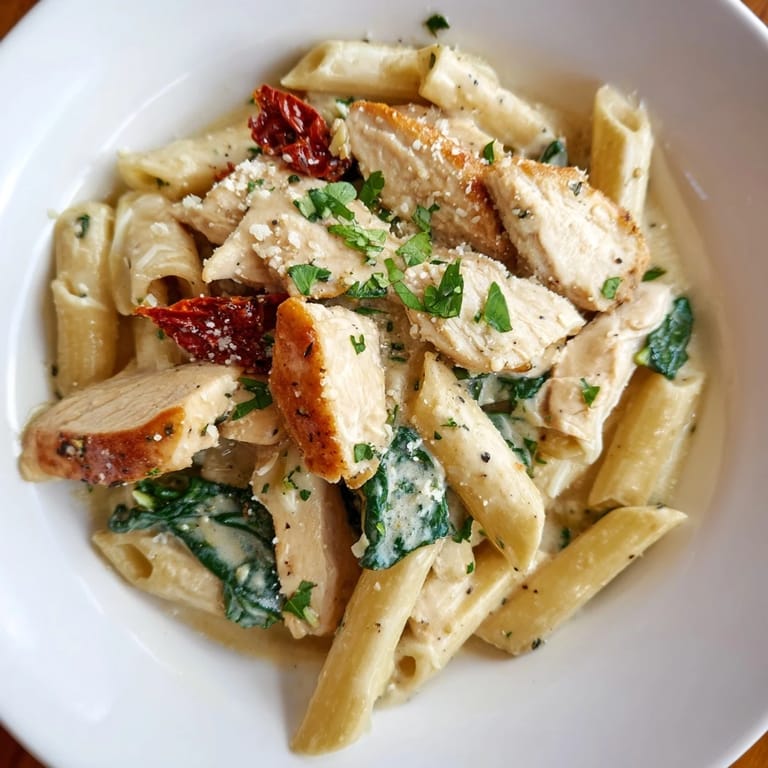
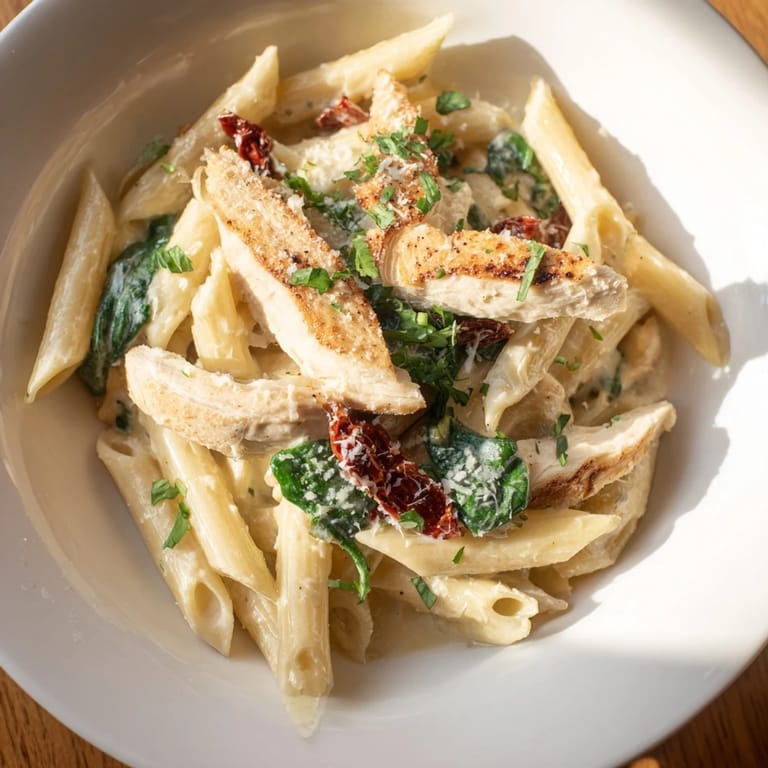
- Taste and adjust salt and pepper if needed, then transfer to bowls and finish with fresh basil or parsley and a shower of extra Parmesan.
 Save
Save I'll never forget the quiet moment at my dinner table when everyone stopped talking to focus entirely on eating, forks moving steadily from plate to mouth with the kind of contentment that only a really good dish can inspire. That's when I knew this pasta had earned its place in regular rotation.
The Power of Brown Bits
Those crusty, caramelized bits stuck to the bottom of your skillet after the chicken finishes cooking are liquid gold in disguise. When you pour in that chicken broth and scrape with your wooden spoon, you're essentially dissolving all that concentrated chicken flavor and golden crust into the sauce, building layers of taste that you simply can't achieve by starting fresh. This technique, called deglazing, is one of those kitchen moves that feels like cheating because it makes everything taste so much better with barely any extra effort.
Cream Sauces Without Fear
The biggest myth about cream sauces is that they're tricky and temperamental, which is why so many people stick to red sauce instead. The truth is simpler: keep your heat low to medium, never let it boil, and add your cream slowly while stirring. Parmesan contributes both flavor and a subtle thickening power, which means you don't need cornstarch or flour hiding in your sauce.
Making It Your Own
The beauty of this dish is how forgiving it is to customization. I've made it with grilled shrimp instead of chicken on nights when I'm craving seafood, and it transforms completely while keeping the same soul. Other times I'll add mushrooms sautéed alongside the garlic, or roasted red peppers instead of sun-dried tomatoes, or finish with a splash of white wine instead of all broth.
- Use half-and-half instead of heavy cream if you want something lighter, though the sauce will be thinner and less luxurious.
- Fresh pasta cooks so much faster than dried that you might want to time it to finish right as the sauce comes together rather than ahead of time.
- A pinch of nutmeg stirred into the finished sauce adds an almost imperceptible warmth that makes people ask what your secret ingredient is.
 Save
Save This pasta has become my answer to the question what's for dinner when I want something that feels special without spending hours in the kitchen. It's comfort and elegance on the same plate, and that's exactly the kind of magic I'm always chasing in the kitchen.
Recipe FAQs
- → What type of pasta works best for this dish?
Penne or fettuccine are ideal choices as they hold the creamy sauce well, enhancing each bite.
- → Can I substitute the chicken for another protein?
Grilled shrimp or turkey can replace chicken for variety, maintaining the dish's balance.
- → How can I make the sauce lighter?
Substituting half-and-half for heavy cream reduces richness without compromising flavor.
- → What herbs complement this dish?
Dried Italian herbs in seasoning and fresh basil or parsley as garnish provide aromatic layers.
- → Can this dish be adapted for gluten-free diets?
Using gluten-free pasta allows this hearty meal to suit gluten-sensitive individuals.