 Save
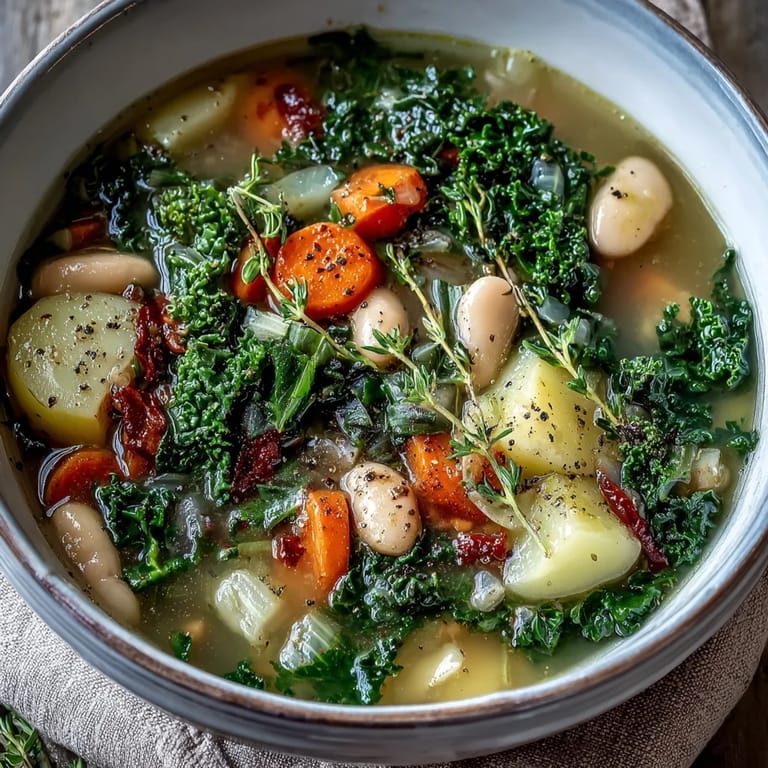
Save The first time I made this kale soup was during a particularly challenging winter when everyone around me seemed to be fighting off colds. I was thumbing through my grandmother's recipe collection when I found a weathered card with a similar soup recipe, its edges worn from frequent handling. The rich aroma that filled my kitchen that day felt like a warm embrace against the biting chill outside my windows, and I've been making variations ever since.
Last autumn, when my sister was recovering from surgery, I brought over a big container of this kale soup. She called me the next day saying she'd eaten it for both lunch and dinner, and could I please share the recipe. There's something profoundly healing about offering someone a meal that nourishes on multiple levels, and watching her strength return spoonful by spoonful made this simple recipe feel like medicine.
Ingredients
- Kale: I've found that removing those tough stems completely is worth the extra few minutes, as they never quite soften enough no matter how long you simmer them.
- Cannellini beans: These creamy white beans practically melt into the broth, giving the soup a subtle richness that makes it feel indulgent despite being so wholesome.
- Lemon juice: This might seem like a small addition, but that bright splash of acidity at the end lifts all the flavors and cuts through the earthiness of the kale.
- Vegetable broth: I once made this with a mushroom-based broth and the umami depth it added was remarkable, though any good quality vegetable broth will create a lovely foundation.
Tired of Takeout? 🥡
Get 10 meals you can make faster than delivery arrives. Seriously.
One email. No spam. Unsubscribe anytime.
Instructions
- Build your flavor base:
- Heat the olive oil in your largest soup pot and add those finely chopped onions, stirring until they become translucent and your kitchen begins to fill with their sweet aroma. When you add the garlic, you'll notice an immediate fragrant shift that tells you good things are happening.
- Layer in the vegetables:
- As you add the carrots, celery, and potato, listen for that satisfying sizzle that signals they're beginning to caramelize slightly. I like to stir occasionally but not constantly, letting some pieces get a bit more color than others for complexity.
- Introduce the star ingredient:
- When you add the kale, the pot will look alarmingly full, but watch how quickly it wilts down as you gently fold it into the hot vegetables. You'll see its vibrant green deepen slightly as it softens.
- Create the brothy foundation:
- Pour in the vegetable broth along with the dried thyme and cumin, which will bloom in the hot liquid and release their aromatic oils. As the soup comes to a gentle boil, you'll see the colors intensify and meld together.
- Simmer to tenderness:
- Reduce the heat to maintain a gentle simmer where small bubbles occasionally break the surface. During this 20-minute window, the vegetables will surrender their individual firmness and begin to harmonize.
- Add protein and brightness:
- Stir in those creamy cannellini beans and let them warm through for just a few minutes. That final splash of lemon juice might seem minor, but it's like turning up the volume on all the flavors you've built.
 Save
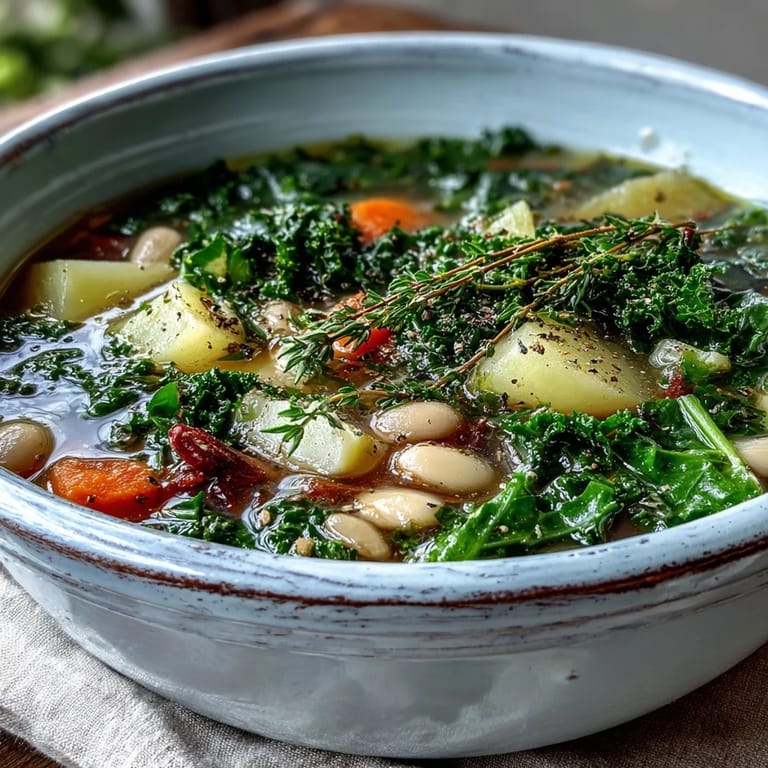
Save During the pandemic lockdowns, this soup became a weekly ritual in our household. Every Thursday, I'd simmer a pot while my partner worked from home, and we'd sit down to steaming bowls as we shared the highs and lows of our strange new reality. Even now, the familiar scent of this kale soup cooking brings back a sense of groundedness during that untethered time, reminding me how food can anchor us when everything else feels uncertain.
Seasonal Variations
Summer brings the possibility of using fresh garden kale, which has a tenderness store-bought varieties rarely match. I've discovered that adding a handful of fresh herbs like basil or parsley in the warmer months lightens the soup considerably, making it suitable even on warm evenings. Winter versions benefit from a longer simmer and perhaps a parmesan rind thrown in for depth, creating something that can stand up to the coldest days.
Serving Suggestions
While this soup is certainly complete on its own, I've found it pairs beautifully with a thick slice of olive oil-brushed sourdough toasted until golden. For dinner parties, I serve smaller portions in mugs as a starter, often with a tiny swirl of good olive oil floating on top and a few flakes of Maldon salt. The visual contrast of the deep green soup against white ceramic never fails to elicit appreciative murmurs from guests.
Storage and Reheating
This kale soup actually improves with a day of rest in the refrigerator, allowing the flavors to meld and deepen in a way that transforms it entirely. I've learned through trial and error that it freezes beautifully for up to three months, though the potatoes might break down slightly upon thawing.
- When refrigerating, cool the soup completely before transferring to airtight containers to prevent condensation from diluting the flavors.
- For reheating, gentle stovetop warming maintains the texture better than microwave blasting, which can make the kale stringy.
- If the soup thickens too much during storage, add a splash of broth or water when reheating rather than diluting the carefully built flavors with too much liquid.
 Save
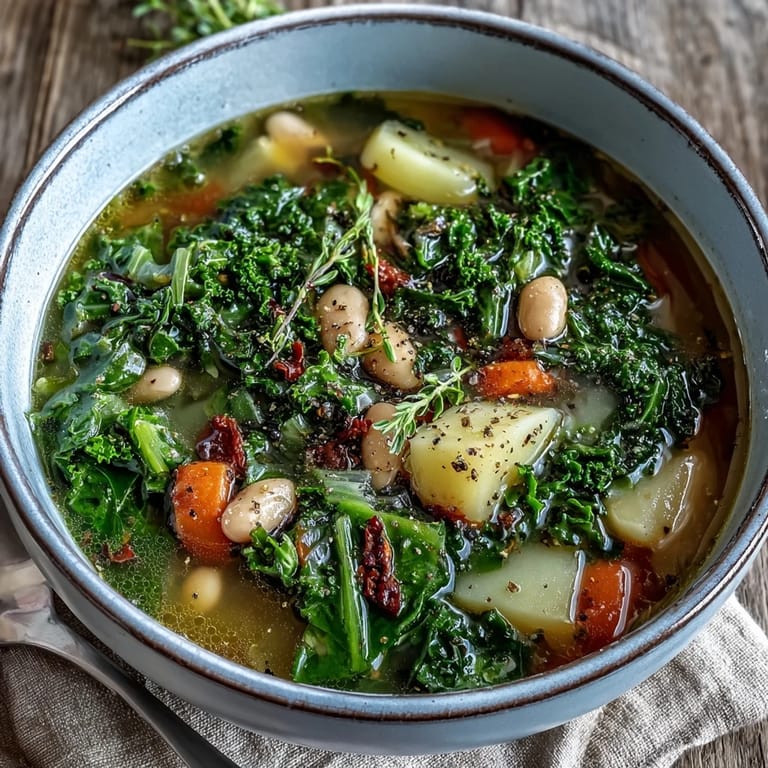
Save There's a quiet magic in transforming humble ingredients into something that nourishes so completely. This kale soup reminds me that good cooking isn't always about complexity or novelty, but about honoring simple ingredients with care.
Recipe FAQs
- → Can I use different types of beans?
Absolutely. Chickpeas, lentils, or Great Northern beans work beautifully as substitutes for cannellini beans. Each brings a slightly different texture and flavor profile while maintaining the soup's heartiness.
- → How should I store leftovers?
Store cooled soup in an airtight container in the refrigerator for up to 5 days. The flavors continue to develop, making leftovers even more delicious. Freeze portions for up to 3 months if you'd like to meal prep.
- → Is this soup freezer-friendly?
Yes, it freezes exceptionally well. Cool completely before transferring to freezer-safe containers, leaving some space for expansion. Thaw overnight in the refrigerator before reheating gently on the stovetop.
- → Can I add more vegetables?
Certainly. Zucchini, bell peppers, spinach, or Swiss chard make excellent additions. Add quicker-cooking vegetables like spinach during the last 5 minutes of simmering to prevent them from becoming too soft.
- → What can I serve with this soup?
Crusty gluten-free bread, crackers, or a simple side salad round out the meal perfectly. A sprinkle of grated Parmesan or a drizzle of olive oil adds extra richness just before serving.
- → How do I prevent the kale from becoming too mushy?
Add the kale during the last stages of simmering and avoid overcooking. The leaves should be wilted and tender but still retain some structure. If meal prepping, slightly undercook the kale as it will continue cooking when reheated.