 Save
Save My neighbor knocked on the door one Tuesday holding a jar of homemade honey and asked if I had any mustard. She was craving something sweet and savory, and within twenty minutes we had this skillet bubbling on the stove. The smell pulled her husband over from next door, and we all stood around my kitchen counter with forks, dipping crusty bread into the sauce. That spontaneous dinner became a monthly tradition, and now I keep extra mustard stocked just in case.
I made this for my sister the night before her big presentation, and she barely spoke through dinner. She just kept nodding and pointing at her plate with her fork. Later she texted me asking for the recipe, and I realized it had become her comfort meal before stressful days. Now every time I sear chicken in that skillet, I think of her sitting at my table, finally relaxed.
Ingredients
- Boneless, skinless chicken breasts (about 1½ lbs): Pat them completely dry before seasoning so they get a proper golden sear instead of steaming in the pan.
- Dijon mustard (1/3 cup): This is the backbone of the sauce, giving it sharpness and body without any flour or cream.
- Honey (1/4 cup): Use raw or local honey if you can, it adds a floral note that processed honey just cannot match.
- Whole-grain mustard (2 tablespoons): The seeds add texture and a gentle pop of flavor that keeps the sauce interesting.
- Garlic (3 cloves, minced): Fresh garlic blooms in the warm oil and perfumes the entire dish, do not skip this step.
- Apple cider vinegar (1 tablespoon): Just enough acidity to cut through the sweetness and brighten the whole pan.
- Low-sodium chicken broth (1/2 cup): This loosens the sauce and helps it coat the chicken as it simmers.
- Fresh thyme leaves (1 teaspoon): I strip the leaves right off the stem into the skillet, the aroma is worth the extra seconds.
- Fresh rosemary (1 teaspoon, finely chopped): Chop it fine so every bite gets a hint without overwhelming the honey and mustard.
- Kosher salt (1/2 teaspoon) and black pepper (1/4 teaspoon): Season the chicken well before it hits the pan, it makes all the difference in flavor depth.
- Olive oil (2 tablespoons): A good quality olive oil helps the chicken brown evenly and adds a subtle richness.
- Fresh parsley (optional, for garnish): A handful of chopped parsley at the end adds color and a fresh finish.
Tired of Takeout? 🥡
Get 10 meals you can make faster than delivery arrives. Seriously.
One email. No spam. Unsubscribe anytime.
Instructions
- Season the chicken:
- Pat each breast completely dry with paper towels, then sprinkle both sides with salt and pepper. Dry chicken sears beautifully and locks in juice.
- Sear the chicken:
- Heat olive oil in a large skillet over medium-high heat until it shimmers, then lay the chicken breasts in without crowding. Let them sear undisturbed for 3 to 4 minutes per side until golden brown, then transfer to a plate.
- Cook the garlic:
- Lower the heat to medium and add the minced garlic to the skillet. Stir for about 30 seconds until it smells sweet and toasted, watching closely so it does not burn.
- Build the sauce:
- Whisk in the Dijon mustard, whole-grain mustard, honey, apple cider vinegar, and chicken broth. Bring the mixture to a gentle simmer, scraping up any browned bits from the bottom of the pan.
- Add herbs and simmer:
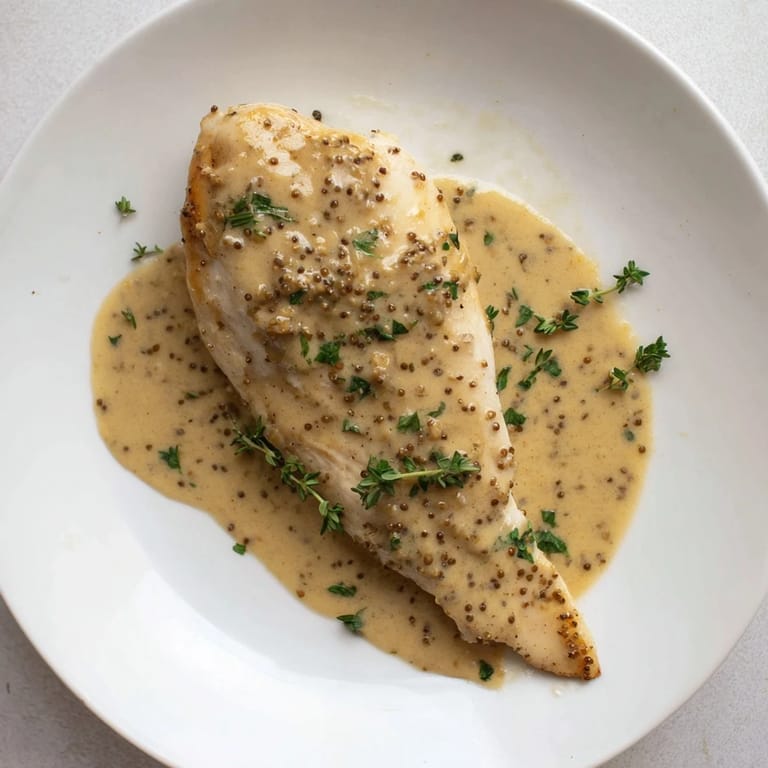
- Stir in the thyme and rosemary, then nestle the chicken breasts back into the skillet and spoon sauce over the tops. Cover and simmer for 10 to 12 minutes until the chicken reaches 165°F internally.
- Thicken the sauce:
- Remove the lid, increase the heat slightly, and let the sauce bubble uncovered for 2 to 3 minutes. It will thicken just enough to coat the back of a spoon.
- Garnish and serve:
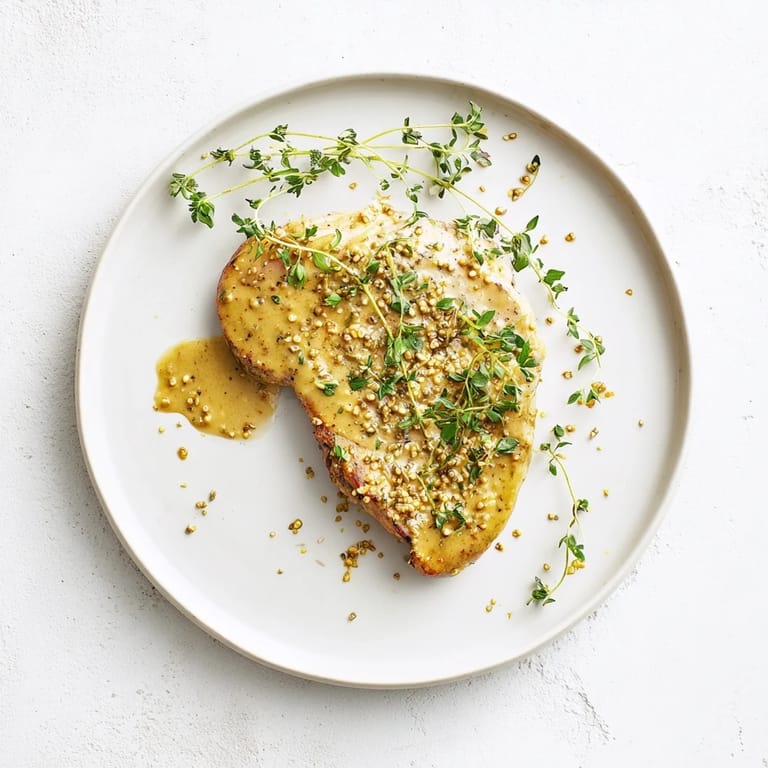
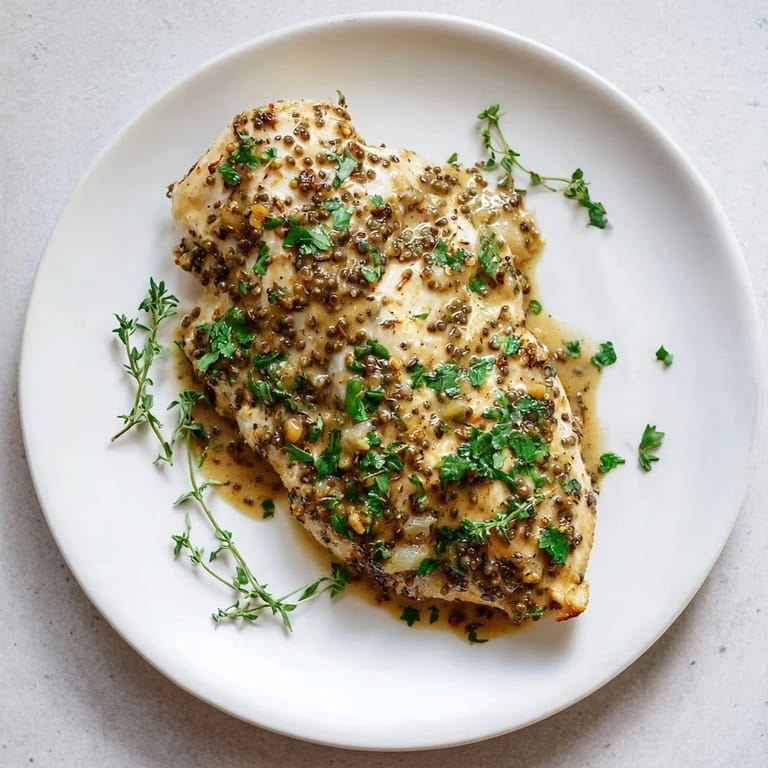
- Sprinkle with chopped parsley if you like, then serve straight from the skillet. The sauce is perfect for spooning over rice or mashed potatoes.
 Save
Save One evening I served this with roasted carrots and a bottle of Chardonnay, and my friend said it tasted like something she would order at a restaurant. That comment stuck with me because this dish really does feel special, even though it is made in one pan on a weeknight. It is proof that simple ingredients and a little attention can turn dinner into an occasion.
Pairing and Serving Ideas
I love spooning this over buttery mashed potatoes so the sauce pools in the center, but it is just as good with fluffy white rice or even a pile of roasted vegetables. The sauce is rich enough to stand on its own but not so heavy that you need to balance it with something plain. A crisp green salad with lemon vinaigrette on the side cuts through the sweetness and makes the whole plate feel complete.
Substitutions and Variations
If you prefer dark meat, swap in boneless skinless chicken thighs and add a few extra minutes to the cooking time since they take longer to reach temperature. For a creamier sauce, I sometimes stir in a couple tablespoons of heavy cream at the very end, which turns it silky and indulgent. You can also use maple syrup instead of honey for a deeper, earthier sweetness that pairs beautifully with the rosemary.
Storage and Reheating
Leftovers keep well in an airtight container in the fridge for up to three days, and the flavors actually deepen overnight. Reheat gently in a covered skillet over low heat with a splash of chicken broth to loosen the sauce, or microwave in 30 second intervals until warmed through. I have even shredded leftover chicken and tossed it with the sauce over pasta, and it was just as satisfying the second time around.
- Always store the chicken and sauce together so the meat stays moist.
- Freeze individual portions in silicone containers for an easy future dinner.
- Reheat on the stovetop instead of the microwave if you want to keep the sauce glossy.
 Save
Save This skillet has pulled me through busy weeks and last minute guests more times than I can count. It is the kind of recipe that feels like a hug, and I hope it becomes that for you too.
Recipe FAQs
- → How do I know when the chicken is fully cooked?
The chicken is done when it reaches an internal temperature of 165°F (74°C) when measured with a meat thermometer at the thickest part. The meat should no longer be pink inside and should be opaque throughout.
- → Can I use chicken thighs instead of breasts?
Yes, chicken thighs are an excellent substitute and will give you juicier, more flavorful meat. You may need to increase the simmering time by 3-5 minutes since thighs are thicker than breasts.
- → How can I make the sauce thicker?
After removing the lid, increase the heat slightly and let the sauce simmer uncovered for 2-3 minutes. For a creamier consistency, stir in 2 tablespoons of heavy cream during the final minute of cooking.
- → What are good side dishes to serve with this?
This pairs beautifully with rice, creamy mashed potatoes, roasted root vegetables, or a fresh green salad. The tangy sauce complements starchy sides particularly well.
- → Is this gluten-free?
The base is gluten-free, but you must verify that your chicken broth and Dijon mustard labels confirm they're gluten-free, as some brands may contain hidden gluten. Always check labels when preparing for gluten-free diets.
- → Can I make this ahead of time?
You can prepare the sauce ingredients ahead and store them separately. However, it's best to sear and cook the chicken fresh to maintain optimal texture. Leftovers store well in the refrigerator for up to 3 days.