 Save
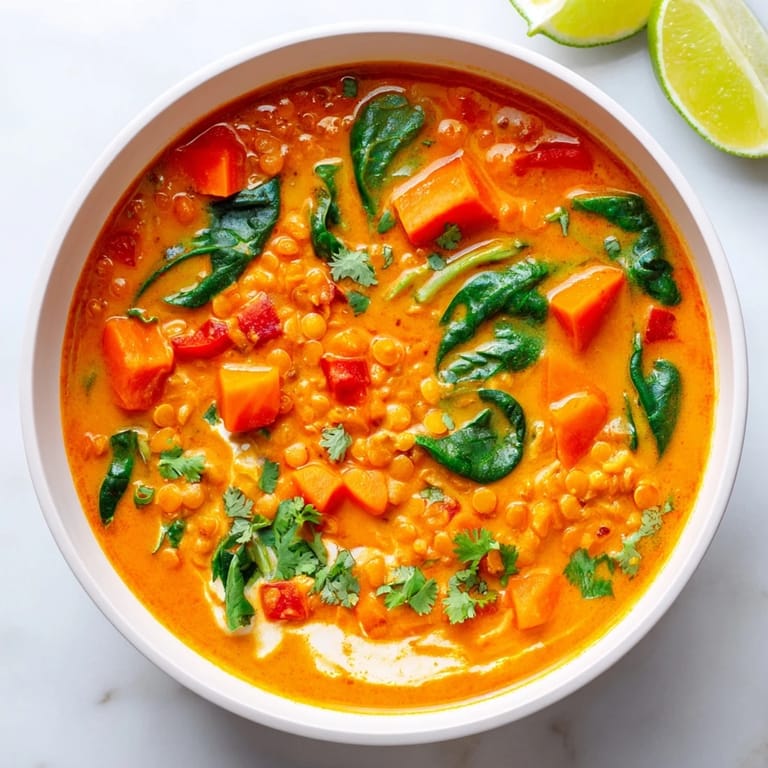
Save There's something about the smell of curry paste hitting hot oil that instantly transports me to a rainy afternoon when a friend showed up at my door with leftover coconut milk and a craving for something warm. We didn't have a plan, just ingredients scattered across my counter and the vague memory of a soup she'd eaten once. What emerged was this golden, fragrant bowl of comfort that's become my go-to when I need to feel both nourished and a little adventurous.
I made this for my partner on a night when he was exhausted from work, and he had seconds without saying a word—just that satisfied look of someone who's been fed exactly what their body needed. The bright cilantro and lime at the end felt like waking up after the warming spices had done their thing, and somehow that simple contrast made the whole meal feel complete.
Ingredients
- Red lentils: They cook down faster than other varieties and add natural body to the broth; rinsing them removes excess starch so your soup stays vibrant instead of turning murky.
- Onion, garlic, and ginger: This trio is where the flavor foundation lives—don't skip the ginger, it adds warmth that complements the curry paste perfectly.
- Red curry paste: Start with three tablespoons and taste as you go; some brands are spicier than others, and you can always add more.
- Coconut milk: Full-fat is worth it here; it creates that silky mouthfeel that makes the soup feel indulgent.
- Carrot, bell pepper, and zucchini: They stay slightly tender and add sweetness and texture; the zucchini is optional but adds subtle earthiness.
- Baby spinach: Wilts in at the very end so it stays bright green and doesn't turn into mush.
- Vegetable broth: Use a good quality broth if you can; it's the backbone of the whole soup.
- Lime juice and cilantro: These finish the soup with brightness that cuts through the richness and makes everything taste fresher.
Tired of Takeout? 🥡
Get 10 meals you can make faster than delivery arrives. Seriously.
One email. No spam. Unsubscribe anytime.
Instructions
- Start with your base:
- Heat oil in a large pot over medium heat and sauté the diced onion for about three minutes until it softens and turns translucent. You'll know it's ready when the edges start to turn golden and the whole kitchen smells like you're doing something intentional.
- Build the aromatics:
- Stir in the garlic and ginger and let them cook for one minute—this short time releases their essential oils into the oil without letting them burn. You're essentially infusing your base with deep, warm flavor.
- Bloom the curry:
- Add the red curry paste and turmeric and cook for one to two minutes while stirring constantly. This step matters more than you'd think; the heat helps the spices open up and lose that raw paste flavor.
- Add your vegetables:
- Toss in the carrot, bell pepper, and zucchini and sauté for two to three minutes until they soften slightly at the edges. They'll continue cooking once the liquid goes in, so you're just starting the process here.
- Build the soup:
- Stir in the lentils, coconut milk, vegetable broth, and soy sauce and bring to a boil, then lower the heat and simmer uncovered for twenty to twenty-five minutes. The lentils will gradually soften and start breaking down slightly, thickening the broth naturally.
- Finish with greens:
- Add the spinach and cook for about two minutes just until wilted. Stir in the lime juice and taste for salt, adjusting as needed.
- Serve with intention:
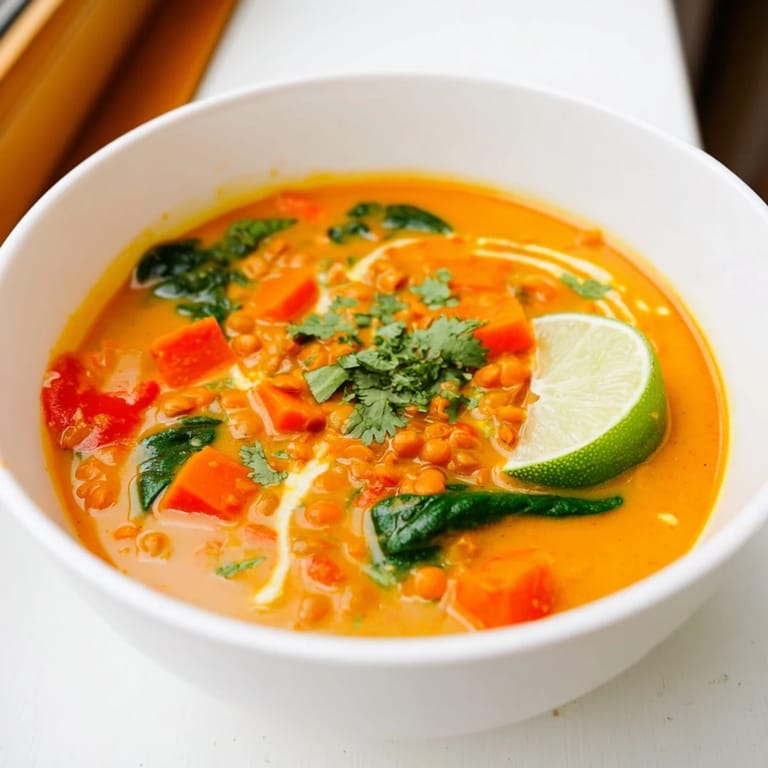
- Ladle into bowls and top with fresh cilantro and serve with lime wedges on the side so people can adjust the brightness to their taste.
 Save
Save This soup taught me that sometimes the most satisfying meals are the ones you build without overthinking, letting each ingredient do what it naturally does. There's something grounding about watching red lentils soften into a creamy base while the kitchen fills with the smell of curry and coconut.
Adjusting the Heat
If you like your curry milder, start with two tablespoons of paste and taste before adding more. If you want heat, dice a fresh red chili and add it alongside the curry paste, or finish the soup with a pinch of chili flakes. I've found that the heat builds slightly as it sits, so if you're serving to guests, err toward less spice and let people adjust with lime and cilantro.
Variations and Swaps
Kale works beautifully instead of spinach if that's what you have, though it needs a few extra minutes to wilt. You can swap the zucchini for cauliflower, mushrooms, or snap peas depending on the season or what's in your crisper drawer. Some nights I add a splash of fish sauce instead of soy sauce for deeper umami, but keep the coconut aminos swap if you're soy-free.
Serving and Storage
This soup is perfect on its own, but serving it with jasmine rice or warm naan transforms it into something more substantial. Leftovers keep well in the fridge for four days and actually taste better the next day once the flavors have had time to settle and deepen.
- Reheat gently on the stovetop and add a splash of broth if it's thickened too much.
- You can freeze it for up to three months, though the spinach will lose its vibrant color.
- If you're meal prepping, keep the cilantro garnish separate and add it fresh just before eating.
 Save
Save This is the kind of soup that feels like a hug in a bowl—warming without being heavy, flavorful without being complicated. Make it once and you'll find yourself reaching for it again on nights when you need something both nourishing and a little bit special.
Recipe FAQs
- → What type of lentils work best?
Red lentils are ideal as they cook quickly and break down to create a creamy texture.
- → Can I adjust the spice level?
Yes, modify the amount of red curry paste to control the heat, and add chili flakes for extra spice.
- → What can I substitute for coconut milk?
Full-fat coconut milk provides the creaminess; however, soy or almond milk may be used for a lighter version.
- → How to make it gluten-free?
Use tamari instead of soy sauce and verify that the curry paste and broth are gluten-free.
- → What garnishes complement this dish?
Fresh cilantro and lime wedges add brightness and fresh herbal notes to the finished dish.