 Save
Save There's something about the way maple syrup hits a hot pan that makes me pause every time. Years ago, I was trying to impress someone with dinner and grabbed a jar without thinking—it was the sweet-and-savory moment I didn't know I needed. Now, this maple Dijon chicken is the recipe I reach for when I want something that tastes like I spent hours in the kitchen but doesn't demand it.
I made this for a small group last autumn when the kitchen was cool enough to turn on the oven without heating the whole house. Everyone went quiet for a moment after that first bite, and then someone asked for the recipe before they'd even finished their plate. That's when I knew I'd found something worth keeping.
Ingredients
- Bone-in, skin-on chicken thighs (8 pieces, about 1.2 kg): Skip the breasts—thighs stay moist and forgiving, and that skin gets impossibly crispy when it meets heat.
- Pure maple syrup (1/4 cup): Real maple, not the pancake stuff; it makes an actual difference in how the glaze caramelizes.
- Dijon mustard (3 tbsp): The tangy backbone that keeps this from tasting like candy.
- Olive oil (2 tbsp): Helps the glaze stick and deepens the browning.
- Apple cider vinegar (2 tbsp): Cuts through the richness with a gentle brightness.
- Garlic (2 cloves, minced): Raw garlic in the glaze softens slightly in the oven and adds depth.
- Fresh thyme (1 tbsp, or 1 tsp dried): Earthy and classic—dried works just fine if fresh isn't around.
- Smoked paprika (1/2 tsp): A whisper of smokiness that makes people ask what your secret is.
- Baby potatoes (400 g, halved): They cook at roughly the same pace as the chicken and soak up all those pan juices.
- Carrots (250 g, cut into 2-inch pieces): Caramelize beautifully and add natural sweetness.
- Red onion (1, cut into wedges): Turns soft and jammy by the time everything's done.
- Kosher salt and freshly ground black pepper: Season generously—chicken can handle it.
Tired of Takeout? 🥡
Get 10 meals you can make faster than delivery arrives. Seriously.
One email. No spam. Unsubscribe anytime.
Instructions
- Get your oven ready and organize your pan:
- Preheat to 220°C (425°F) and line a large baking sheet with parchment or foil. This matters less for cooking and more for preserving your sanity during cleanup.
- Dry those thighs like you mean it:
- Pat the chicken completely dry with paper towels—moisture is the enemy of crispy skin. Season both sides generously with salt and pepper and let them sit while you make the glaze.
- Whisk the glaze until it's glossy:
- Combine maple syrup, Dijon, olive oil, vinegar, minced garlic, thyme, and smoked paprika in a small bowl. It should smell like autumn and promise.
- Prepare the vegetables with intention:
- Toss potatoes, carrots, and onion on the sheet pan with a drizzle of olive oil, salt, and pepper. Spread them in a single layer—crowding them means they steam instead of roast.
- Nestle the chicken skin-side up:
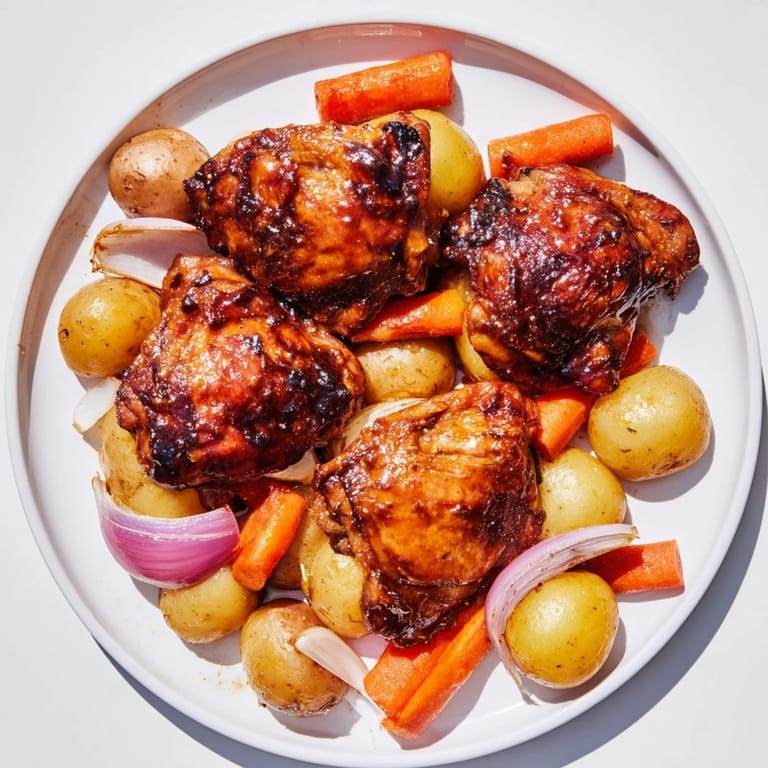
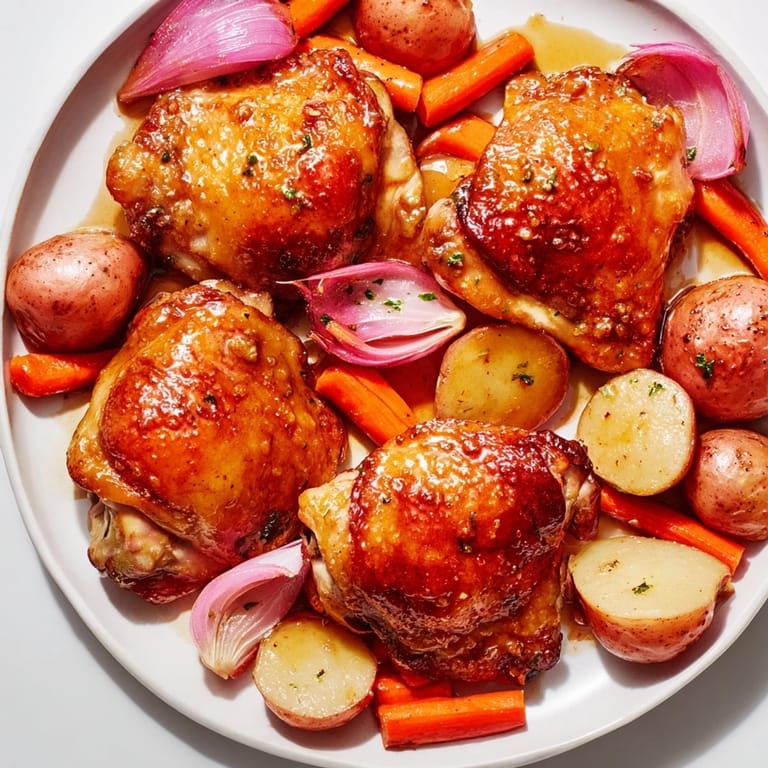
- Arrange thighs among the vegetables, then brush each one generously with glaze. Save about 2 tablespoons for a final brush later—this layering is what builds that mahogany finish.
- Roast for the first stretch:
- Into the oven for 30 minutes without peeking too much. The chicken will start releasing its own juices, and the vegetables will begin to soften.
- Brush and finish:
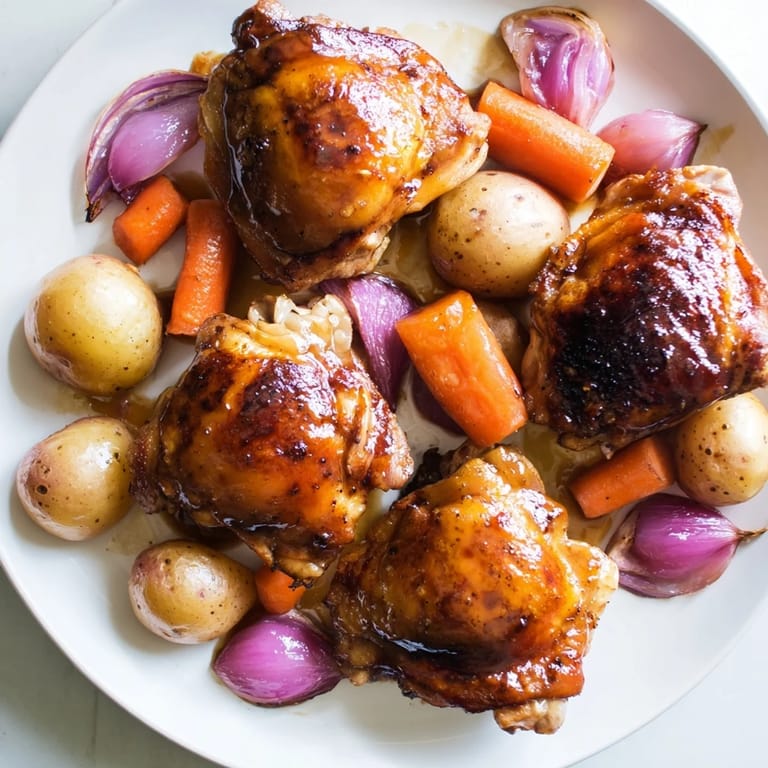
- Pull the pan out, brush the chicken with that reserved glaze, then return it for another 5 to 10 minutes until the skin is caramelized and an instant-read thermometer reads 74°C (165°F) at the thickest part of the thigh.
- Let it rest briefly:
- Five minutes might feel short, but it lets the juices settle back into the meat. Tear some extra thyme leaves over the top if you're feeling fancy.
 Save
Save This dish became a regular thing because it sits in that sweet spot between effort and ease. It's the kind of meal that makes people feel cared for without making you feel stressed.
Variations and Swaps
The vegetables here are more of a suggestion than a rule. I've roasted this with sweet potatoes when I wanted something richer, and it was just as good. Parsnips work beautifully, and Brussels sprouts get these crispy edges that catch all the pan juices. In winter, when I'm tired of root vegetables, I've used a mix of things I had around and nobody complained.
About the Chicken
Bone-in, skin-on thighs are really the point here—they're nearly impossible to dry out, and the skin gets that crackling quality that makes you remember why you liked cooking in the first place. I've made this with boneless thighs when they were on sale, and while they work, they need about 5 minutes less in the oven and don't have quite the same textural magic. Dark meat stays tender in ways white meat simply doesn't, which is why this weeknight meal actually tastes like something special.
Serving and Pairing
This is a complete meal on a single pan, but it pairs beautifully with something bright on the side—a simple green salad with a sharp vinaigrette, or crusty bread to catch the pan juices. A crisp Chardonnay or dry Riesling cuts through the sweetness of the glaze and feels unexpectedly elegant for something this casual.
- Serve straight from the pan for a relaxed, generous feel.
- Leftovers are honest and good—shred the meat and toss it back with the vegetables for lunch.
- This recipe scales easily; just give yourself a couple extra minutes in the oven for a full sheet pan.
 Save
Save This recipe stopped being something I made when I was trying to impress and became something I make because it genuinely tastes good and doesn't demand much of me. That's the best kind of dinner to have in rotation.
Recipe FAQs
- → What cut of chicken works best?
Bone-in, skin-on chicken thighs provide the most flavor and juiciness, though boneless thighs can be used with a slightly shorter cook time.
- → Can I substitute the vegetables?
Yes, sweet potatoes, parsnips, or Brussels sprouts are excellent alternatives to the baby potatoes, carrots, and red onions.
- → How do I ensure crispy skin?
Pat the chicken dry before seasoning and use skin-on thighs. Brushing with the maple Dijon glaze at the end helps caramelize the skin.
- → What temperature should I roast at?
Roast at 220°C (425°F) for optimal caramelization and thorough cooking.
- → What herbs enhance the flavor?
Fresh or dried thyme adds a lovely earthy note that complements the maple and Dijon flavors well.