 Save
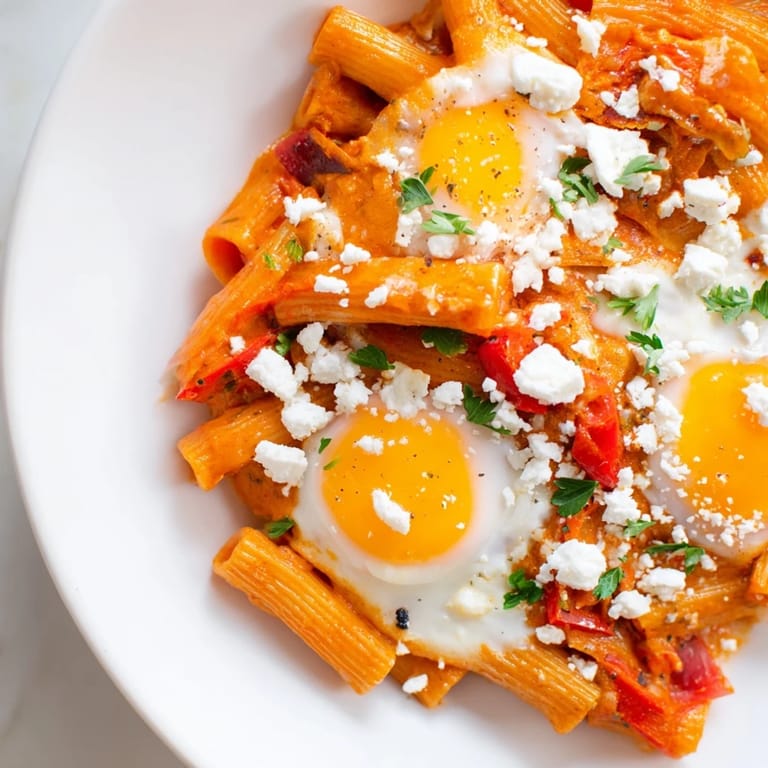
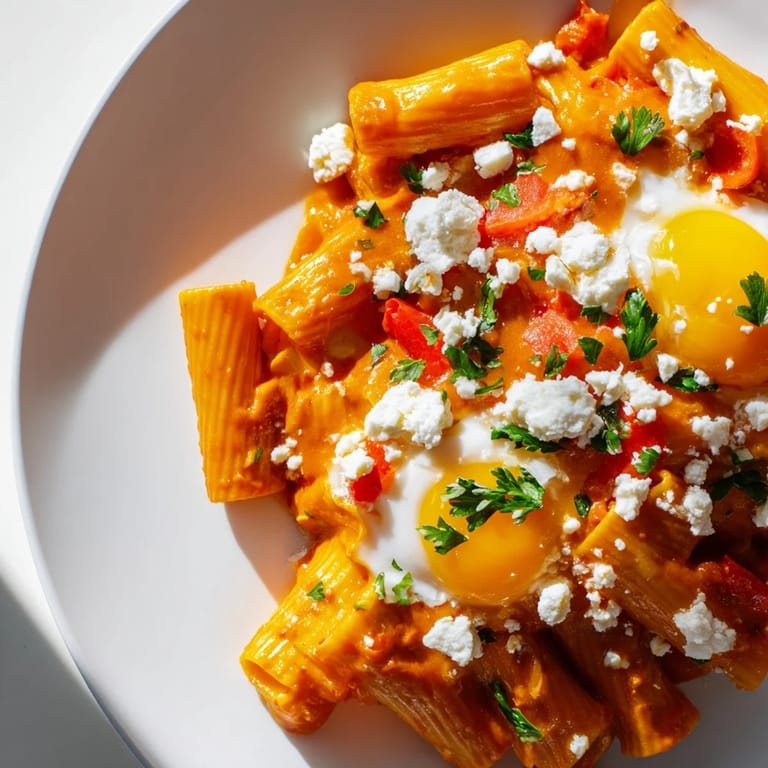
Save One Tuesday night, I stood at my stove with leftover pasta and a can of tomatoes, trying to remember what my friend had ordered at that tiny Mediterranean place downtown. The shakshuka—that egg-and-tomato comfort dish—had stuck with me, and suddenly I wondered what would happen if I just merged the two together. Twenty minutes later, I had a steaming skillet of tangled pasta swimming in spiced tomato sauce with eggs nestled into it like little golden gifts. It became the dish I make when I want something that tastes like it took hours but asks for almost no time at all.
I made this for my sister on a night when she showed up unannounced, tired from work and hungry for something that felt indulgent but not complicated. I remember her face when she twirled the pasta on her fork, catching an egg yolk mid-bite—that moment when simple food becomes exactly what someone needed. She asked for the recipe before she finished eating, and now it's become our phone-call dinner, the thing we text about when we're both in the kitchen on the same evening.
Ingredients
- Penne or rigatoni, 300 g: Use a pasta shape sturdy enough to hold the sauce without falling apart; tubes catch the spiced tomatoes beautifully.
- Olive oil, 2 tbsp: This is your flavor base, so choose something you'd taste on bread.
- Onion and red bell pepper: The onion becomes mellow and sweet, while the pepper adds color and a subtle sweetness that balances the spice.
- Garlic, 3 cloves minced: Don't skip the mincing—it distributes throughout the sauce evenly and prevents bitter burnt pieces.
- Ground cumin and smoked paprika, 1 tsp each: These spices are what make this taste like memory; they're the soul of the dish.
- Chili flakes, 1/4 tsp optional: Start small and taste as you go—heat builds, and you can always add more.
- Crushed tomatoes, 1 can 400 g: The backbone of everything; canned tomatoes are often better than fresh in cooked sauce.
- Tomato paste, 1 tbsp: This concentrates flavor and deepens the color—it's the secret to making thirty minutes taste like slow cooking.
- Sugar, 1/2 tsp: Just enough to soften the acidity without making anything sweet.
- Large eggs, 4: These are the treasure; cook them gently so the yolk stays runny and becomes your sauce.
- Fresh parsley or cilantro: Brightness and freshness at the end—choose whichever feels right to you.
- Feta cheese, crumbled: Optional but worthwhile; it adds a salty, creamy note that makes everything taste more intentional.
Tired of Takeout? 🥡
Get 10 meals you can make faster than delivery arrives. Seriously.
One email. No spam. Unsubscribe anytime.
Instructions
- Boil the pasta:
- Fill a large pot with salted water and bring it to a rolling boil—the water should taste like the sea. Add pasta and cook to al dente, which means it should still have a slight firmness when you bite it; this matters because it will soften slightly in the sauce.
- Build the sauce base:
- While pasta cooks, heat olive oil in a large skillet over medium heat until it shimmers. Add your chopped onion and diced bell pepper, and let them soften for about five minutes, stirring occasionally until the onion becomes translucent.
- Bloom the spices:
- Add minced garlic, cumin, smoked paprika, and chili flakes to the pan and cook for just one minute, stirring constantly—you'll smell when it's ready, that toasted, fragrant moment when the spices release their oils.
- Create the sauce:
- Pour in your crushed tomatoes and tomato paste, add the sugar, and season with salt and pepper. Let this simmer gently for eight to ten minutes, stirring now and then, until the sauce thickens and darkens slightly.
- Nest the eggs:
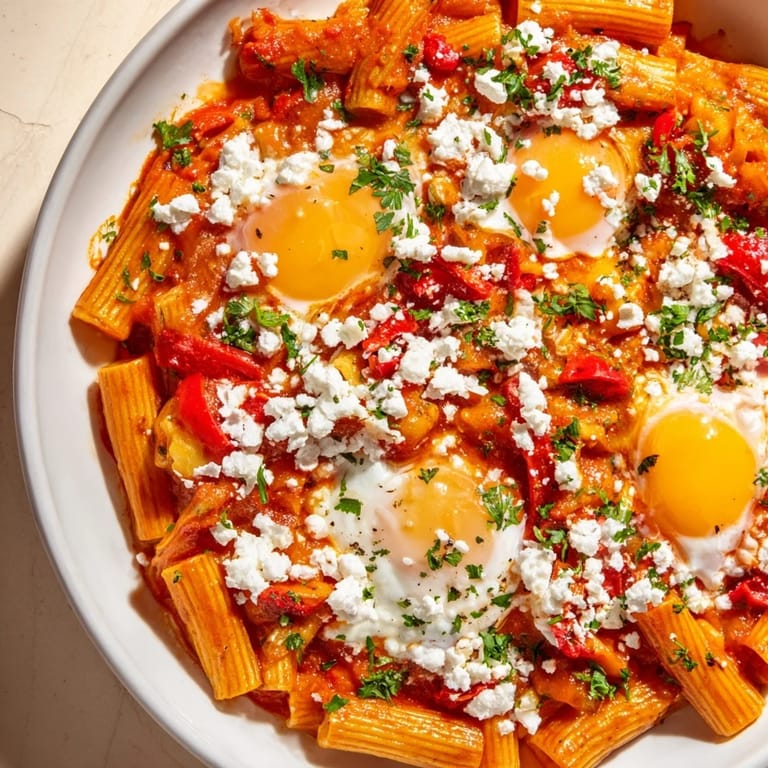
- Using the back of a spoon, create four shallow wells in the sauce, spacing them evenly. Crack an egg into each well carefully, then cover the skillet and reduce heat to medium-low, cooking for four to six minutes until the whites set but yolks stay soft.
- Combine pasta and sauce:
- Gently stir the cooked, drained pasta into the skillet, tossing carefully to coat everything in sauce without breaking the eggs. If it feels too thick, add a splash of that reserved pasta water and stir gently.
- Finish and serve:
- Scatter fresh herbs and crumbled feta across the top, then serve immediately directly from the skillet if you want it to feel special and communal.
 Save
Save There's something deeply satisfying about this dish the moment you break that first yolk at the table and watch it mingle with the hot sauce. It transforms from a single plate into something that tastes more generous than it should, more like care.
The Magic of Smoked Paprika
The first time I made this without smoked paprika, using regular paprika instead, I realized how much that one small change mattered. Smoked paprika brings a warmth and depth that makes you think of distant kitchens and slower meals, even when you're cooking in a rush. It's the difference between a tomato sauce and a dish that tastes intentional. If you can only find sweet paprika, use it, but make a note to seek out the smoked version next time—it's worth the small effort to find.
When to Break Your Own Rules
This recipe works beautifully as written, but it also invites you to trust your instincts and adjust as you cook. If your sauce tastes thin after simmering, let it cook longer—every stove is different, and every can of tomatoes has its own water content. If you love heat, add more chili flakes or a pinch of cayenne without apology. The dish is flexible enough to taste like your kitchen, not someone else's.
Making It Your Own
I've made this with goat cheese instead of feta on mornings when I had a wedge I needed to use, and with fresh spinach stirred in at the last moment when greens felt necessary. I've added chickpeas to stretch it further for unexpected guests and crispy breadcrumbs on top for texture on nights when I wanted something more. The foundation is strong enough that these variations feel like additions, not compromises.
- Fresh spinach wilts beautifully into the warm sauce in the last minute, adding earthiness without effort.
- A handful of canned chickpeas stirred in with the pasta makes it heartier and more filling.
- A drizzle of good olive oil and crusty bread for soaking up sauce should always be part of the plan.
 Save
Save This dish lives in the space between everyday cooking and something that tastes like you went to some trouble, even though you didn't. It's become my answer for when people ask what to make when there's not much time but someone's worth feeding well.
Recipe FAQs
- → What type of pasta works best?
Penne or rigatoni hold the sauce well, but other tubular pastas can be used depending on preference.
- → How can I adjust the spice level?
Modify chili flakes to your taste or add a pinch of cayenne for extra heat without overpowering the dish.
- → Can I make this dish dairy-free?
Yes, omit the feta cheese or substitute it with a plant-based alternative to keep it dairy-free.
- → How do I achieve runny egg yolks in the sauce?
Cook the eggs in the simmering sauce for 4-6 minutes covered, checking frequently to keep yolks soft but cooked.
- → Are there gluten-free options?
Using certified gluten-free pasta ensures the dish suits gluten-sensitive diets without sacrificing flavor.