 Save
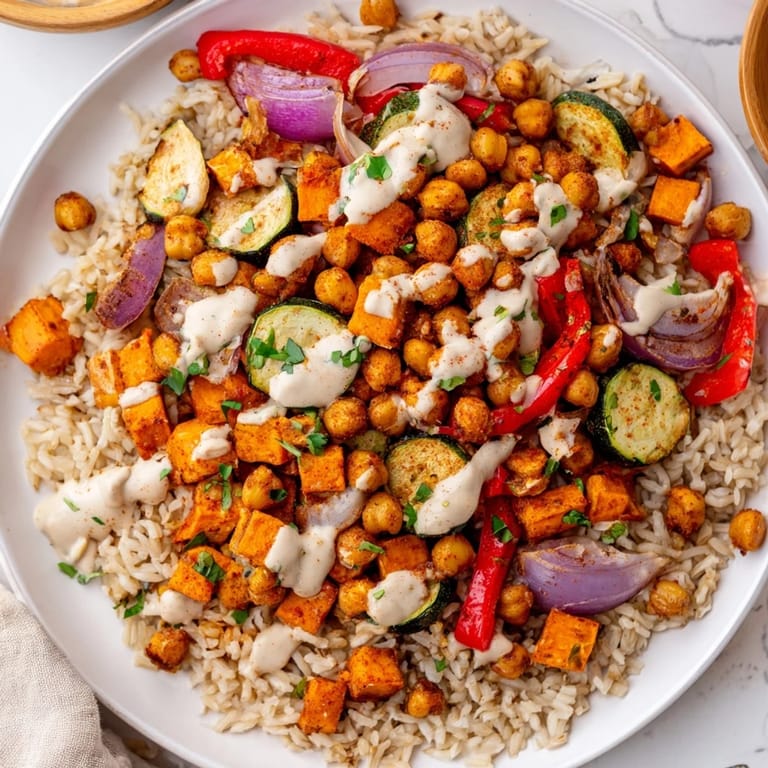
Save There's something about the moment when roasted chickpeas turn golden and crispy that made me fall in love with this bowl. I was experimenting one Tuesday evening, honestly just trying to use up what was in my pantry, when the smell of smoked paprika and cumin filled my kitchen. By the time everything came together—fluffy rice, caramelized vegetables, creamy tahini—I realized I'd stumbled onto something I'd want to make again and again. It became my go-to when I needed something nourishing but didn't want to spend hours cooking.
I made this for a friend who'd been stressed about eating well while traveling, and watching her dive into it with real enthusiasm reminded me why I love cooking bowls like this. There's something generous about a full, colorful plate that says you care without needing to make a fuss. She asked for the tahini sauce recipe separately, which is always the highest compliment.
Ingredients
- Chickpeas: Drain and rinse canned ones thoroughly—this step removes the starchy liquid and prevents sogginess later.
- Smoked paprika and cumin: These two spices are what make the chickpeas taste restaurant-quality, not cafeteria-style.
- Sweet potato: It caramelizes beautifully and adds natural sweetness that balances the earthy tahini.
- Bell pepper: I use red because it stays tender and adds visual pop, but any color works if that's what you have.
- Brown rice: It needs the full 30-35 minutes to get fluffy—don't rush it or you'll end up with crunchy grains.
- Tahini: Make sure it's well-stirred before measuring, as the oil separates and you want a consistent paste.
- Lemon juice: This is what makes the sauce taste alive instead of just creamy—don't skip it or cut back.
Tired of Takeout? 🥡
Get 10 meals you can make faster than delivery arrives. Seriously.
One email. No spam. Unsubscribe anytime.
Instructions
- Get everything prepped and your oven ready:
- Pat those chickpeas completely dry with paper towels—moisture is the enemy of crispiness. While you're at it, line both baking sheets with parchment, chop everything into roughly the same size so it roasts evenly, and preheat to 200°C.
- Season the chickpeas with intention:
- Toss them with oil and all those spices until every single one is coated. Spread them out in a single layer on the first sheet—crowding them will make them steam instead of crisp.
- Season and arrange the vegetables:
- Keep them separate from the chickpeas because they'll release moisture. Oil, salt, and pepper, then spread in one layer on the second sheet.
- Roast both sheets until magic happens:
- About 25-30 minutes total, stirring halfway through. You're looking for chickpeas that sound crispy when you bite one and vegetables with charred edges.
- Get your rice going while everything roasts:
- A quick rinse under cold water removes excess starch. Combine with water and salt in a saucepan, bring to a boil, then let it simmer covered for 30-35 minutes—resist the urge to peek.
- Whisk the tahini sauce until silky:
- Whisk tahini with lemon juice, minced garlic, and a touch of maple syrup. It'll seem thick at first, then add water gradually until it reaches a drizzle-friendly consistency.
- Build your bowls with intention:
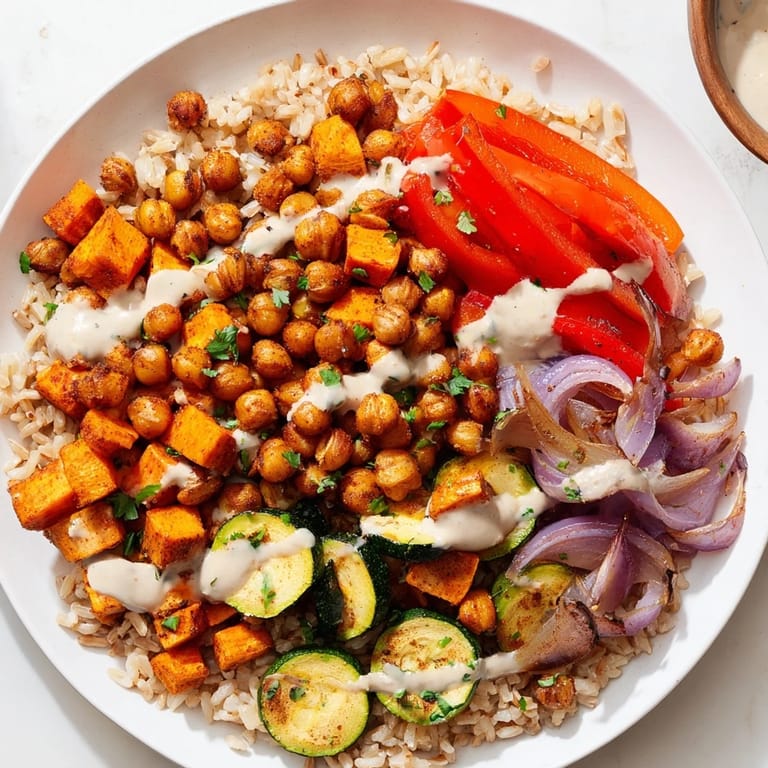
- Rice as your base, then chickpeas, then vegetables, then greens. Drizzle the tahini sauce generously, then finish with fresh herbs and a squeeze of lemon.
 Save
Save The first time someone told me they'd made this three times in one week, I understood why this bowl had become such a fixture in my kitchen. It's simple enough to feel casual, but thoughtful enough to feel like you're taking care of yourself.
Why This Bowl Works
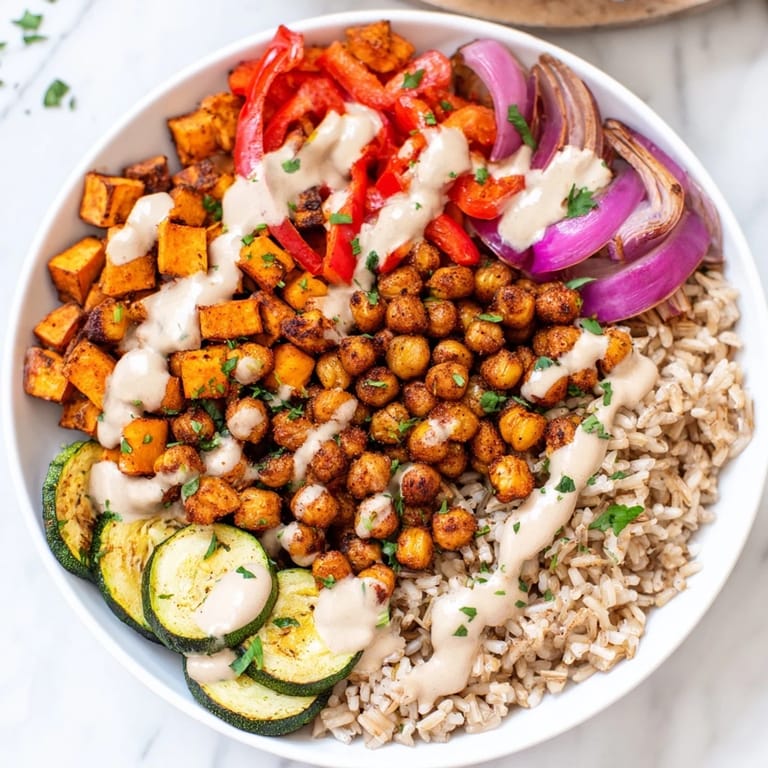
There's a balance happening here that makes this more than just throwing things in a bowl. The crispy chickpeas give you protein and that satisfying crunch that keeps you engaged with every bite. The vegetables add color and natural sweetness, while the rice provides gentle comfort. The tahini sauce ties everything together, turning separate components into something cohesive and creamy. When you build it this way, you're not eating health food—you're eating something that actually tastes good.
Making It Your Own
I've learned that the beauty of a Buddha bowl is how personal it becomes once you understand the formula. Some days I add sliced avocado because I'm in that mood, other times I layer in pickled red onions for brightness. The tahini sauce stays constant because it's that good, but everything else can shift based on the season or what you're craving. I've swapped in farro, used different vegetables based on what looked good at the market, even tried the sauce over roasted cauliflower and it was just as satisfying.
The Sauce Matters Most
If there's one thing I'd encourage you not to skip, it's taking an extra minute with the tahini sauce. That lemon juice and garlic transform it from a thick paste into something that tastes restaurant-quality. I've found that a tiny bit of maple syrup rounds out the flavors without making it sweet, but honey works just as well if that's what you have. The sauce is what elevates this from simple to something you'll crave.
- Taste the sauce before assembly—you might want more lemon or a pinch more salt depending on your tahini brand.
- If you make it ahead, thin it with extra water right before serving since tahini thickens as it sits.
- A food processor makes the sauce even smoother, but whisking by hand works perfectly fine.
 Save
Save This bowl has become my answer to the question of what to make when you want something wholesome but don't want to overthink it. It's the kind of meal that feels generous to yourself.