 Save
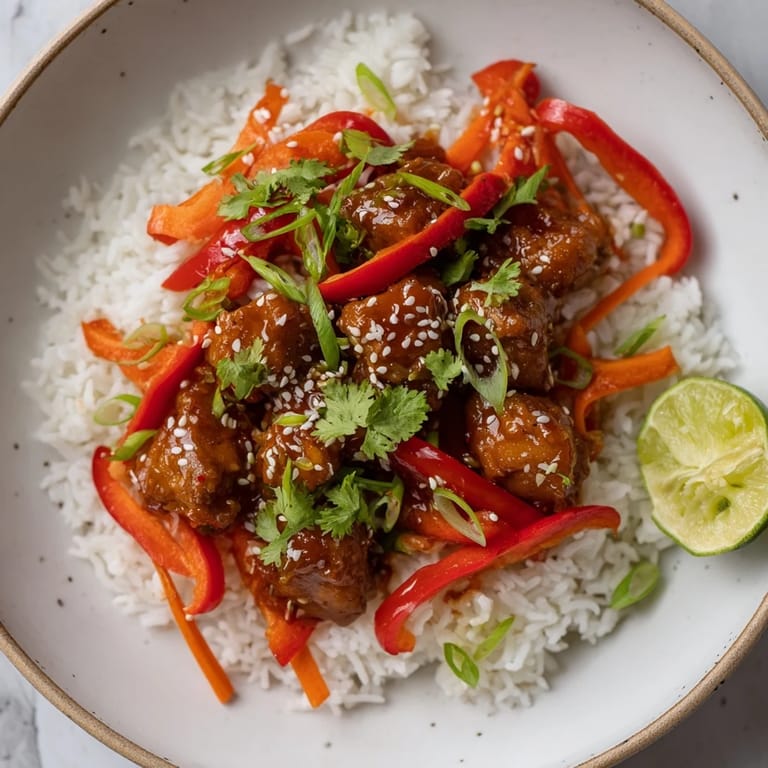
Save There's something about the smell of sesame oil hitting a hot pan that instantly transports me to a tiny noodle shop tucked away on a side street. I was testing recipes one evening when a friend stopped by unannounced, hungry and skeptical about my cooking abilities, and I threw together this bowl on the fly with whatever was in my kitchen. The look on their face when they took that first bite—crispy chicken, that warm ginger hum, vegetables still snapping with life—made me realize I'd stumbled onto something special.
I made this for a potluck once where everyone was tired and food seemed boring, and suddenly people were hovering around the rice bowls asking for the recipe. My aunt, who usually just picks at whatever I bring, came back for seconds. That moment sealed it for me—this isn't fancy or complicated, but it hits differently when you nail those proportions and let the ginger really breathe.
Ingredients
- Chicken breast or thighs: Cut them bite-sized so they cook quickly and soak up the sauce. Thighs stay juicier, but breasts work fine if that's what you have.
- Soy sauce: Low sodium if possible, otherwise the salt creeps up on you by the end.
- Toasted sesame oil: The dark stuff, not the light kind—it's the flavor anchor here.
- Rice vinegar: Balances the richness and keeps everything bright.
- Honey or maple syrup: A touch of sweetness rounds out the spice and tang.
- Fresh ginger: Grate it yourself; the bottled stuff feels thin by comparison.
- Garlic cloves: Minced small so it disperses into the sauce evenly.
- Sriracha or chili garlic sauce: Optional, but it adds depth and a gentle heat that builds slowly.
- Jasmine or short-grain rice: Jasmine has that subtle floral note that plays nicely with the ginger.
- Carrot: Julienned thin so it picks up heat quickly and stays tender-crisp.
- Red bell pepper: The sweetness cuts through the savory sauce in the best way.
- Sugar snap peas or snow peas: Keep them halved so they don't overpower the bowl.
- Spring onions: Raw at the end, they add a sharp green note that wakes everything up.
- Sesame seeds: Toast them yourself if you can—the smell is worth it alone.
- Fresh coriander: A handful scattered on top brings everything together.
- Lime wedges: Essential for squeezing over at the last moment.
Tired of Takeout? 🥡
Get 10 meals you can make faster than delivery arrives. Seriously.
One email. No spam. Unsubscribe anytime.
Instructions
- Make your sauce first:
- Whisk together soy sauce, sesame oil, rice vinegar, honey, ginger, garlic, and sriracha in a bowl. Split it in half—one part marinating the chicken, the other reserved for drizzling after. The reserved sauce stays bright and potent this way.
- Marinate the chicken:
- Toss your chicken pieces with the first half of the sauce and let them sit for fifteen minutes. This isn't a long marinade, but it's enough time for the ginger and garlic to start working their way in.
- Cook the rice:
- Rinse your rice under cold water until the water runs clear—this removes excess starch so each grain stays separate. Combine with water in a saucepan, bring to a boil, then reduce heat, cover, and simmer for twelve to fifteen minutes until tender.
- Sear the chicken:
- Heat your skillet or wok over medium-high heat until it's properly hot. Add the marinated chicken (discard the used marinade) and cook, stirring occasionally, for five to seven minutes until golden and cooked through. The edges should have a little char.
- Quick-fry the vegetables:
- In the same hot pan, add your carrot, bell pepper, and snap peas. Stir constantly for two to three minutes—you want them to soften just slightly while keeping their snap.
- Bring it all together:
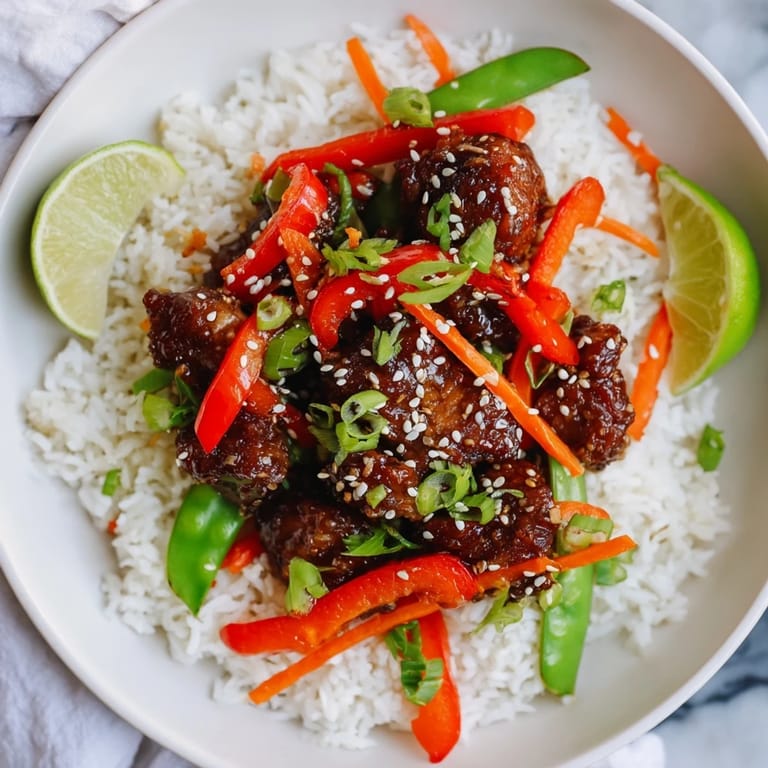
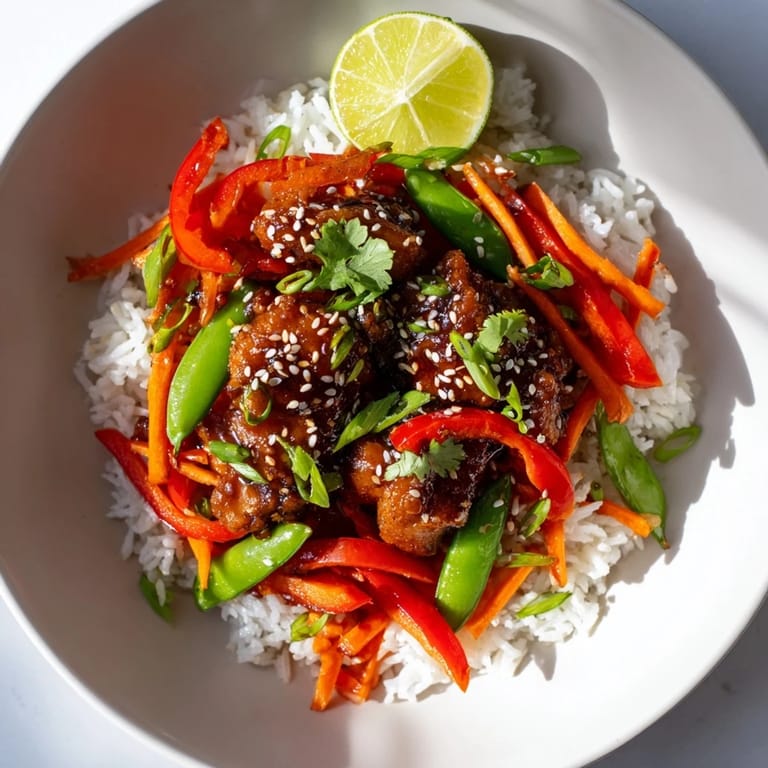
- Divide the fluffy rice among your bowls, top with the chicken and vegetables, then drizzle generously with that reserved sauce. Let people adjust their own lime and garnishes.
 Save
Save There's a quiet satisfaction in eating something this good at home, something that tastes like you've got real skill in the kitchen even though most of the work is just timing. The bowl transforms depending on what you emphasize—more sauce makes it richer, more vegetables make it lighter, a squeeze of lime changes the whole balance—and that flexibility means you can eat it a dozen times and have a slightly different experience each time.
The Sauce Is Everything
I learned this the hard way by once making the chicken without building a proper sauce base first. The ginger, soy, and sesame don't just sit on top of everything—they need to develop together, to marry, so that when they hit hot chicken they're one complete thing. That reserved sauce drizzled at the end is what transforms a decent bowl into something memorable. Don't rush it or thin it out thinking you need more to cover everything; a smaller amount of concentrated sauce does more work.
Why Toasted Sesame Oil Matters
Regular sesame oil is pale and mild, almost forgettable. Toasted sesame oil is dark, aromatic, and intense in the best way. A little goes a long way, which means a small bottle lasts forever, and it transforms every sauce it touches. Once you start cooking with toasted sesame oil, regular oil feels like cooking without flavor at all.
Making It Your Own
This bowl is a foundation, not a rule. Some nights I add crispy tofu instead of chicken. Other times I'll fold in a spoonful of peanut butter into the sauce for richness, or crack an egg over the warm rice and let it cook slightly from the heat. Fresh herbs beyond cilantro—mint, Thai basil, even regular basil—all work beautifully.
- Sliced avocado melts slightly from the warm rice and adds a luxurious creaminess.
- A handful of edamame brings a nutty sweetness and extra protein.
- Crushed peanuts or cashews scattered on top add texture and a roasted depth that complements the ginger.
 Save
Save This bowl has become my go-to when I want something that feels restaurant-quality but doesn't demand hours in the kitchen. It's proof that real flavor comes from understanding a few good ingredients and knowing when to step back and let them speak.
Recipe FAQs
- → What type of rice works best?
Jasmine or short-grain white rice are ideal for their fragrance and texture, complementing the dish perfectly.
- → Can I use other proteins instead of chicken?
Yes, firm tofu or tempeh make excellent substitutes for a vegetarian take on the dish.
- → How can I make the sauce spicier?
Adding extra sriracha or a pinch of chili flakes enhances the heat without overpowering the balance.
- → Is the dish suitable for gluten-free diets?
Use tamari instead of soy sauce to keep the dish gluten-free without losing flavor.
- → What garnishes add the best finishing touch?
Toasted sesame seeds, fresh coriander leaves, and lime wedges enhance both flavor and presentation.