 Save
Save My neighbor once knocked on my door at noon with a chuck roast she didn't know what to do with. We threw it in my old Dutch oven with whatever vegetables I had rolling around in the crisper drawer, and three hours later, the whole building smelled like Sunday. That pot roast taught me more about patience than any cookbook ever did. Sometimes the best meals are the ones you stumble into with no plan and a little faith in low heat.
I made this the first winter my sister moved back home, and we ate it straight from the pot with crusty bread while snow piled up outside. She told me it tasted like being a kid again, which made me realize food has a way of keeping time better than photographs. We didn't talk much that night, just ate and listened to the wind, and that felt like exactly enough.
Ingredients
- Boneless beef chuck roast (3-4 lb): This cut has enough marbling to stay juicy through the long roast, and it won't dry out like leaner cuts will.
- Kosher salt and black pepper: Season generously because this is your foundation, and bland pot roast is a tragedy no gravy can fix.
- Carrots, parsnips, onions, potatoes, celery: These turn sweet and soft as they braise, soaking up all the beefy richness and becoming just as important as the meat.
- Garlic: Smash the cloves with the side of your knife so they release their oils and perfume everything in the pot.
- Tomato paste: This adds a deep, savory backbone that you won't taste directly but will absolutely miss if you skip it.
- Beef broth: Use good quality broth or stock, because watery broth makes watery pot roast, and nobody wants that.
- Dry red wine: It deglazes the pan and adds complexity, but if you don't have it, just use more broth and don't stress.
- Worcestershire sauce: A few shakes of this bring umami and a hint of tang that rounds out the whole dish.
- Fresh thyme, rosemary, bay leaves: These herbs infuse everything with earthy warmth, and fresh really does make a difference here.
- Olive oil: You need this to get a good sear on the beef, which is where all the flavor starts.
Tired of Takeout? 🥡
Get 10 meals you can make faster than delivery arrives. Seriously.
One email. No spam. Unsubscribe anytime.
Instructions
- Preheat and prep the beef:
- Set your oven to 300°F and let it heat while you pat the roast completely dry with paper towels. Season every side with salt and pepper, pressing it in gently so it sticks.
- Sear the beef:
- Heat olive oil in your Dutch oven over medium high heat until it shimmers, then lay the roast in carefully and let it sizzle undisturbed for 3 to 4 minutes per side until deeply browned. Move it to a plate and don't wipe out the pot, those brown bits are liquid gold.
- Cook the vegetables:
- Toss in the onions, carrots, parsnips, potatoes, and celery, stirring occasionally for about 5 minutes until they start to soften. Add the garlic and tomato paste, stirring for another minute until everything smells toasty and sweet.
- Deglaze and build the braising liquid:
- Pour in the red wine and scrape up all those browned bits stuck to the bottom with a wooden spoon, then let it simmer for 2 minutes. Nestle the beef back into the pot, add the broth, Worcestershire, thyme, rosemary, and bay leaves so the liquid comes halfway up the roast.
- Braise in the oven:
- Bring everything to a gentle simmer on the stove, cover tightly with the lid, and slide it into the oven. Let it roast undisturbed for 3 to 3 and a half hours until the beef yields easily to a fork and the vegetables are meltingly tender.
- Rest and serve:
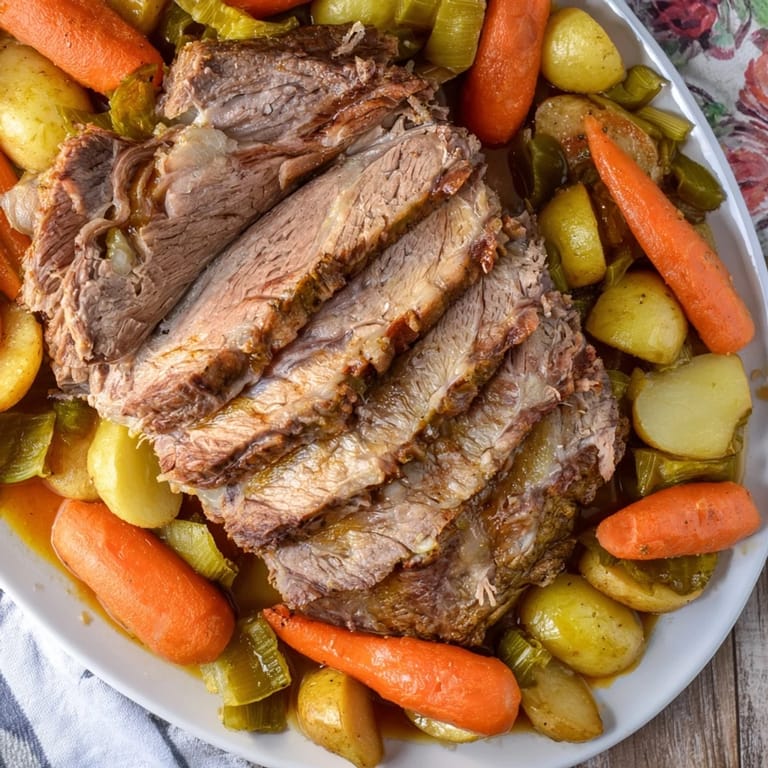
- Pull the pot from the oven, fish out the herb stems and bay leaves, and let the beef rest for 10 minutes before slicing or shredding. Serve it with the vegetables and spoon those rich, glossy pan juices over everything.
 Save
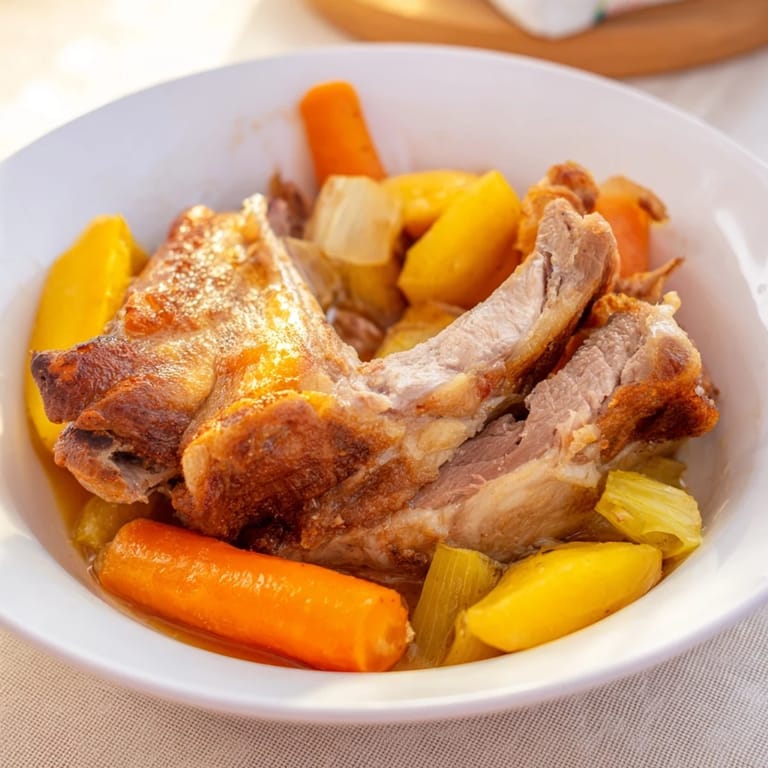
Save The first time I served this to my in-laws, my father in law went quiet for a minute, then asked if I'd learned to cook from his mother. I hadn't, but I took it as the highest compliment I'd ever received in a kitchen. Food that makes people remember someone they loved is food worth making again and again.
Making the Sauce Richer
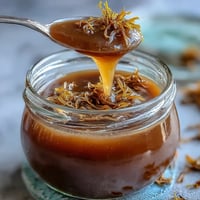
If you want a thicker, more luxurious sauce, lift out the beef and vegetables at the end and set them aside covered. Put the pot back on the stove over medium heat and let the juices simmer down by half, which concentrates all those flavors into something almost gravy like. You can also whisk together a tablespoon of cornstarch with two tablespoons of cold water and stir that slurry in, simmering for another minute until it thickens up beautifully.
Choosing Your Vegetables
Parsnips are sweet and nutty, but if you can't find them, turnips or even extra carrots work just fine. I've also thrown in chunks of butternut squash or sweet potato when that's what I had, and it turned out just as comforting. The key is cutting everything into similar sized pieces so they cook evenly and nothing turns to mush while something else stays crunchy.
Serving and Storing
This pot roast is perfect with crusty bread, buttered egg noodles, or even mashed potatoes if you want to go all in on comfort. Leftovers keep in the fridge for up to four days and reheat beautifully, or you can shred the beef and turn it into stew, tacos, or the best sandwiches you'll eat all week.
- Store the beef and vegetables in their juices to keep everything moist and flavorful.
- Reheat gently on the stove or in the oven, adding a splash of broth if things look dry.
- Freeze leftovers in airtight containers for up to three months, and thaw overnight in the fridge before reheating.
 Save
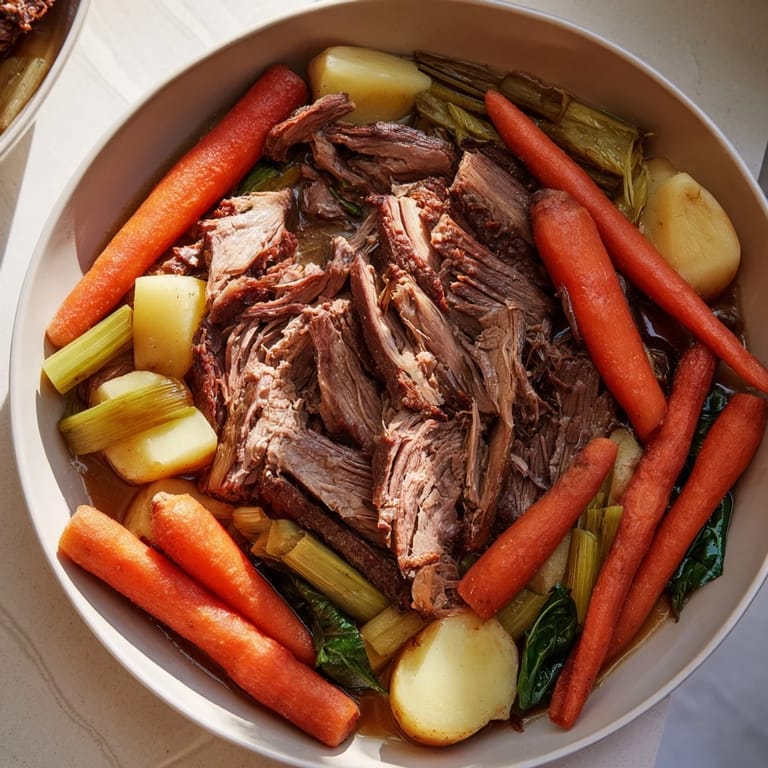
Save There's something about a pot roast that turns a regular Tuesday into something worth sitting down for. It's the kind of meal that doesn't ask for much except a little time and attention, and it gives back more than you'd expect.
Recipe FAQs
- → What cut of beef is best for this dish?
Boneless beef chuck roast is recommended as it becomes tender and flavorful when slow-cooked.
- → Can I substitute any vegetables?
Yes, parsnips can be replaced with turnips or omitted based on availability or preference.
- → Is red wine necessary for deglazing?
Red wine adds depth but can be replaced with additional beef broth if preferred or avoided.
- → How do I thicken the pan juices for serving?
Remove meat and vegetables, then simmer the juices on the stove to reduce or stir in a cornstarch slurry for a thicker consistency.
- → What herbs enhance the flavor best?
Fresh thyme, rosemary, and bay leaves provide aromatic notes that complement the beef and vegetables.