 Save
Save The kitchen counter was dusted white, my hands sticky with dough, when I realized making ravioli from scratch wasn't about perfection. It was about the rhythm of kneading, the satisfaction of sealing each little pillow, and the way the whole house smelled like flour and promise. My first batch was lumpy and uneven, but when they floated to the top of the pot, I felt like I'd unlocked something ancient. Now, every time I roll out that dough, I remember that messy, glorious afternoon.
I made these ravioli for my sister's birthday dinner one spring, and she cried a little when she tasted them. Not because they were fancy, but because they reminded her of our grandmother's kitchen, even though Nonna never made ravioli quite like this. Sometimes food carries feeling more than memory. We ate seconds, then thirds, scraping our plates with bread and laughing too loud.
Ingredients
- All purpose flour: The foundation of your dough, it gives structure without being too heavy, and I always keep extra nearby because dough can be thirsty.
- Eggs: They bind the dough and add richness, turning simple flour into something silky and golden when kneaded properly.
- Ricotta cheese: Use whole milk ricotta for the creamiest filling, and if it seems watery, strain it in cheesecloth for twenty minutes.
- Fresh spinach: Wilting it first and squeezing out every drop of water is non negotiable, or your filling will weep and your ravioli will split.
- Parmesan cheese: Freshly grated is a must, the pre shredded kind has anti caking agents that make the filling grainy instead of smooth.
- Nutmeg: Just a whisper of it wakes up the ricotta and spinach, making the filling taste layered and interesting.
- Marinara sauce: Homemade is lovely, but a good jar works beautifully when you're already making pasta from scratch.
- Garlic: Sautéing it gently in olive oil creates a fragrant base that makes even simple sauce taste like you simmered it for hours.
- Fresh basil: Torn at the last second and scattered on top, it adds a pop of color and a sweet, peppery brightness.
Tired of Takeout? 🥡
Get 10 meals you can make faster than delivery arrives. Seriously.
One email. No spam. Unsubscribe anytime.
Instructions
- Make the Pasta Dough:
- Mound your flour on the counter and create a well in the center, then crack in the eggs and salt. Use a fork to beat the eggs gently, pulling in flour bit by bit until a shaggy dough forms, then knead it for eight to ten minutes until it feels smooth and springs back when poked.
- Prepare the Filling:
- Steam or sauté the spinach until it wilts down to almost nothing, then let it cool before squeezing it dry in a towel. Mix it with ricotta, Parmesan, egg yolk, nutmeg, salt, and pepper until everything is evenly blended and tastes well seasoned.
- Roll the Pasta:
- Divide your rested dough in half and work with one piece at a time, keeping the other covered. Roll it through a pasta machine or use a rolling pin to get it as thin as you can, about the thickness of a dime.
- Shape the Ravioli:
- Lay one sheet of pasta flat and dot it with teaspoons of filling spaced two inches apart, then brush the edges and spaces between with water. Drape the second sheet over the top and press around each mound to seal, then cut into squares and crimp the edges with a fork.
- Cook the Ravioli:
- Bring a large pot of salted water to a gentle boil and add the ravioli in batches so they don't crowd. They'll sink at first, then float to the surface in three to four minutes, and that's when you know they're done.
- Make the Marinara Sauce:
- Heat olive oil in a saucepan and sauté minced garlic until it smells sweet and toasty, about a minute. Pour in your marinara, season with salt and pepper, and let it simmer for five minutes to meld the flavors.
- Serve:
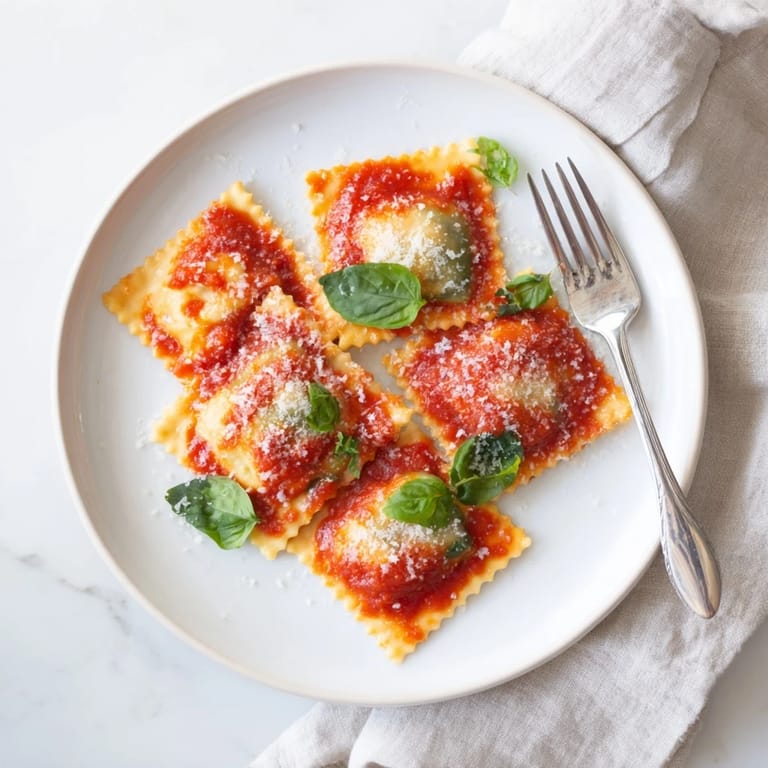
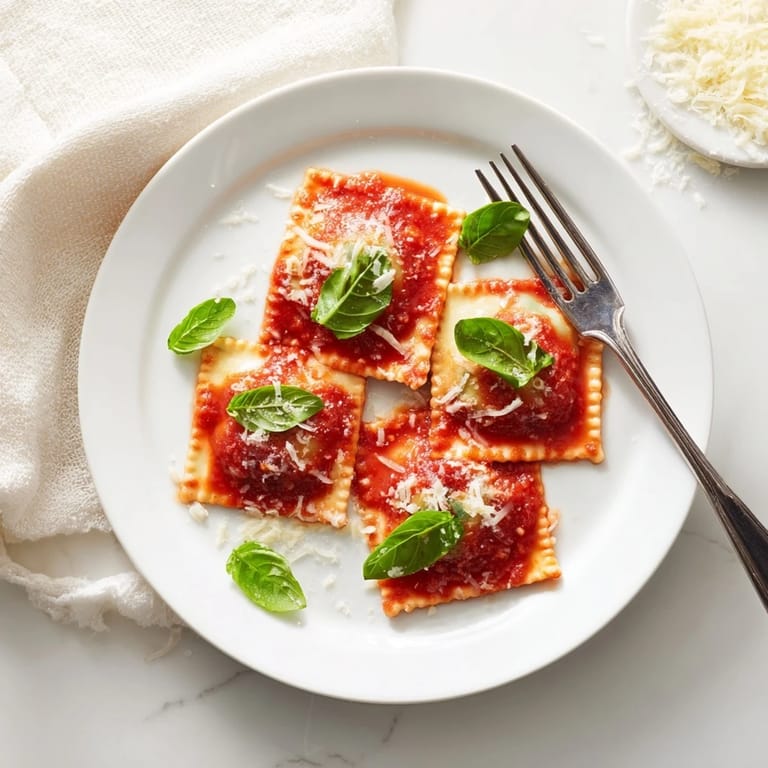
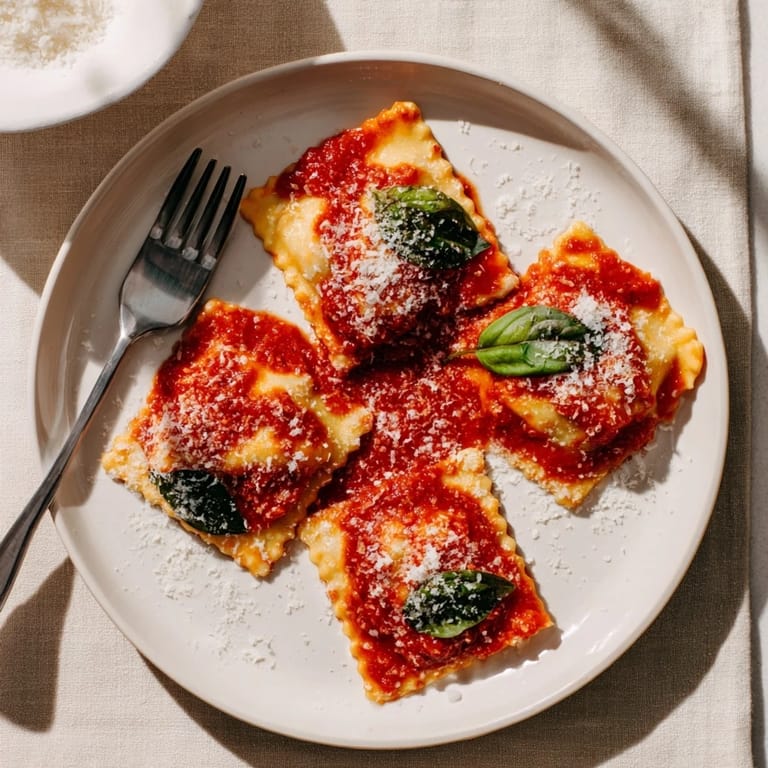
- Spoon a puddle of warm sauce onto each plate, nestle the ravioli on top, and finish with more sauce, torn basil, and a generous shower of Parmesan. Serve immediately while everything is hot and glossy.
 Save
Save One evening, I served these ravioli to a friend who said she didn't like spinach. She ate her whole plate without realizing what was in the filling, then asked for the recipe. That's when I understood that good cooking isn't about tricking people, it's about showing them ingredients in a new light. She makes these now for her own dinners, and texts me photos every time.
Getting the Dough Right
The dough might feel too dry at first, and you'll be tempted to add water, but resist. Keep kneading, and it will come together as the flour hydrates and the eggs work their magic. If it's truly crumbly after five minutes, add a few drops of water, but only a few. The dough should be firm and smooth, not sticky, and when you press a finger into it, the indent should slowly bounce back.
Storing and Freezing
You can freeze uncooked ravioli on a parchment lined baking sheet until solid, then transfer them to a freezer bag for up to three months. Cook them straight from frozen, adding an extra minute or two to the boiling time. I always make a double batch now because having homemade ravioli in the freezer feels like having a secret weapon for busy weeknights.
Finishing Touches
The way you plate this matters more than you'd think. A shallow bowl works better than a flat plate because it cradles the sauce and keeps everything warm longer. I like to drizzle a little extra olive oil over the top and add a crack of black pepper right before serving.
- If you have it, a microplane of lemon zest over the finished dish adds unexpected brightness.
- Brown butter with sage is a stunning alternative to marinara if you want to switch things up.
- Leftover ravioli can be pan fried in butter the next day until crispy, which is an entirely different kind of delicious.
 Save
Save There's something deeply satisfying about pulling a plate of homemade ravioli from your own hands, knowing every step was yours. It's the kind of meal that turns an ordinary night into an occasion, and reminds you why cooking from scratch is always worth it.
Recipe FAQs
- → Can I prepare the ravioli ahead of time?
Yes, you can freeze uncooked ravioli on a baking sheet for up to 3 months. Cook directly from frozen, adding 1-2 extra minutes to cooking time.
- → What's the best way to prevent ravioli from bursting?
Ensure edges are well-sealed by brushing with water and pressing firmly with a fork. Maintain gentle boiling water and avoid crowding the pot during cooking.
- → Can I use frozen spinach instead of fresh?
Absolutely. Use thawed frozen spinach and squeeze out excess moisture thoroughly before mixing into the filling to prevent a watery texture.
- → How do I know when ravioli is properly cooked?
Ravioli is ready when it floats to the surface and stays there for 30 seconds. This typically takes 3-4 minutes for fresh ravioli.
- → What wine pairs well with this dish?
A crisp white wine like Pinot Grigio complements the creamy filling and bright marinara sauce beautifully.
- → Can I make the pasta dough by hand?
Yes, the mound-and-well method works perfectly. Mix gradually with a fork, then knead by hand until smooth and elastic before resting.