 Save
Save There's a moment in every cook's life when a single dish becomes the one you make when you want to feel instantly transported. For me, that's this Thai green curry coconut soup. I discovered it during a rainy afternoon when my kitchen felt too quiet, and I had a can of coconut milk and a jar of green curry paste that had been waiting for exactly this kind of kitchen adventure. The aroma that filled the room within minutes—toasted and green and alive—reminded me why I love cooking in the first place.
I made this soup for friends who were skeptical about anything "too exotic" for their palates, and watching their faces change after that first spoonful was everything. The sweetness of coconut milk balancing the heat of the curry paste, the tender vegetables catching the broth just right—it became the soup everyone started asking for. Now when someone visits on a cold day, this is my quiet confidence in a bowl.
Ingredients
- Firm tofu or chicken breast (400g): Tofu absorbs the curry flavors beautifully if you give it time, while chicken adds richness; cube the tofu into bite-sized pieces and slice the chicken thin so it cooks quickly without drying out.
- Green curry paste (2 tbsp): This is where the soul of the soup lives, so don't skip it or substitute it with red curry paste—trust the green paste to deliver that herbaceous, slightly less intense heat.
- Coconut milk (400 ml): Full-fat versions create a silkier soup, but light coconut milk works if that's what you prefer; shake or stir the can first because the cream separates.
- Vegetable or chicken broth (500 ml): The broth keeps the soup from becoming too heavy while the vegetables add their own subtle flavors into the mix.
- Fish sauce or soy sauce (1 tbsp): This ingredient scared me the first time, but it's the secret depth-charge that makes everything taste more like itself—start with less if you're nervous.
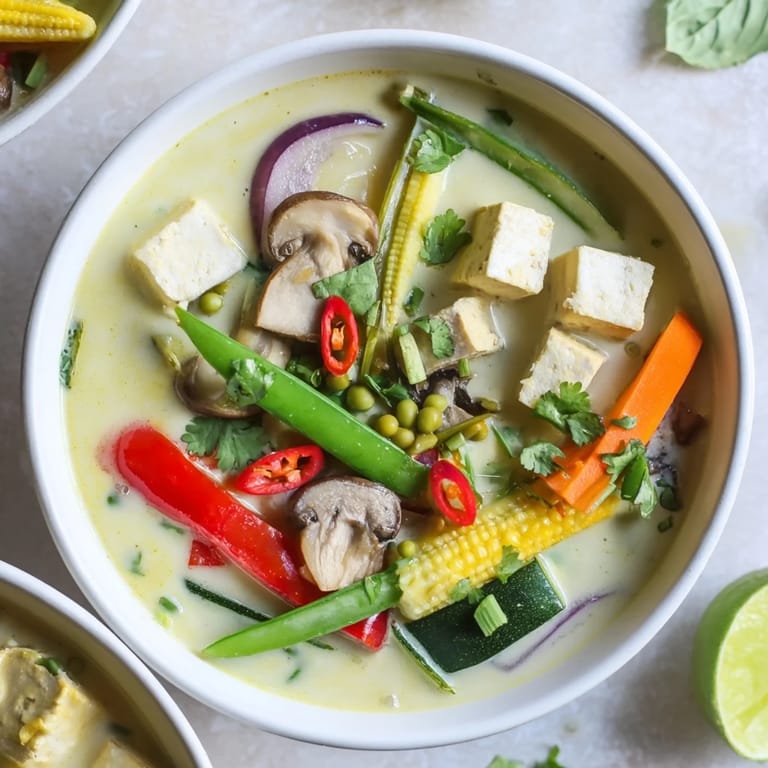
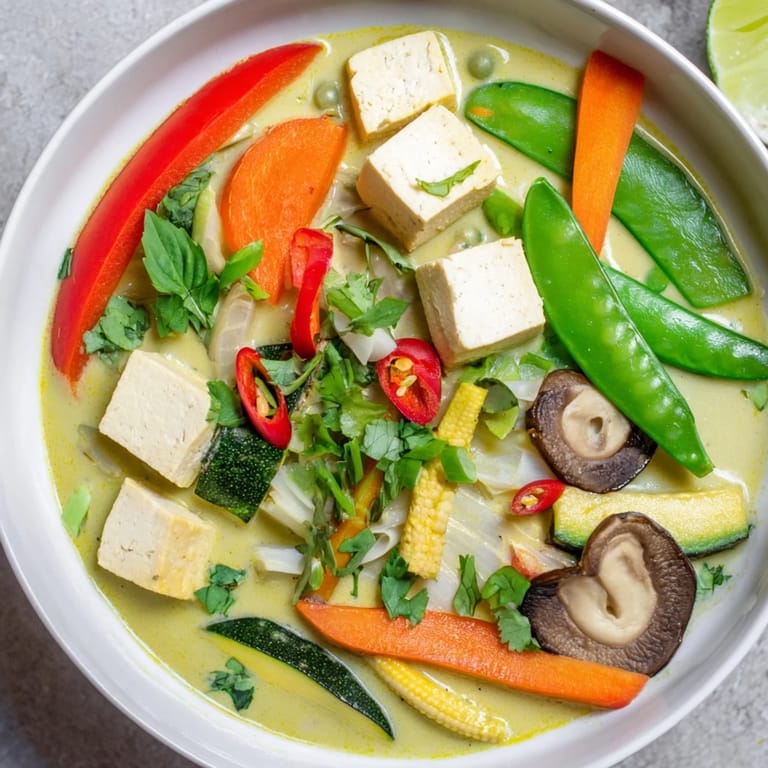
- Red bell pepper, zucchini, baby corn, snap peas, mushrooms, and carrot: These vegetables add color, texture, and nutrition, and because they're cut uniformly, they cook at roughly the same pace.
- Fresh cilantro, lime, and Thai basil: These aren't just garnishes—they're the bright finish that lifts the entire bowl and make you feel like you're eating something special.
Tired of Takeout? 🥡
Get 10 meals you can make faster than delivery arrives. Seriously.
One email. No spam. Unsubscribe anytime.
Instructions
- Bloom the curry paste:
- Heat oil in your pot over medium heat until it shimmers slightly, then add the curry paste. Let it sauté for a minute or two—you'll smell the change as it becomes more fragrant and the raw edge softens. This step matters because it wakes up the paste's flavors.
- Build your flavor base:
- Toss in the sliced onion and let it soften for a couple of minutes, stirring occasionally. The onion sweetens slightly and creates a cushion for everything else to rest on.
- Add your protein:
- Whether you're using tofu or chicken, add it now and let it cook for 2–3 minutes. The chicken will start turning from pink to white (but won't be fully cooked yet), and the tofu will firm up slightly at the edges.
- Pour in the creamy broth:
- Add the coconut milk and broth together, stirring gently to combine the curry paste throughout. Bring the pot to a gentle simmer—not a rolling boil, which can make the broth taste thin.
- Add the vegetables:
- Drop in all your prepared vegetables and let them simmer for 8–10 minutes. They should be tender but still have a slight bite to them, not mushy or falling apart.
- Season to taste:
- Stir in the fish sauce and sugar, then taste a spoonful of broth. Adjust the salt, heat, or lime juice (squeeze some of your lime wedges in) until it tastes exactly right to you—this is your moment to make it perfect.
- Finish and serve:
- Ladle the soup into bowls while it's hot, then scatter cilantro, Thai basil, and a few chili slices across the top. A lime wedge perched on the rim makes it feel intentional and inviting.
 Save
Save There was an evening when I made this soup and my partner asked if we could have it once a week. That's when I realized this wasn't just another recipe in my collection—it was becoming a comfort dish, something familiar enough to make without thinking but special enough to feel like I was cooking something meaningful. That shift, from curious experiment to trusted favorite, is what keeps me coming back to this pot.
Customizing Your Vegetables
The vegetable combination I've given you works beautifully, but this soup was practically designed for improvisation. In winter, I swap in broccoli, cauliflower, and winter squash; in summer, I lean into zucchini, snap peas, and fresh corn. The rule I follow is to cut everything roughly the same size so nothing cooks faster than anything else and throws off the timing. One unexpected addition that changed everything for me was adding a handful of spinach in the last minute—it wilts into the broth and adds a subtle earthiness that complements the curry paste.
Making It Your Own
I used to think authentic meant following a recipe exactly, but this soup taught me that authenticity comes from understanding the foundations and then trusting your instincts. Want it spicier? Add more curry paste or fresh chili. Want it richer? Use full-fat coconut milk or add a splash more. Want it lighter? Increase the broth and use light coconut milk. Each version is still true to the dish because you're maintaining that perfect balance of creamy, spicy, and bright. The beauty of Thai cooking is that it's flexible by design—it wants you to adjust and taste as you go.
Serving and Pairing Ideas
This soup is naturally a complete meal, but serving it alongside something starchy makes it feel more substantial and restaurant-like. Jasmine rice is the traditional choice—something about its subtle floral notes pairs with the curry without competing, and you can use the rice to soak up every last drop of broth. Rice noodles are another beautiful option, especially if you want the meal to feel lighter. I've also served it with crusty bread for scooping, and while that's not traditional, it worked better than I expected.
- A squeeze of fresh lime juice right before eating brightens everything and is the difference between a good bowl and one that sings.
- Keep extra cilantro and Thai basil at the table so everyone can customize their garnish to their own taste preferences.
- Leftover soup keeps beautifully in the refrigerator for 3-4 days and tastes even better the next day as flavors deepen.
 Save
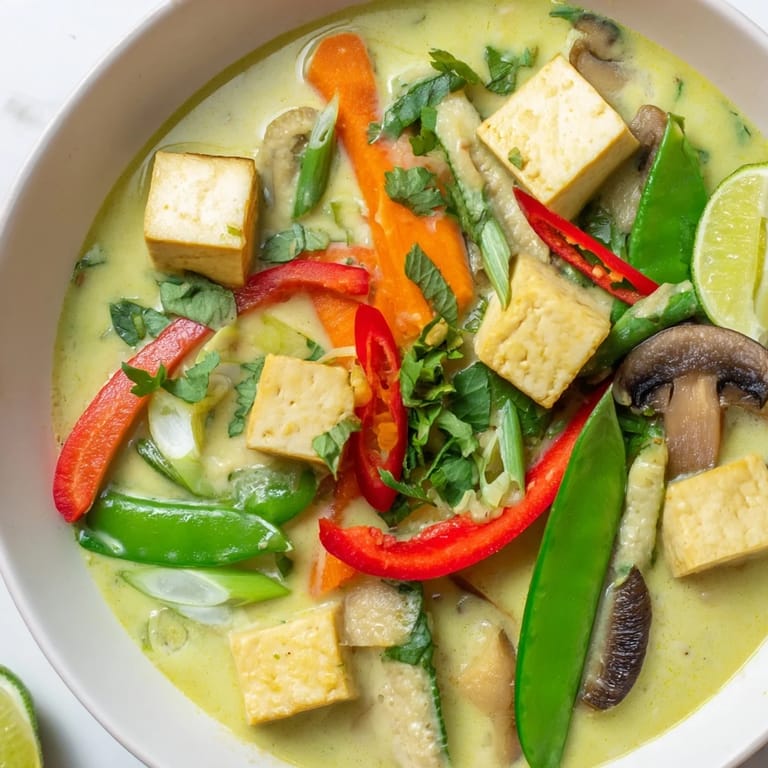
Save This Thai green curry coconut soup has become one of those dishes that makes my kitchen feel alive again, that reminds me cooking is both simple and magical. Make it once, and it will find its way back to your table again and again.
Recipe FAQs
- → Can I use chicken instead of tofu?
Yes, you can substitute tofu with boneless, skinless chicken breast for a protein-rich variation.
- → What vegetables work best in this curry soup?
Baby corn, bell pepper, zucchini, snap peas, mushrooms, carrot, and onion balance texture and flavor well.
- → How do I make the soup spicier?
Add extra green curry paste or sliced fresh red chili according to your heat preference.
- → Is it possible to make this dish gluten-free?
Yes, use gluten-free soy sauce instead of regular soy sauce and ensure all other ingredients are gluten-free.
- → Can I prepare this soup ahead of time?
Yes, it can be stored in the refrigerator and reheated gently before serving to maintain flavor and texture.
- → What can I serve alongside this soup?
Steamed jasmine rice or rice noodles complement the soup for a complete and satisfying meal.