 Save
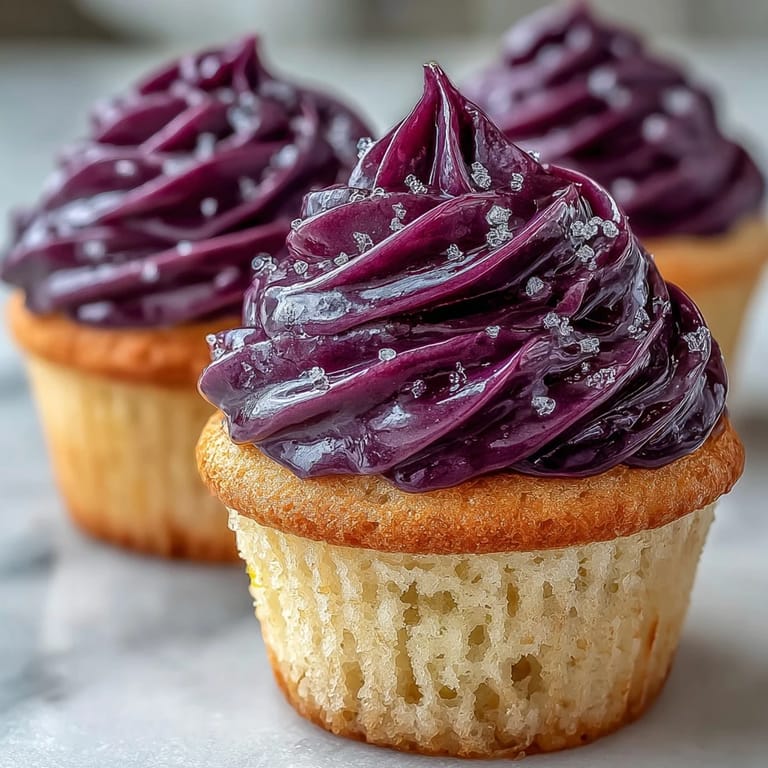
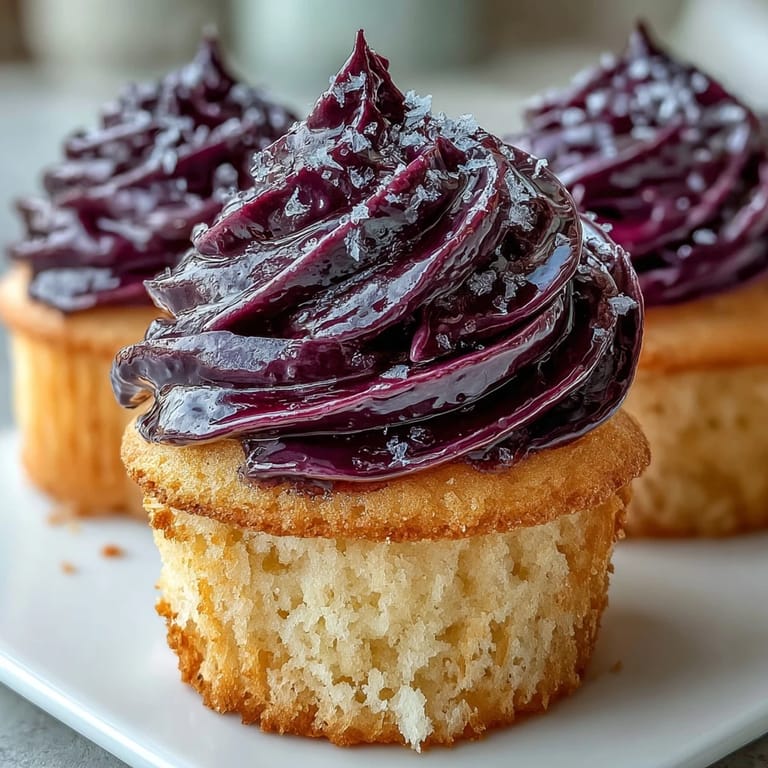
Save There's something about olive oil that makes dessert feel grown-up, and I learned that lesson while standing in a friend's Tuscan kitchen, watching her grandmother drizzle green oil over pound cake with the same care she'd use on a salad. These cupcakes emerged from that memory—light, tender, and sophisticated enough to serve at afternoon tea but approachable enough that you'll want to make them on a random Tuesday. The black currant frosting adds a tart, jewel-toned elegance that transforms a simple cupcake into something unexpectedly special.
I baked these for a book club meeting where someone mentioned feeling intimidated by fancier desserts, and watching her face light up after one bite was worth every careful fold of the batter. It reminded me that the best recipes are the ones that feel special to eat but honest to make—no pretension, just genuine flavor and care.
Ingredients
- All-purpose flour (1 1/2 cups): Use a light hand when measuring—scoop and level rather than packing it down, or weigh it for accuracy since flour settles during storage.
- Baking powder and baking soda (1 tsp and 1/2 tsp): These work together to create a light, tender crumb, so don't skip either one or your cupcakes will be dense.
- Extra virgin olive oil (1/2 cup): Choose a mild or buttery olive oil rather than peppery—you want the oil to add moisture and richness without dominating the flavor.
- Eggs and milk (room temperature): Cold eggs and milk won't incorporate smoothly into the batter, so pull them out 20 minutes before baking.
- Granulated sugar (3/4 cup): Don't reduce this—it's not just sweetness but also structure that keeps the cupcakes tender.
- Cream cheese and butter for frosting (4 oz and 1/2 cup): Both must be softened or your frosting will be lumpy and hard to spread smoothly.
- Black currant jam (1/4 cup): If you can't find it, blackberry or raspberry jam works, but black currant's tartness is what makes this frosting truly special.
- Lemon zest and juice: These brighten everything—the zest in the cake brings subtle citrus notes, and the juice in the frosting balances the sweetness beautifully.
Tired of Takeout? 🥡
Get 10 meals you can make faster than delivery arrives. Seriously.
One email. No spam. Unsubscribe anytime.
Instructions
- Set yourself up for success:
- Preheat your oven to 350°F and line your muffin tin—this takes two minutes and prevents the panic of hot batter waiting for empty liners. Have all your ingredients measured and at room temperature before you start mixing, which makes the whole process feel calm and controlled.
- Build your dry foundation:
- Whisk flour, baking powder, baking soda, and salt together in a medium bowl, pressing out any lumps of baking soda with the back of your whisk. This distributes the leavening evenly so your cupcakes rise uniformly.
- Create the creamy base:
- Beat eggs and sugar for about two minutes until the mixture is noticeably pale and slightly fluffy—this incorporates air that helps the cupcakes rise. Slowly drizzle in the olive oil while whisking constantly, which ensures it emulsifies smoothly rather than pooling at the bottom.
- Bring it together gently:
- Stir in milk, vanilla, and lemon zest, then fold the dry ingredients into the wet mixture using a spatula with as few strokes as possible. Overmixing develops gluten and creates a tough, dense cupcake—stop as soon as you see no streaks of flour.
- Fill and bake:
- Divide batter evenly among liners so each cupcake bakes at the same rate, filling them about two-thirds full. Bake for 16 to 18 minutes—they're done when a toothpick comes out clean and they spring back slightly when you touch the top.
- Cool with patience:
- Let them cool in the pan for five minutes to set, then transfer to a wire rack so air circulates underneath and they finish cooling evenly. Warm cupcakes will cause frosting to melt, so wait until they're completely cool before frosting.
- Make frosting magic:
- Beat softened butter and cream cheese until completely smooth and creamy, about one minute—any lumps of cold cheese will show up later. Add powdered sugar gradually while beating so it incorporates smoothly without creating a powdery cloud.
- Add the signature flavor:
- Fold in black currant jam, lemon juice, and salt, beating just until the frosting is light and spreadable with a uniform color. If it seems stiff, add a teaspoon of milk; if it's too soft, refrigerate for 10 minutes.
- Frost with generosity:
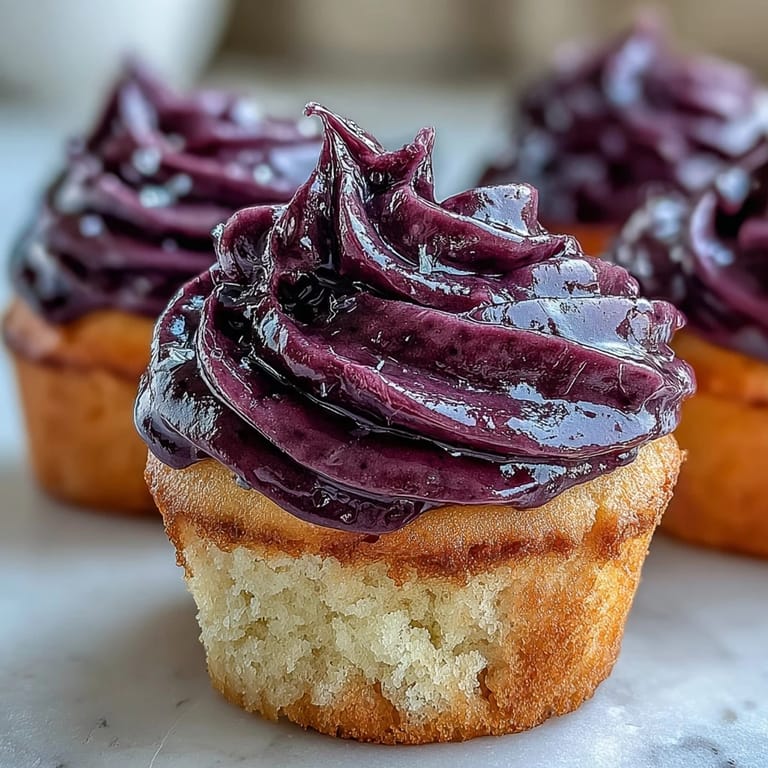
- Spread frosting onto completely cool cupcakes with an offset spatula or the back of a spoon, adding enough so each bite has frosting mixed with cake. Top with a fresh black currant or a pinch of lemon zest for a pretty finish.
 Save
Save These cupcakes became my go-to for moments when I wanted to offer something that felt considered and elegant without spending hours in the kitchen. There's real power in a dessert that tastes like it took all day but actually respects your time.
Why Olive Oil Transforms These Cupcakes
Olive oil creates a completely different texture than butter—it keeps cupcakes impossibly moist and tender because oil coats flour particles differently than solid fat does. Butter creates a crumbly structure through the cream-and-sugar process, but olive oil stays fluid, creating a denser, more luxurious crumb that doesn't dry out. This is why these cupcakes stay soft for days and taste almost like an oil cake, which is intentional and delicious.
The Black Currant Secret
Black currant frosting exists in this perfect middle ground between sweet and tart, which is exactly why it pairs so beautifully with the subtle olive oil cake. The tartness prevents the frosting from feeling cloying, and the depth of black currant flavor makes the whole dessert feel more sophisticated than standard vanilla frosting ever could. If you've never worked with black currant jam before, start with a smaller amount and taste as you go—some brands are intensely tart while others lean sweeter.
Serving and Storage Wisdom
These cupcakes are honestly better the next day once the flavors have mellowed together slightly, so make them a day ahead if you can. They keep beautifully in an airtight container at room temperature for three days, or you can freeze the unfrosted cupcakes for up to a month.
- Pair them with Earl Grey tea or a dry sparkling wine for an unexpectedly elegant moment.
- If you're baking these for a crowd, you can make the cupcakes and frosting separately, then assemble just before serving so everything stays fresh and beautiful.
- A tiny handful of fresh black currants or a whisper of lemon zest on top looks effortless but feels intentional.
 Save
Save These cupcakes remind me that elegant desserts don't require complicated techniques or strange ingredients—just good instincts about flavor balance and respect for the baking process. Make them whenever you want to feel like you've done something special for yourself or someone else.
Recipe FAQs
- → What does olive oil add to cupcakes?
Extra virgin olive oil creates a remarkably moist and tender crumb while imparting subtle fruity notes. It keeps cupcakes fresh longer than butter-based versions and adds sophistication to the flavor profile.
- → Can I use a different oil?
You can substitute with a neutral oil like vegetable or canola, though you'll lose the delicate fruity notes that olive oil provides. For closest results, use a light olive oil rather than extra virgin.
- → What if I can't find black currant jam?
Blackberry or raspberry jam make excellent substitutes, offering similar tartness and deep color. The frosting will still have that tangy cream cheese base with berry brightness.
- → How should I store these cupcakes?
Keep frosted cupcakes refrigerated in an airtight container for up to 3 days. Unfrosted cupcakes can be stored at room temperature for 2 days or frozen for up to 3 months.
- → Why is there lemon zest in the batter?
Lemon zest adds bright citrus notes that complement both the olive oil's grassiness and the black currant's tartness. It's optional but highly recommended for depth of flavor.
- → Can I make these as a full cake?
Yes, bake the batter in two 8-inch round pans for 22-25 minutes. The frosting amount works perfectly for a layered cake with filling and coverage.