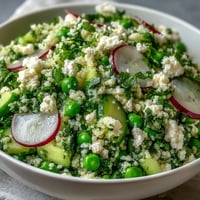
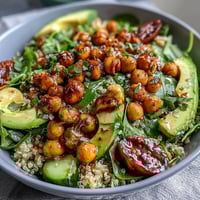
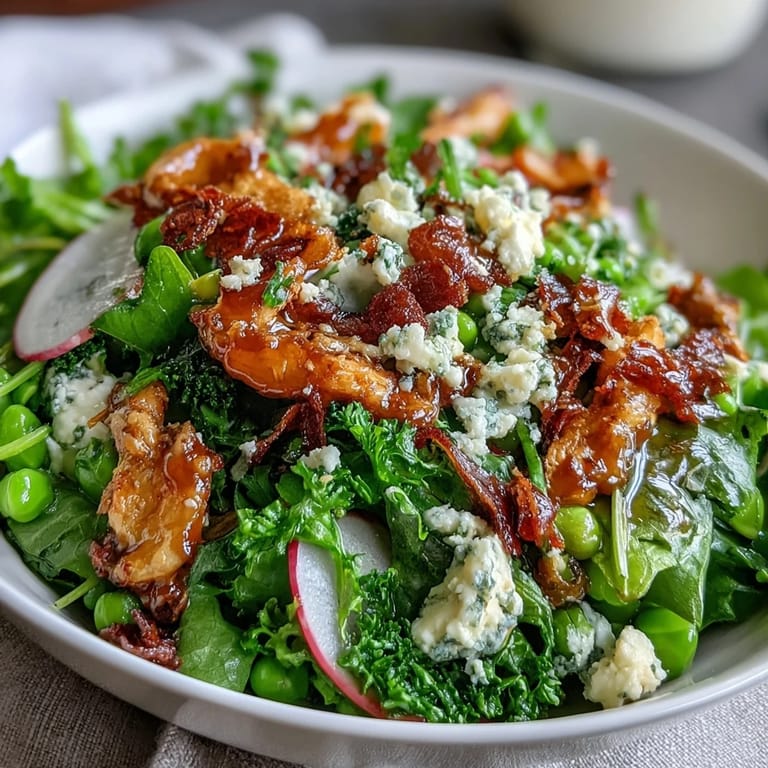
 Save
Save There's a particular Tuesday afternoon when I stood in my kitchen, overwhelmed by a CSA box overflowing with delicate spring greens and snap peas, that this salad came to life. My partner wandered in asking what was for lunch, and I realized I had everything needed for something bright and uncomplicated—no cooking required except for the almonds. That moment taught me that the best meals often arrive unplanned, when you stop overthinking and start with what's in front of you.
I made this for a potluck last spring, arriving with a glass container of the salad and a separate jar of dressing, knowing it would wilt if combined too early. Someone's grandmother asked me for the recipe right there on the lawn, and I realized how a genuinely good salad—one that doesn't apologize for being green—can surprise people who thought they didn't like salads at all. That's when I knew this wasn't just another side dish.
Ingredients
- Mixed spring greens (arugula, baby spinach, watercress, baby lettuce): The variety matters here—each green brings its own personality, from peppery bite to mild sweetness, creating layers of flavor you won't get from a single type.
- Snap peas: Buy these when they're firm and bright, and slice them just before serving so they maintain their fresh crunch throughout the meal.
- Cucumber: Slice thinly on a mandoline if you have one, but a sharp knife works just fine and gives you more control.
- Radishes: Their peppery sharpness balances the honey in the dressing beautifully, so don't skip them even if you think you won't like them.
- Fresh chives and parsley: These aren't garnish—they're flavor, so don't be timid with them and use them right before serving when they're at their most vibrant.
- Sliced almonds, toasted: Toasting them yourself transforms them from pleasant to aromatic and deeply nutty, which is worth those extra three minutes of your time.
- Extra virgin olive oil: Use something you actually enjoy tasting, because the dressing is simple and this ingredient will be noticeable.
- Apple cider vinegar: It has a gentler acidity than regular vinegar, which keeps the dressing from tasting harsh against the delicate greens.
- Lemon juice: Freshly squeezed makes a real difference; bottled has a metallic edge that doesn't belong in something this fresh.
- Dijon mustard: This is the secret ingredient that makes the dressing taste sophisticated—just a small amount creates an entire flavor profile.
- Honey: It doesn't just sweeten; it creates an emulsion that helps the dressing coat the greens evenly.
- Garlic clove: One small one, minced fine, adds depth without overpowering the delicate vegetables.
Tired of Takeout? 🥡
Get 10 meals you can make faster than delivery arrives. Seriously.
One email. No spam. Unsubscribe anytime.
Instructions
- Toast the almonds until golden:
- Heat a dry skillet over medium heat and add your sliced almonds, stirring constantly for 2 to 3 minutes until they turn golden and release that toasty, almost nutty aroma that fills your entire kitchen. This step takes barely five minutes but changes everything about how the salad tastes and feels.
- Build your dressing in a small bowl:
- Whisk together the olive oil, vinegar, lemon juice, mustard, honey, and minced garlic, then taste and adjust the salt and pepper until it makes your mouth happy. The dressing should taste balanced—not too sharp, not too sweet, with just enough depth from the mustard and garlic.
- Combine all the greens and vegetables:
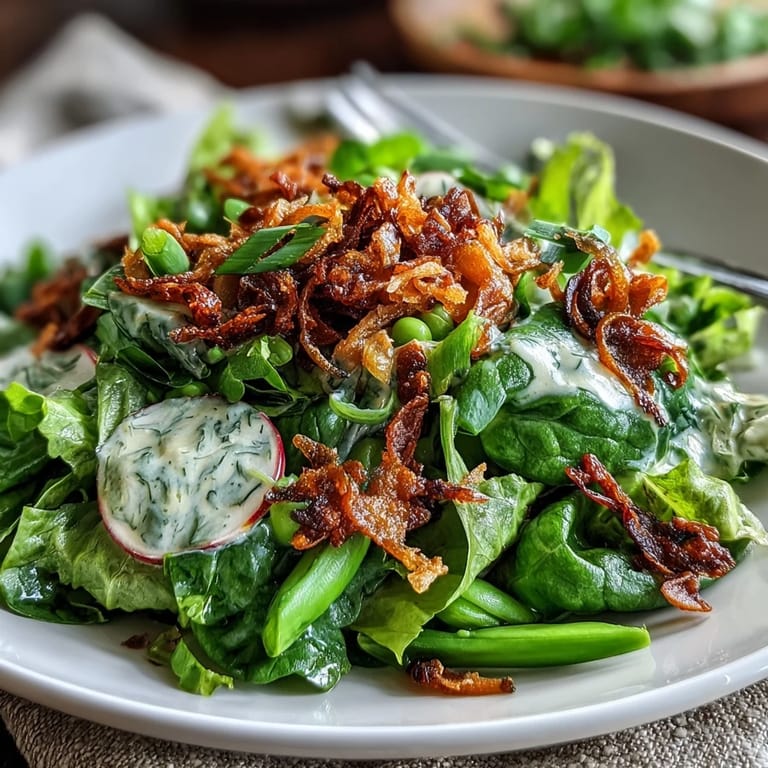
- Toss together your spring greens, snap peas, cucumber slices, radish slices, chives, and parsley in a large bowl, making sure everything is relatively evenly distributed. This is where the salad takes shape as a whole instead of separate components.
- Dress the salad gently:
- Drizzle the dressing over the salad and toss with light hands, making sure every leaf gets coated but nothing gets bruised or crushed in the process. If you're not serving immediately, hold back about a quarter of the dressing and add it just before eating.
- Crown with almonds right before serving:
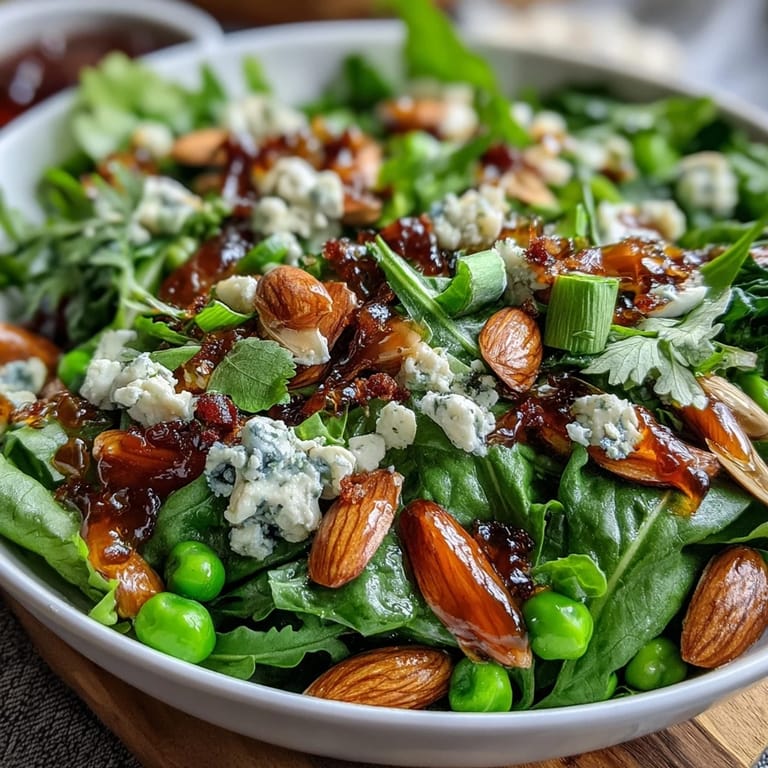
- Sprinkle the toasted almonds on top of the salad just as you're about to eat it, keeping them separate until the last moment so they stay crisp and don't soften from the moisture of the dressing. This one small timing detail keeps the texture contrast alive.
 Save
Save My mother tasted this salad at a family dinner and actually closed her eyes for a moment, then asked why restaurant salads never taste this good. I realized then that most commercial salads are dressed hours in advance and sit under refrigeration, losing their spark, while this one demands to be eaten immediately in its prime. There's something honest about that—a salad that refuses to pretend to be something it's not.
The Art of Salad Dressing
A good vinaigrette is a lesson in balance, and this honey mustard version taught me that sweetness and acidity need each other to make sense. When I first made this, I thought the honey seemed excessive, but it's not there to make things sweet—it's there to smooth out the sharp edges of the vinegar and create a dressing that feels complete. The mustard acts as an anchor, keeping everything from tasting one-dimensional, and the garlic whispers in the background rather than shouts.
Timing and Freshness Matter More Than Perfection
I once made this salad hours ahead of a lunch gathering, thinking I was being organized, and by serving time the greens had darkened slightly and lost their snappy texture. Now I know that spring salads are built in the moment, and that's actually what makes them easier than other dishes—they take true time measured in minutes, not hours of prep and cooking. The cucumber doesn't need to marinate, the radishes don't need to soften, and the almonds don't improve with sitting.
Variations That Keep Things Interesting
This salad is a foundation rather than a rigid formula, and once you understand how it works, you can play with it endlessly. I've added crumbled goat cheese on occasions when I wanted richness, tossed in shredded beets for earthiness, or switched the almonds for walnuts when that's what I had available. The dressing stays constant, which is the real magic—it's flexible enough to partner with whatever vegetables you find beautiful at the market.
- For a vegan version, swap the honey for maple syrup in exact proportions and you won't taste the difference.
- Toasted seeds like sunflower or pumpkin work beautifully if you're avoiding nuts or want to ring changes on texture.
- Add thinly shaved radishes or fennel if you want even more of that sharp, refreshing bite that pairs so well with the creamy dressing.
 Save
Save This salad reminds me that sometimes the most satisfying meals are the ones where vegetables speak for themselves, dressed simply and eaten while still at their peak. It's become my answer to the question of what to make when I want to feel nourished without fussing around.
Recipe FAQs
- → How do I toast almonds for the salad?
Toast sliced almonds in a dry skillet over medium heat for 2-3 minutes, stirring constantly until golden and fragrant, then let cool.
- → Can I make the dressing ahead of time?
Yes, whisk the olive oil, vinegar, lemon juice, mustard, honey, and garlic and store it in the refrigerator for up to 2 days.
- → What variations can I try with the greens?
Use a mix of arugula, baby spinach, watercress, or substitute with kale or mixed lettuces for different textures.
- → How can I make this dish vegan?
Replace honey with maple syrup or agave nectar in the dressing to keep it plant-based without sacrificing sweetness.
- → What pairs well with this salad?
A chilled Sauvignon Blanc or a light rosé complements the fresh and tangy flavors beautifully.